Crambus sperryellus
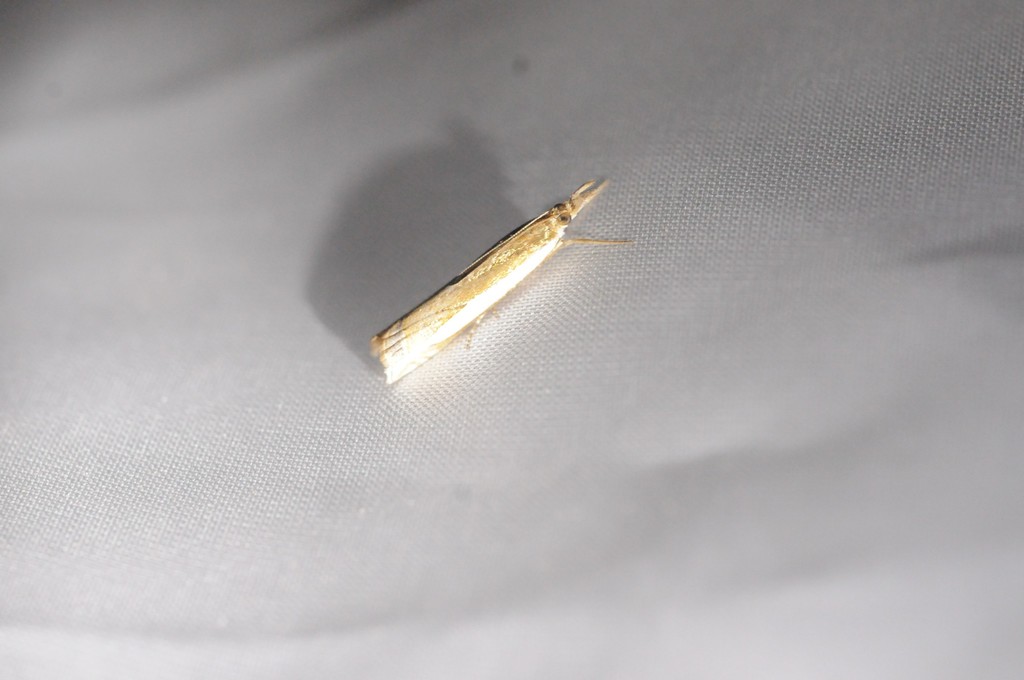
(c) Hawk T., some rights reserved (CC BY) · licence
Family: Crambidae · Class: Insecta · Order: Lepidoptera
Crambus sperryellus is a California animal in the Crambidae family.
Crambus sperryellus is a small moth in the family Crambidae, commonly known as grass moths or sod webworms. This species belongs to the genus Crambus, which comprises numerous small, narrow-winged moths typically associated with grassland habitats. Adult moths measure approximately 8-12 mm in wingspan, displaying the characteristic elongated forewings typical of crambids. The forewings are typically pale brown to grayish-brown with subtle darker markings and a metallic sheen, while the hindwings are lighter, often whitish or pale gray. When at rest, the wings are held close to the body, giving the moth a cylindrical appearance. The antennae are thread-like in both sexes, and the palpi are prominent and project forward from the head. The distribution and range of Crambus sperryellus remain poorly documented in current literature. Like many Crambus species, it likely has a limited geographic range, potentially restricted to specific regions of western North America. The genus Crambus includes both widespread and localized species, with some having very narrow distributions tied to particular host plants or habitat types. Without comprehensive survey data, the current extent of occurrence for this species remains uncertain. Crambus species typically inhabit grasslands, prairies, meadows, and other areas dominated by graminoid vegetation. They are generally associated with native grass communities and may require specific microhabitat conditions related to soil moisture, grass species composition, or elevation. Many crambid moths in this genus show strong fidelity to particular grass species or grass communities, suggesting specialized ecological requirements that may limit their distribution. The larval stage of Crambus moths typically develops as root feeders or stem borers in grasses. Larvae construct silk-lined tunnels in the soil or at the base of grass clumps, feeding on roots and lower stem portions of their host plants. The life cycle is typically annual, with adults emerging during specific flight periods that vary by species and location. Adults are primarily active during evening and nighttime hours and are attracted to artificial lights. Mating occurs soon after emergence, with females depositing eggs singly or in small clusters on or near host plants. The conservation status of Crambus sperryellus has not been formally evaluated by federal or state agencies. Like many small moth species, it faces potential threats from habitat loss due to agricultural conversion, urban development, and changes in land management practices. Grassland habitats throughout much of North America have experienced significant degradation and fragmentation. The use of herbicides and intensive grazing can eliminate host plants and alter the microhabitat conditions required by specialized grass-feeding moths. Climate change may also affect the distribution of both the moth and its host plants. Without comprehensive population data or formal status assessments, the species' conservation needs remain unclear, highlighting the broader challenge of conserving poorly studied invertebrate taxa.
Classification
Class: Insecta · Order: Lepidoptera · Family: Crambidae
Frequently asked questions
How is Crambus sperryellus classified?
Crambus sperryellus belongs to class Insecta, order Lepidoptera, family Crambidae.
What family does Crambus sperryellus belong to?
Crambus sperryellus is in the Crambidae family.
What is Crambus sperryellus?
Crambus sperryellus is a small moth in the family Crambidae, commonly known as grass moths or sod webworms.
Is Crambus sperryellus found in California?
Yes. Crambus sperryellus is recorded in California in The California Species Project's catalogue.
Related species
Other California species in the same genus, family, or bioregion.
Data from The California Species Project — 14,000+ California species with verified data from CNPS, CDFW, USFWS, and more.