Crenichthys baileyi grandis
Hiko White River springfish
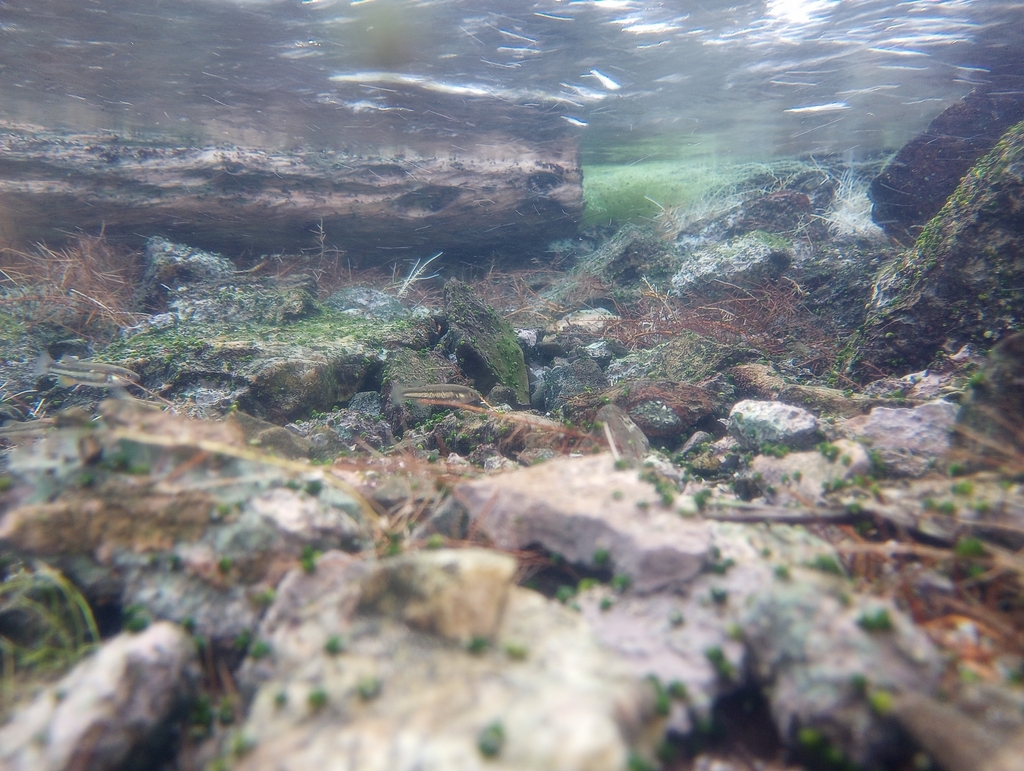
(c) Mike Ostrowski, some rights reserved (CC BY-SA) · licence
Family: Goodeidae · Class: Actinopterygii · Order: Cyprinodontiformes
Conservation status: Endangered
Crenichthys baileyi grandis (Hiko White River springfish) is a California animal in the Goodeidae family.
The Hiko White River springfish is a small, deep-bodied freshwater fish endemic to a single spring system in Nevada. Adults typically reach maximum lengths of 5 to 7.6 centimeters (2 to 3 inches), with a robust body form that distinguishes them from other subspecies of White River springfish. The species exhibits the characteristic morphology of the Crenichthys baileyi complex but differs from related subspecies in body shape, fin ray counts, and coloration patterns. Historically, the Hiko White River springfish was restricted to Hiko Springs in the Pahranagat Valley of Lincoln County, Nevada. The species is endemic to this single location and has never been documented elsewhere. The spring system that supports this population is part of the broader White River drainage system in southeastern Nevada, representing one of the most geographically restricted fish species in North America. The species inhabits thermal spring environments with consistently warm water temperatures and low dissolved oxygen levels. Springfish demonstrate high tolerance for these extreme conditions (Williams & Wilde 1981), typically occupying springheads, pools, and backwater areas along spring outflow channels. The habitat is characterized by constant water flow from underground sources, creating stable thermal and chemical conditions year-round. These fish prefer areas with slow-moving or standing water within the spring system, avoiding faster-flowing sections where temperatures may be cooler. Hiko White River springfish are believed to follow similar ecological patterns to related subspecies, with individuals typically living 3 to 4 years. As with other members of the Crenichthys genus, they likely feed on small invertebrates, algae, and organic detritus available in their spring habitat. Reproductive behavior and timing are not well documented for this specific subspecies, though related springfish species generally spawn multiple times throughout the year in response to favorable environmental conditions. The U.S. Fish and Wildlife Service listed the Hiko White River springfish as endangered on September 27, 1985, with critical habitat designated on May 26, 1998. The species receives a recovery priority ranking of 3C, indicating high degree of threat and conflict with other resource uses, but high recovery potential according to USFWS recovery documents. Primary threats include habitat modification, water diversions, and potential introduction of non-native fish species. The extremely limited range makes the population particularly vulnerable to catastrophic events or habitat degradation. According to USFWS expenditure reports from the late 1990s and early 2000s, federal agencies invested approximately $47,500 to $74,000 annually in recovery efforts for this species. The restricted distribution to a single spring system makes conservation efforts critical for preventing extinction, as any significant alteration to the Hiko Springs habitat could eliminate the entire population. Ongoing monitoring and habitat protection remain essential components of the species' recovery strategy.
Classification
Class: Actinopterygii · Order: Cyprinodontiformes · Family: Goodeidae
Conservation status
Endangered
Frequently asked questions
How is Crenichthys baileyi grandis classified?
Crenichthys baileyi grandis belongs to class Actinopterygii, order Cyprinodontiformes, family Goodeidae.
What family does Crenichthys baileyi grandis belong to?
Crenichthys baileyi grandis is in the Goodeidae family.
Is Crenichthys baileyi grandis protected or of conservation concern?
Crenichthys baileyi grandis carries the following status: Endangered.
What is Crenichthys baileyi grandis?
The Hiko White River springfish is a small, deep-bodied freshwater fish endemic to a single spring system in Nevada.
Is Crenichthys baileyi grandis found in California?
Yes. Crenichthys baileyi grandis is recorded in California in The California Species Project's catalogue.
Related species
Other California species in the same genus, family, or bioregion.
Data from The California Species Project — 14,000+ California species with verified data from CNPS, CDFW, USFWS, and more.