Crenichthys nevadae
Railroad Valley springfish
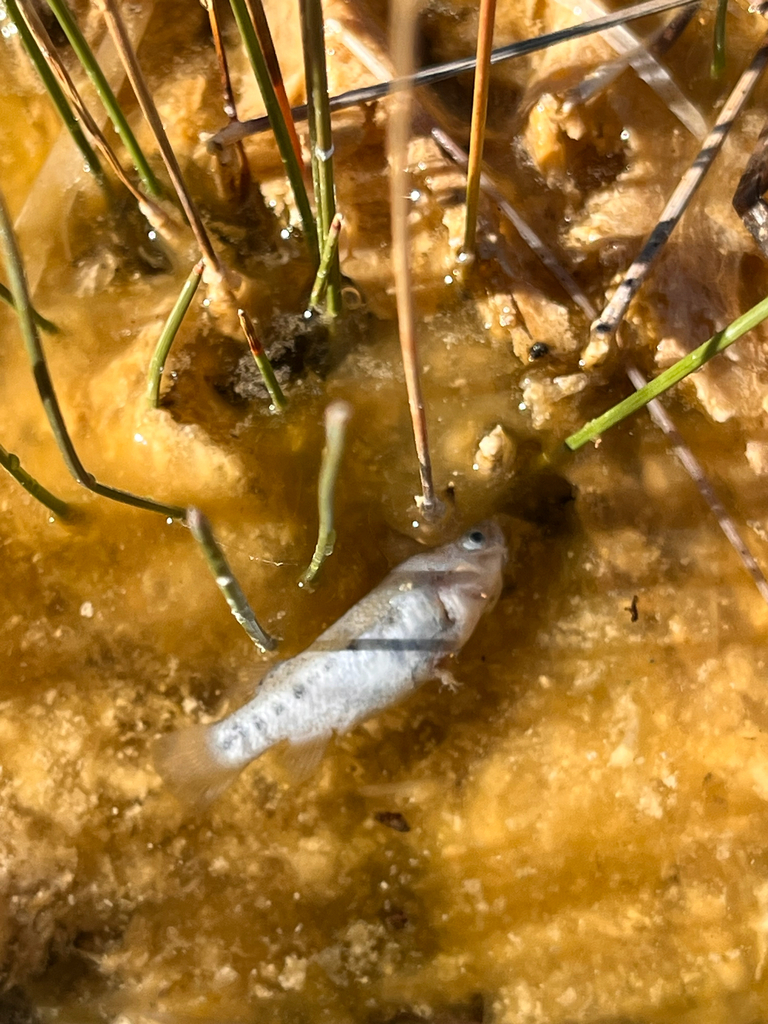
(c) T. J. Samojedny, some rights reserved (CC BY) · licence
Family: Goodeidae · Class: Actinopterygii · Order: Cyprinodontiformes
Conservation status: Threatened
Crenichthys nevadae (Railroad Valley springfish) is a California animal in the Goodeidae family.
The Railroad Valley springfish is a small, thermally adapted fish endemic to the warm springs of Railroad Valley in central Nevada. Adults typically measure 50 to 80 mm (2.0 to 3.1 inches) in total length. The species exhibits a moderately compressed body with a relatively large head and terminal mouth. Coloration is generally olive-brown dorsally with lighter silvery sides, and breeding males may develop more pronounced coloration during reproductive periods. Historically, Railroad Valley springfish were found in multiple thermal springs throughout Railroad Valley in Nye County, Nevada. The species' range has contracted significantly, and current populations are restricted to a few remaining thermal springs in the valley. According to USFWS recovery documents, the species now occupies a fraction of its historical range due to habitat modifications and water diversions. Railroad Valley springfish have adapted to survive in high water temperatures, inhabiting thermal springs with temperatures ranging from 29 to 37.8 degrees Celsius (84 to 100 degrees Fahrenheit) (USFWS Species Profile). These fish require constant water temperatures and flows typical of thermal spring environments. They inhabit areas with aquatic vegetation and prefer shallow waters with moderate currents. The species depends on stable spring flows and specific temperature regimes that characterize natural thermal spring ecosystems. Reproductive behavior occurs when water temperatures are between 28 and 35 degrees Celsius, with spawning typically taking place in shallow areas among vegetation or over gravel substrates (USFWS Five-Year Review). The species exhibits year-round reproductive potential due to the stable thermal conditions of their habitat. Diet varies seasonally, with animal-based foods comprising 74 percent of their diet during summer months, including aquatic invertebrates such as chironomid larvae, amphipods, and other small prey items. Plant material and detritus supplement their diet, particularly during cooler periods. The Railroad Valley springfish was listed as threatened under the Endangered Species Act, with critical habitat designation including the remaining thermal spring habitats essential for the species' survival. Primary threats include habitat modification, water diversions for agricultural and municipal use, groundwater pumping that reduces spring flows, and potential contamination from nearby land uses. The species faces ongoing risks from climate change, which may affect groundwater levels and spring temperatures. A refugia population has been established at the Sodaville property as part of conservation efforts to prevent extinction (Federal Register 1998). Recovery efforts focus on habitat protection, water rights acquisition, and maintaining refugia populations to ensure long-term species persistence. Population monitoring and habitat restoration remain critical components of the species' recovery strategy.
Classification
Class: Actinopterygii · Order: Cyprinodontiformes · Family: Goodeidae
Conservation status
Threatened
Frequently asked questions
How is Crenichthys nevadae classified?
Crenichthys nevadae belongs to class Actinopterygii, order Cyprinodontiformes, family Goodeidae.
What family does Crenichthys nevadae belong to?
Crenichthys nevadae is in the Goodeidae family.
Is Crenichthys nevadae protected or of conservation concern?
Crenichthys nevadae carries the following status: Threatened.
What is Crenichthys nevadae?
The Railroad Valley springfish is a small, thermally adapted fish endemic to the warm springs of Railroad Valley in central Nevada.
Is Crenichthys nevadae found in California?
Yes. Crenichthys nevadae is recorded in California in The California Species Project's catalogue.
Related species
Other California species in the same genus, family, or bioregion.
Data from The California Species Project — 14,000+ California species with verified data from CNPS, CDFW, USFWS, and more.