Crepidula onyx
Onyx Slippersnail
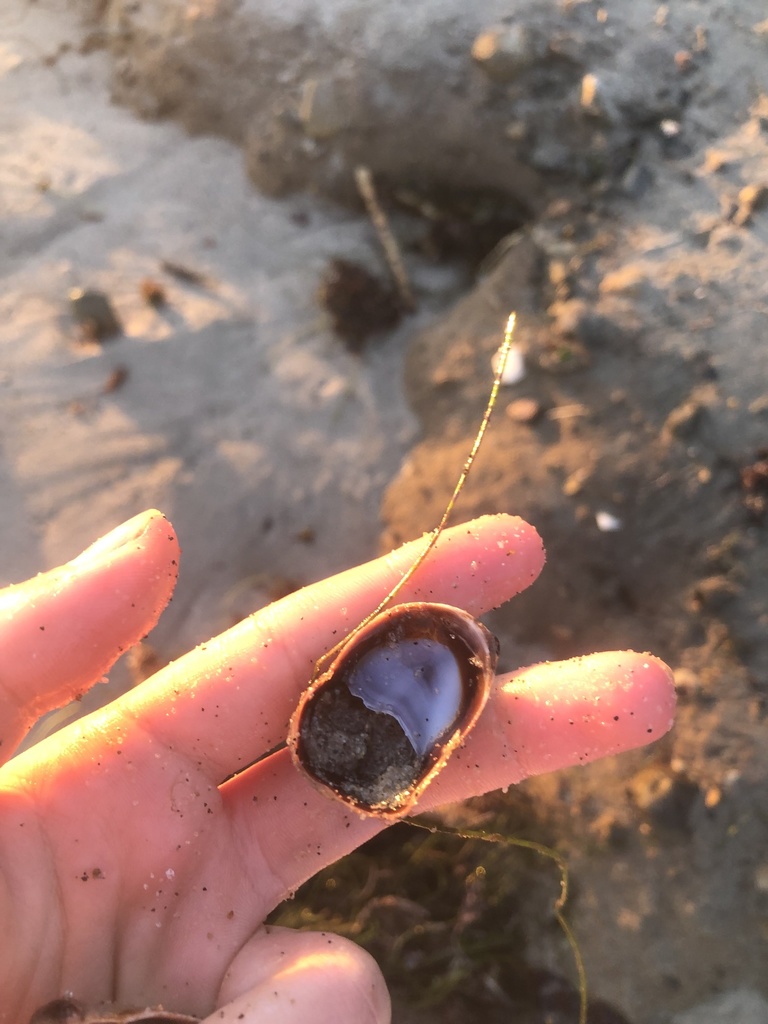
(c) Parsa Fard, some rights reserved (CC BY) · licence
Family: Calyptraeidae · Class: Gastropoda · Order: Littorinimorpha
Crepidula onyx (Onyx Slippersnail) is a California animal in the Calyptraeidae family.
The onyx slippersnail (Crepidula onyx) is a marine gastropod mollusk in the family Calyptraeidae, commonly known as slipper snails or cup-and-saucer snails. This species exhibits the characteristic cap-like shell morphology typical of its family, with a curved, asymmetrical shell that resembles a slipper when viewed from the side. The shell features a distinctive internal shelf or deck that partially covers the aperture, creating the cup-like appearance that gives the family its common name. Adult shells typically measure 15-40 mm in length, with a glossy exterior surface that ranges from light brown to dark brown or black coloration. Crepidula onyx occurs along the Pacific coast of North America, with documented populations in California waters. The species has been recorded in various coastal marine environments, including the Ballona Wetlands area where it was documented during field surveys in 1991 (Carter 1991). The species' range extends into subtidal zones and estuarine environments along the California coast, where it inhabits both natural and artificial hard substrates. This gastropod inhabits marine and estuarine environments, typically attaching to hard surfaces including rocks, shells of other mollusks, and artificial structures. The species has been found encrusting on the shells of larger mollusks such as mussels and oysters, demonstrating its epibiotic lifestyle (CDFW Marine Species Appendix). Onyx slippersnails prefer areas with moderate water movement and are commonly found in intertidal and shallow subtidal zones. They occur in association with diverse benthic communities that include other gastropods, bivalves, crustaceans, and various invertebrates. Like other members of the family Calyptraeidae, C. onyx is a filter feeder that captures planktonic organisms and organic particles from the water column using ciliated structures. The species exhibits protandric hermaphroditism, a reproductive strategy common among slipper snails where individuals begin life as males and later transition to females. They often form stacks or chains of individuals, with larger, older females positioned at the bottom and smaller males toward the top. This stacking behavior facilitates reproduction and maximizes filter-feeding efficiency by positioning individuals to capture food particles in the water column. The conservation status of Crepidula onyx has not been formally assessed by federal or state agencies, and it does not appear on threatened or endangered species lists. The species appears to maintain stable populations in suitable habitat areas along the California coast. However, like many marine invertebrates, onyx slippersnails may face ongoing pressures from coastal development, water quality changes, and ocean acidification. The species serves as a component of nearshore marine ecosystems, contributing to benthic diversity and serving as prey for various predators including fish, crabs, and other marine organisms. Continued monitoring of coastal marine habitats is important for maintaining healthy populations of this and other native gastropod species.
Classification
Class: Gastropoda · Order: Littorinimorpha · Family: Calyptraeidae
Frequently asked questions
How is Crepidula onyx classified?
Crepidula onyx belongs to class Gastropoda, order Littorinimorpha, family Calyptraeidae.
What family does Crepidula onyx belong to?
Crepidula onyx is in the Calyptraeidae family.
What is Crepidula onyx?
The onyx slippersnail (Crepidula onyx) is a marine gastropod mollusk in the family Calyptraeidae, commonly known as slipper snails or cup-and-saucer snails.
Is Crepidula onyx found in California?
Yes. Crepidula onyx is recorded in California in The California Species Project's catalogue.
Related species
Other California species in the same genus, family, or bioregion.
Data from The California Species Project — 14,000+ California species with verified data from CNPS, CDFW, USFWS, and more.