Crocidosema plebejana
Cotton Tipworm Moth
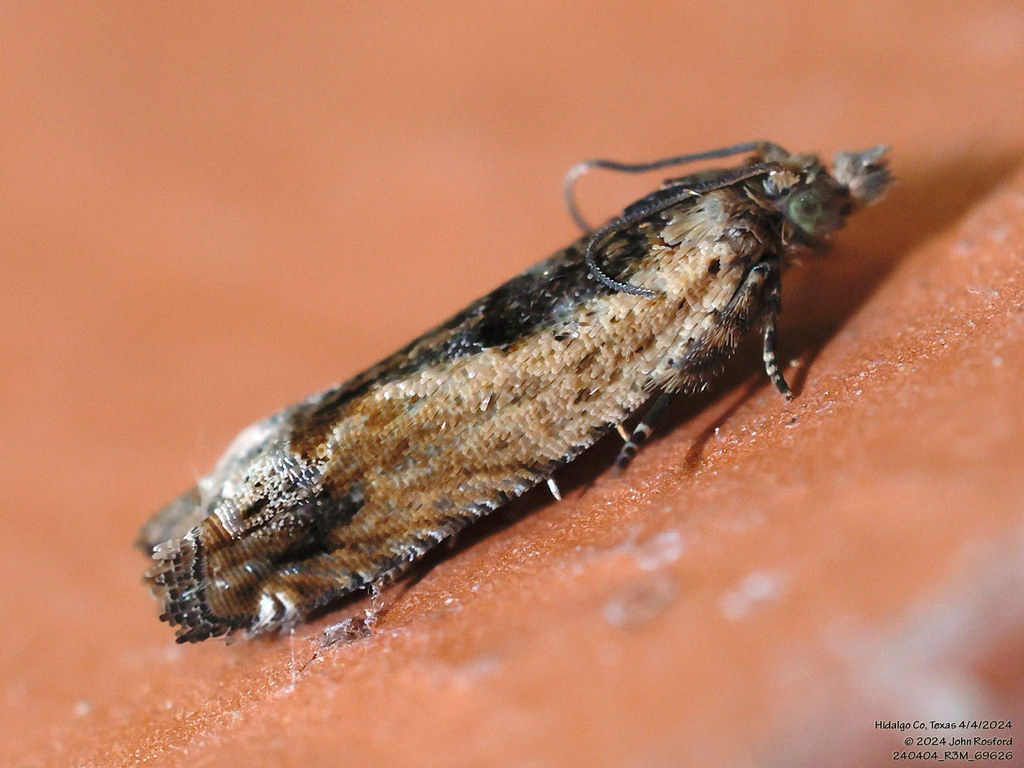
(c) John Rosford, some rights reserved (CC BY) · licence
Family: Tortricidae · Class: Insecta · Order: Lepidoptera
Crocidosema plebejana (Cotton Tipworm Moth) is a California animal in the Tortricidae family.
The Cotton Tipworm Moth (Crocidosema plebejana) is a small tortricid moth in the family Tortricidae, subfamily Olethreutinae. Adults typically measure 8-12 mm in wingspan, with forewings displaying a mottled gray-brown coloration marked by darker crosslines and pale patches. The hindwings are lighter, usually pale gray to whitish. The moth's appearance is relatively nondescript, with the typical bell-shaped resting posture characteristic of tortricid moths when the wings are folded over the body. Crocidosema plebejana has a broad distribution across North America, including California, where it occurs throughout much of the state from sea level to moderate elevations. The species ranges from southern Canada south to Mexico, and from the Pacific Coast eastward to the Atlantic states. In California, records exist from the Central Valley, coastal regions, and inland areas, though specific county-level distribution data is limited. The species inhabits diverse environments where its host plants occur, including agricultural areas, disturbed sites, weedy fields, and natural plant communities. Cotton Tipworm Moths are typically found in areas with abundant herbaceous vegetation, particularly where members of the Amaranthaceae and Chenopodiaceae families grow. The larvae develop within the growing tips and stems of various plants, creating characteristic feeding damage. Larvae of C. plebejana are polyphagous, feeding on multiple plant families but showing preference for amaranths, goosefoots, and related species. The caterpillars bore into plant stems and growing tips, causing wilting and stunting of affected plant parts. This feeding behavior gives the species its common name, as larvae often attack the terminal growing points or 'tips' of host plants. The species is multivoltine in warmer regions, producing multiple generations per year. Adults are active during warmer months, with flight periods extending from spring through fall in suitable climates. Females deposit eggs singly or in small clusters on host plant foliage. The Cotton Tipworm Moth is not currently listed under state or federal endangered species legislation. As a widespread and apparently stable species, it does not appear on conservation priority lists. The moth's ability to utilize multiple host plants and adapt to disturbed habitats likely contributes to its persistence across varied environments. In some agricultural contexts, the species may be considered a minor pest due to its feeding habits on crop plants, though it rarely causes significant economic damage. The species benefits from human-modified landscapes that create habitat for weedy host plants, suggesting populations may be stable or increasing in many areas. No specific conservation measures are currently implemented for this species, and none appear necessary given its broad distribution and ecological adaptability.
Classification
Class: Insecta · Order: Lepidoptera · Family: Tortricidae
Frequently asked questions
How is Crocidosema plebejana classified?
Crocidosema plebejana belongs to class Insecta, order Lepidoptera, family Tortricidae.
What family does Crocidosema plebejana belong to?
Crocidosema plebejana is in the Tortricidae family.
What is Crocidosema plebejana?
The Cotton Tipworm Moth (Crocidosema plebejana) is a small tortricid moth in the family Tortricidae, subfamily Olethreutinae.
Is Crocidosema plebejana found in California?
Yes. Crocidosema plebejana is recorded in California in The California Species Project's catalogue.
Related species
Other California species in the same genus, family, or bioregion.
Data from The California Species Project — 14,000+ California species with verified data from CNPS, CDFW, USFWS, and more.