Crotalus atrox
Western Diamond-Backed Rattlesnake
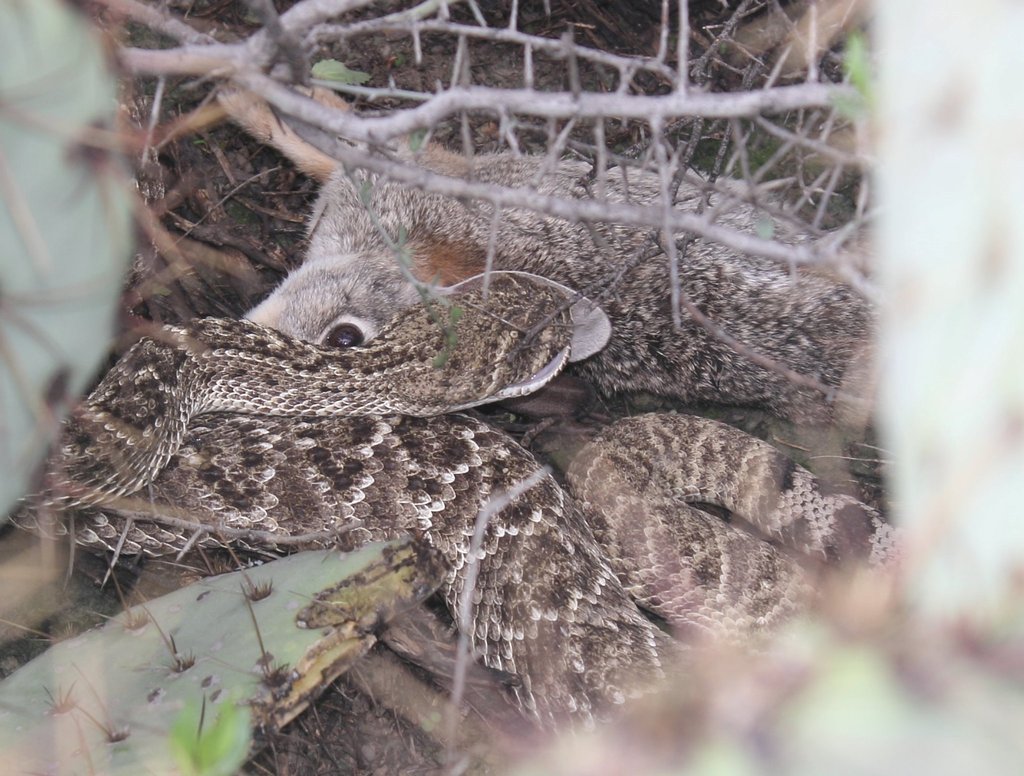
(c) Juan Cruzado Cortés, some rights reserved (CC BY-SA) · licence
Family: Viperidae · Class: Reptilia · Order: Squamata
Crotalus atrox (Western Diamond-Backed Rattlesnake) is a California animal in the Viperidae family.
The western diamond-backed rattlesnake is a large, heavy-bodied venomous snake and one of the most recognizable reptiles in North America. Adults typically measure 0.9 to 1.5 meters (3 to 5 feet) in total length, with exceptional specimens reaching up to 1.8 meters (6 feet). The body is robust and cylindrical, with a distinctly triangular head that is noticeably wider than the neck. The species displays a characteristic pattern of dark gray to brown diamond-shaped markings bordered by light-colored scales along the dorsal surface, giving rise to its common name. The tail bears distinct black and white bands and terminates in the species' signature rattle, which consists of interlocking keratin segments that produce a distinctive buzzing sound when vibrated. Historically, the western diamond-backed rattlesnake ranged throughout much of the southwestern United States, including extreme southern California. In California, the species was documented in desert regions of Imperial, Riverside, and San Bernardino counties, representing the northwestern edge of its continental distribution. However, current populations in California appear to be extremely limited or possibly extirpated, with no confirmed recent records from the state. The species inhabits arid and semi-arid environments, including desert scrubland, grasslands, pine-oak woodlands, and rocky hillsides. Elevation range extends from sea level to approximately 2,000 meters (6,500 feet). Western diamond-backed rattlesnakes prefer areas with adequate cover such as rock crevices, mammal burrows, or dense vegetation. They are often found near water sources and show a preference for areas with moderate to dense ground cover that provides hunting opportunities and thermal regulation sites. Western diamond-backed rattlesnakes are primarily ambush predators, feeding on small mammals including rodents, rabbits, and ground-dwelling birds. Adults consume prey items ranging from mice to prairie dogs, with larger individuals capable of taking rabbits and other medium-sized mammals. The species employs a sit-and-wait hunting strategy, using heat-sensing pit organs to detect warm-blooded prey. Mating occurs in spring and fall, with females giving birth to live young after a gestation period of approximately seven months. Litter sizes range from 10 to 30 offspring, with larger females typically producing more young. Neonates measure 25 to 30 centimeters (10 to 12 inches) at birth and are capable of independent survival. The western diamond-backed rattlesnake holds no federal or state conservation listing status and is generally considered secure throughout most of its range. However, in California, the species faces potential extirpation due to habitat loss, human persecution, and collection pressure. Primary threats include urban development, agricultural conversion, vehicle mortality, and deliberate killing by humans. Climate change may also impact the species through altered precipitation patterns and increased temperatures in already marginal California habitats. The apparent rarity or absence of current California populations warrants monitoring to determine if viable breeding populations persist within the state.
Classification
Class: Reptilia · Order: Squamata · Family: Viperidae
Frequently asked questions
How is Crotalus atrox classified?
Crotalus atrox belongs to class Reptilia, order Squamata, family Viperidae.
What family does Crotalus atrox belong to?
Crotalus atrox is in the Viperidae family.
What is Crotalus atrox?
The western diamond-backed rattlesnake is a large, heavy-bodied venomous snake and one of the most recognizable reptiles in North America.
Is Crotalus atrox found in California?
Yes. Crotalus atrox is recorded in California in The California Species Project's catalogue.
Related species
Other California species in the same genus, family, or bioregion.
Data from The California Species Project — 14,000+ California species with verified data from CNPS, CDFW, USFWS, and more.