Crotalus oreganus
Western Rattlesnake
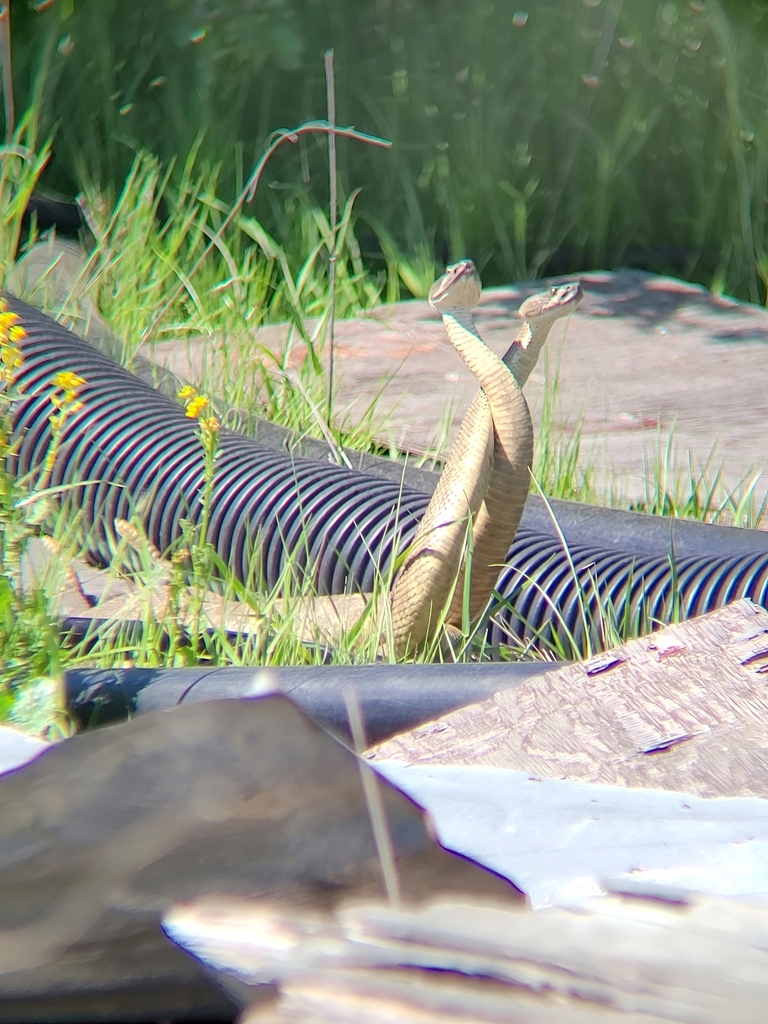
(c) Guillermo Roque, some rights reserved (CC BY) · licence
Family: Viperidae · Class: Reptilia · Order: Squamata
Crotalus oreganus (Western Rattlesnake) is a California animal in the Viperidae family.
The western rattlesnake is a large, heavy-bodied venomous snake native to western North America, including California. Adults typically measure 60 to 162 cm (24 to 64 inches) in total length, with females generally larger than males. The species displays considerable color variation, ranging from pale yellow or gray to dark brown or black, often with darker diamond-shaped or hexagonal blotches along the dorsal surface. The distinctive triangular head is clearly demarcated from the neck, and heat-sensing pits are located between the eyes and nostrils. The characteristic segmented rattle at the tail tip produces the species' warning sound when vibrated. Crotalus oreganus occurs throughout much of California, from sea level to elevations exceeding 2,400 meters (7,900 feet). The species ranges from the Oregon border south through the Coast Ranges, Sierra Nevada, and southern California mountains. Populations are documented in diverse counties including Humboldt, Shasta, El Dorado, Los Angeles, and San Diego. The northern Pacific subspecies (C. o. oreganus) occupies northern California, while the southern Pacific subspecies (C. o. helleri) occurs in central and southern regions. Western rattlesnakes occupy diverse habitats including grasslands, oak woodlands, chaparral, coniferous forests, and rocky outcrops. They demonstrate extensive habitat flexibility, utilizing both mesic coastal environments and arid inland areas. Essential habitat components include suitable den sites such as rock crevices, rodent burrows, or talus slopes for winter hibernation. During active seasons, individuals utilize diverse microhabitats from dense vegetation to open areas for thermoregulation and hunting. This species exhibits typical viperid ecology as an ambush predator specializing in small mammals. Primary prey includes rodents such as ground squirrels, mice, and rats, though birds, lizards, and amphibians are occasionally consumed. Hunting occurs primarily during twilight and nighttime hours. Mating takes place in spring following emergence from hibernation, with females giving birth to 4 to 21 live young after a gestation period of approximately six months. Neonates measure 20 to 30 cm (8 to 12 inches) at birth and possess functional venom and a single rattle segment. Western rattlesnakes are not federally or state listed as threatened or endangered species. However, local populations face pressure from habitat loss due to urban development, agricultural conversion, and wildfire management practices. Vehicle mortality along roadways represents a significant threat, particularly during seasonal movements between hibernation and foraging areas. The species benefits from its legal protection under California Fish and Game Code, which prohibits killing except in immediate defense situations. Public education programs emphasize coexistence strategies and the ecological importance of rattlesnakes as rodent population controllers.
Classification
Class: Reptilia · Order: Squamata · Family: Viperidae
Frequently asked questions
How is Crotalus oreganus classified?
Crotalus oreganus belongs to class Reptilia, order Squamata, family Viperidae.
What family does Crotalus oreganus belong to?
Crotalus oreganus is in the Viperidae family.
What is Crotalus oreganus?
The western rattlesnake is a large, heavy-bodied venomous snake native to western North America, including California.
Is Crotalus oreganus found in California?
Yes. Crotalus oreganus is recorded in California in The California Species Project's catalogue.
Related species
Other California species in the same genus, family, or bioregion.
Data from The California Species Project — 14,000+ California species with verified data from CNPS, CDFW, USFWS, and more.