Crotalus pyrrhus
Speckled Rattlesnake
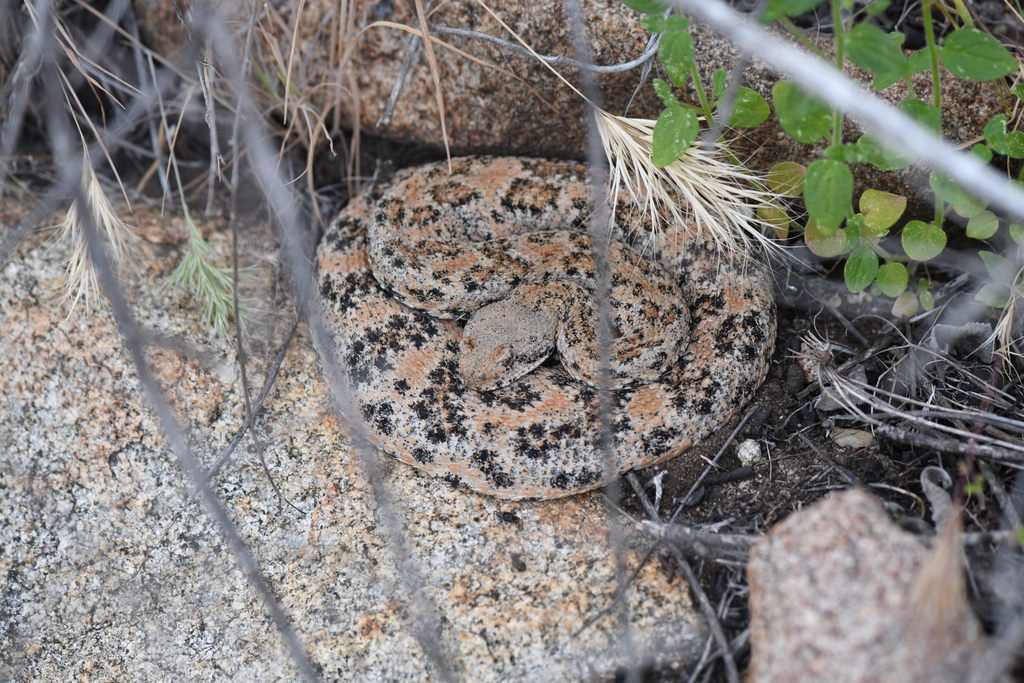
(c) Trevor Van Loon, some rights reserved (CC BY) · licence
Family: Viperidae · Class: Reptilia · Order: Squamata
Crotalus pyrrhus (Speckled Rattlesnake) is a California animal in the Viperidae family.
The speckled rattlesnake is a medium-sized venomous snake characterized by its variable coloration and distinctive pattern. Adults typically measure 60 to 137 cm (24 to 54 inches) in total length, with females generally larger than males. The species exhibits extensive color variation, ranging from pale gray, tan, or pink to darker brown or black, often matching the substrate of their rocky habitat. The dorsal pattern consists of irregular bands or crossbars that may be well-defined or nearly absent, giving the snake a speckled or mottled appearance that provides excellent camouflage against granite and volcanic rock surfaces. The tail features alternating light and dark bands, and like all rattlesnakes, terminates in a segmented rattle. The triangular head is distinct from the neck, with heat-sensing pits located between the eyes and nostrils. The speckled rattlesnake occurs in southeastern California, extending from the eastern slopes of the Sierra Nevada and southern Central Valley southward through the Mojave and Sonoran deserts to the Mexican border. The species ranges eastward into Nevada, Arizona, and northwestern Mexico. In California, populations are documented in counties including Inyo, Kern, Los Angeles, Riverside, San Bernardino, and Imperial. The northernmost populations occur in the Owens Valley and eastern Sierra Nevada foothills. This species inhabits arid and semi-arid environments from sea level to approximately 2,440 meters (8,000 feet) elevation. Preferred habitats include rocky hillsides, boulder fields, desert scrublands, and chaparral communities. Speckled rattlesnakes show strong affinity for areas with granite outcrops, volcanic rock formations, and rocky washes where crevices provide shelter and thermoregulatory sites. Vegetation associations include creosote bush scrub, Joshua tree woodland, pinyon-juniper woodland, and desert chaparral. Speckled rattlesnakes are primarily nocturnal and crepuscular, becoming active during cooler periods of spring, summer, and fall. Winter months are spent in brumation within rock crevices or underground retreats. The species is an ambush predator, feeding primarily on small mammals including rodents, rabbits, and bats, with birds and lizards comprising smaller portions of the diet. Prey is struck and envenomated, then tracked until death occurs. Mating typically occurs in spring, with females giving birth to 3 to 20 live young in late summer or early fall after a gestation period of approximately 6 to 7 months. Neonates measure 20 to 28 cm (8 to 11 inches) at birth and possess functional venom and rattles. The speckled rattlesnake is not currently listed under federal or California endangered species acts. Populations appear stable throughout most of the species' range, though localized declines may occur due to habitat loss from urban development, particularly in southern California. Additional threats include road mortality, collection for the pet trade, and direct persecution by humans. Climate change may affect the species through altered precipitation patterns and increased temperatures in desert environments.
Classification
Class: Reptilia · Order: Squamata · Family: Viperidae
Frequently asked questions
How is Crotalus pyrrhus classified?
Crotalus pyrrhus belongs to class Reptilia, order Squamata, family Viperidae.
What family does Crotalus pyrrhus belong to?
Crotalus pyrrhus is in the Viperidae family.
What is Crotalus pyrrhus?
The speckled rattlesnake is a medium-sized venomous snake characterized by its variable coloration and distinctive pattern.
Is Crotalus pyrrhus found in California?
Yes. Crotalus pyrrhus is recorded in California in The California Species Project's catalogue.
Related species
Other California species in the same genus, family, or bioregion.
Data from The California Species Project — 14,000+ California species with verified data from CNPS, CDFW, USFWS, and more.