Crotalus ruber
Red Diamond Rattlesnake
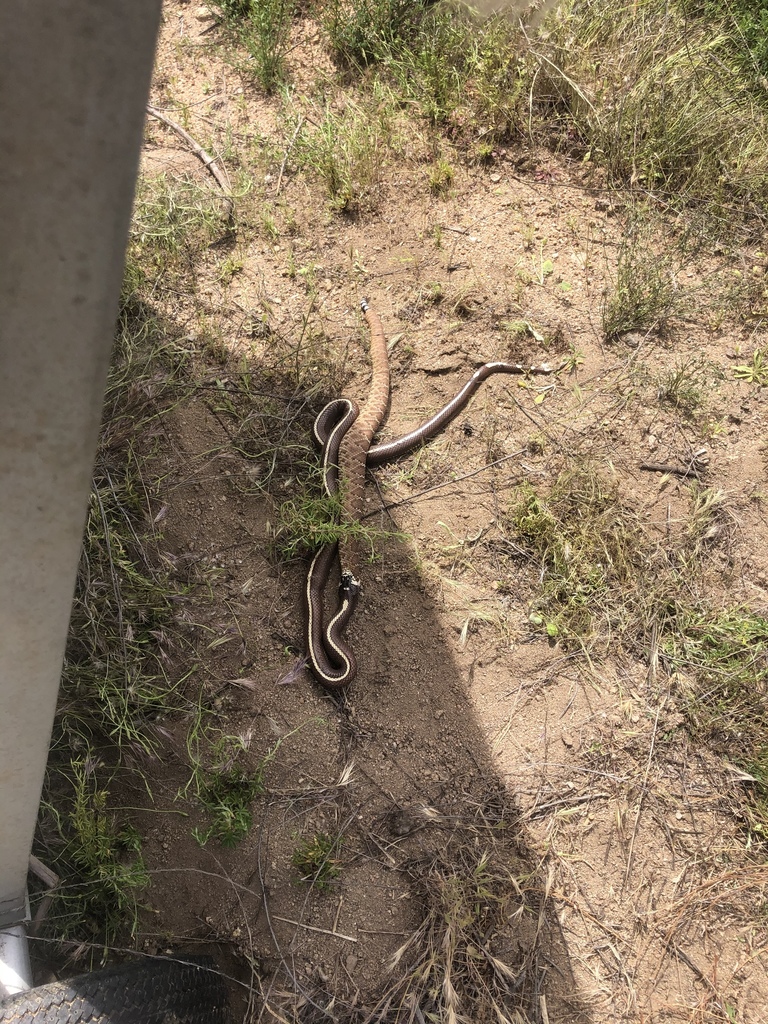
(c) Amy Huie, some rights reserved (CC BY) · licence
Family: Viperidae · Class: Reptilia · Order: Squamata
Conservation status: G4 S3
Crotalus ruber (Red Diamond Rattlesnake) is a California animal in the Viperidae family.
The red diamond rattlesnake is a large, heavy-bodied venomous snake endemic to southwestern California and Baja California, Mexico. Adults typically measure 0.9 to 1.5 meters (3 to 5 feet) in total length, with exceptional individuals reaching 1.6 meters (5.2 feet). The species exhibits a distinctive reddish-brown to brick-red ground coloration with darker diamond-shaped dorsal patterns outlined in light gray or white scales. The tail displays alternating black and light bands above the rattle. The head is triangular and distinctly wider than the neck, with heat-sensing pits located between the eyes and nostrils. Juveniles often display more contrasted patterns that fade with age. Historically, red diamond rattlesnakes ranged throughout much of southwestern California from sea level to approximately 1,980 meters (6,500 feet) elevation. Current distribution extends from southwestern San Bernardino County south through Riverside, Orange, San Diego, and Imperial counties. The species also occurs on several Channel Islands, including Santa Catalina Island. Populations have experienced significant range reduction, particularly in coastal areas where urban development has eliminated suitable habitat. Red diamond rattlesnakes inhabit diverse environments including chaparral, coastal sage scrub, desert scrub, pine-oak woodlands, and rocky hillsides. They demonstrate adaptability to elevation gradients, from coastal bluffs to montane forests. The species requires areas with adequate cover such as rock crevices, rodent burrows, or dense vegetation for shelter and thermoregulation. They are frequently associated with granite boulder formations and oak woodlands that provide both prey abundance and thermal refugia. This species is primarily nocturnal and crepuscular, becoming more active during cooler months. Red diamond rattlesnakes are ambush predators, feeding predominantly on small mammals including wood rats, ground squirrels, rabbits, and occasionally birds. Prey is struck and envenomated, then tracked and consumed after succumbing to the venom. Mating occurs in spring following emergence from winter dormancy. Females are ovoviviparous, giving birth to 6 to 20 live young after a gestation period of approximately seven months. Neonates measure 25 to 30 centimeters (10 to 12 inches) at birth and possess functional venom apparatus. The red diamond rattlesnake is not federally listed but carries a Global Rank of G4 (apparently secure) and State Rank of S3 (vulnerable) in California. Primary threats include habitat loss from urban development, road mortality, and deliberate killing due to human fear. Coastal populations face particular pressure from residential and commercial development. The species benefits from protection within state and national parks, though fragmented populations in urban interfaces remain vulnerable. Climate change may affect prey availability and suitable thermal habitat, particularly at lower elevations where temperatures are increasing.
Classification
Class: Reptilia · Order: Squamata · Family: Viperidae
Conservation status
G4 S3
Frequently asked questions
How is Crotalus ruber classified?
Crotalus ruber belongs to class Reptilia, order Squamata, family Viperidae.
What family does Crotalus ruber belong to?
Crotalus ruber is in the Viperidae family.
Is Crotalus ruber protected or of conservation concern?
Crotalus ruber carries the following status: G4 S3.
What is Crotalus ruber?
The red diamond rattlesnake is a large, heavy-bodied venomous snake endemic to southwestern California and Baja California, Mexico.
Is Crotalus ruber found in California?
Yes. Crotalus ruber is recorded in California in The California Species Project's catalogue.
Related species
Other California species in the same genus, family, or bioregion.
Data from The California Species Project — 14,000+ California species with verified data from CNPS, CDFW, USFWS, and more.