Crotalus scutulatus
Mohave Rattlesnake
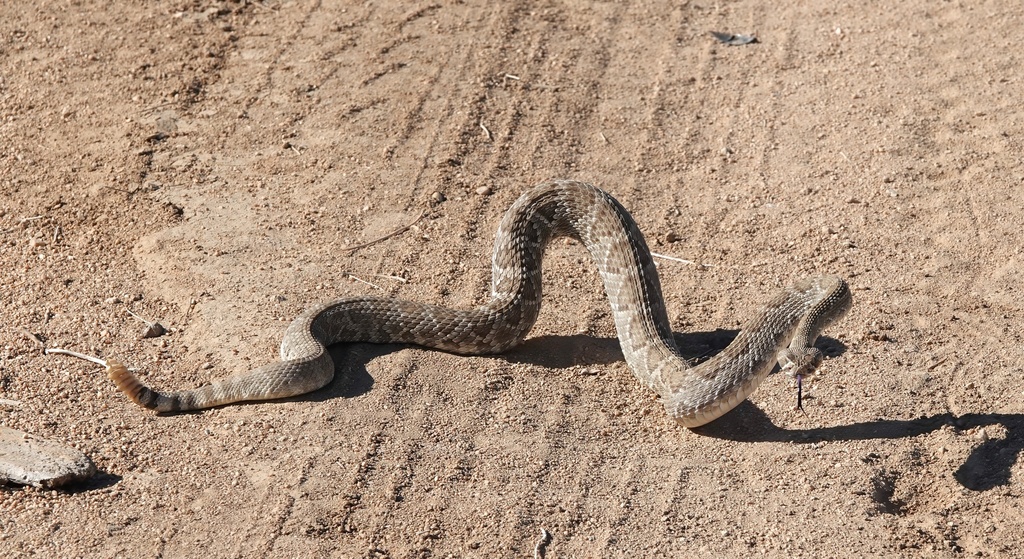
(c) nmoorhatch, some rights reserved (CC BY) · licence
Family: Viperidae · Class: Reptilia · Order: Squamata
Crotalus scutulatus (Mohave Rattlesnake) is a California animal in the Viperidae family.
The Mohave rattlesnake (Crotalus scutulatus) is a venomous pit viper native to the southwestern United States and northwestern Mexico. Adults typically measure 0.6 to 1.2 meters (2 to 4 feet) in total length, with exceptional individuals reaching 1.4 meters (4.6 feet). The body is moderately heavy with a distinctive triangular head and heat-sensing pits between the eyes and nostrils. Coloration varies from greenish-gray to olive, yellow, or brown, with dark diamond-shaped or hexagonal blotches bordered by light-colored scales along the dorsum. The tail features alternating black and white bands, and the rattle consists of interlocking keratin segments that produce the characteristic warning sound. The species ranges from southern Nevada and southeastern California through Arizona and into southwestern New Mexico, extending south into Sonora and northern Sinaloa, Mexico. In California, Mohave rattlesnakes occur primarily in the Mojave Desert region of San Bernardino, Riverside, and eastern Kern counties, with populations documented in areas including Joshua Tree National Park, the eastern Sierra Nevada foothills, and the Antelope Valley. The species is generally found at elevations from sea level to approximately 2,500 meters (8,200 feet). Mohave rattlesnakes inhabit desert scrubland, grassland, and woodland environments characterized by creosote bush, Joshua trees, and desert shrub communities. They show preference for areas with rocky outcrops, washes, and slopes that provide shelter and basking sites. The species utilizes rodent burrows, rock crevices, and vegetation for thermal regulation and protection from predators. This species is primarily nocturnal during warmer months and shifts to diurnal activity during cooler periods. Mohave rattlesnakes are ambush predators that feed predominantly on small mammals, including kangaroo rats, pocket mice, ground squirrels, and rabbits. Birds, lizards, and other snakes constitute secondary prey items. Mating occurs in spring and fall, with females giving birth to live young after a gestation period of approximately six to seven months. Litters typically contain 2 to 17 offspring, with an average of 8 to 10 neonates measuring 20 to 25 centimeters (8 to 10 inches) at birth. The Mohave rattlesnake possesses highly potent venom containing both hemotoxic and neurotoxic components, making it one of the most dangerous venomous snakes in North America. Two distinct venom types exist: Type A contains significant neurotoxic compounds, while Type B is primarily hemotoxic. This species is not currently listed under federal or California endangered species legislation. Population trends are considered stable throughout most of its range, though localized declines may occur due to habitat loss from urban development, agriculture, and renewable energy projects. Climate change may affect the species' distribution as desert environments experience increasing temperatures and altered precipitation patterns.
Classification
Class: Reptilia · Order: Squamata · Family: Viperidae
Frequently asked questions
How is Crotalus scutulatus classified?
Crotalus scutulatus belongs to class Reptilia, order Squamata, family Viperidae.
What family does Crotalus scutulatus belong to?
Crotalus scutulatus is in the Viperidae family.
What is Crotalus scutulatus?
The Mohave rattlesnake (Crotalus scutulatus) is a venomous pit viper native to the southwestern United States and northwestern Mexico.
Is Crotalus scutulatus found in California?
Yes. Crotalus scutulatus is recorded in California in The California Species Project's catalogue.
Related species
Other California species in the same genus, family, or bioregion.
Data from The California Species Project — 14,000+ California species with verified data from CNPS, CDFW, USFWS, and more.