Crotalus stephensi
Panamint Rattlesnake
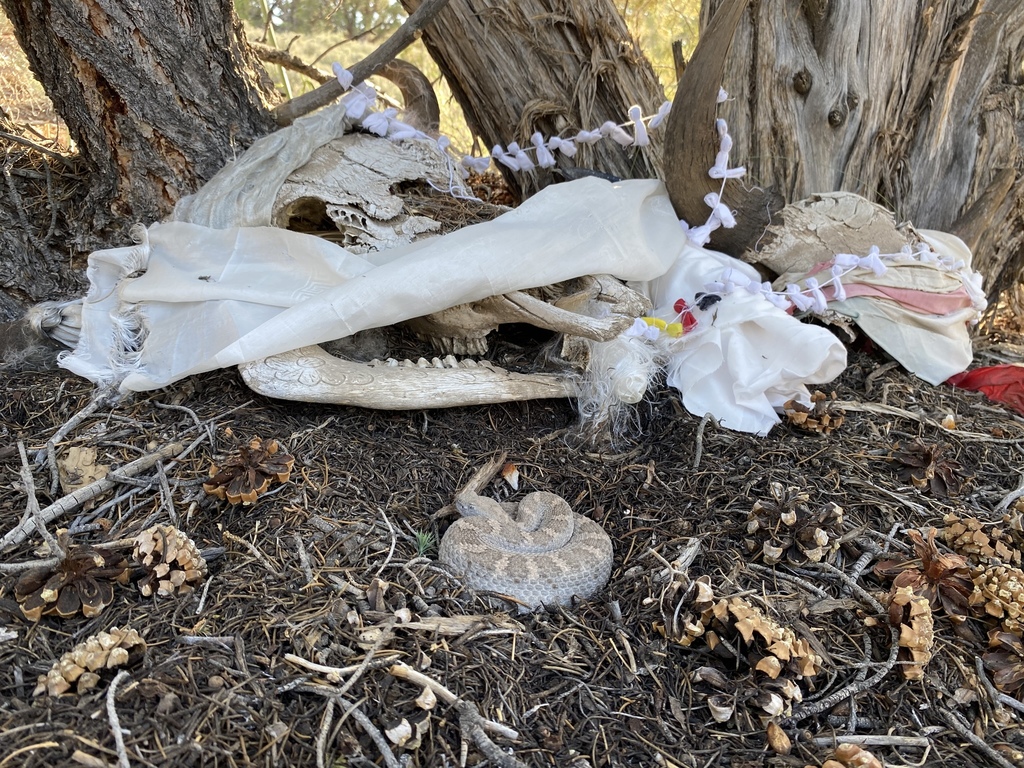
(c) Matt Berger, some rights reserved (CC BY) · licence
Family: Viperidae · Class: Reptilia · Order: Squamata
Crotalus stephensi (Panamint Rattlesnake) is a California animal in the Viperidae family.
The Panamint rattlesnake (Crotalus stephensi) is a medium-sized venomous snake endemic to the southwestern United States. Adults typically measure 61 to 102 cm (24 to 40 inches) in total length, with females generally larger than males. The species displays a distinctive color pattern consisting of a gray, tan, or pinkish-brown ground color with 24 to 44 darker brown or black crossbands across the body. These bands are often bordered by lighter scales, creating a contrasting appearance. The head is triangular and distinctly wider than the neck, with a prominent canthal ridge and heat-sensing pits between the eyes and nostrils. The tail terminates in the characteristic rattle composed of interlocking keratin segments. The Panamint rattlesnake has a limited range in California, occurring primarily in the eastern Sierra Nevada and adjacent desert mountain ranges. The species is found in Inyo County, including the Panamint Mountains from which it takes its common name, as well as portions of the White Mountains and Coso Range. Additional populations occur in scattered mountain ranges in Mono County. Outside California, the species extends into Nevada, with populations in the Spring Mountains near Las Vegas and several other isolated mountain ranges. This species inhabits rocky desert mountain slopes and canyons at elevations ranging from 610 to 2,440 meters (2,000 to 8,000 feet). Panamint rattlesnakes prefer areas with granite or limestone outcrops, boulder fields, and scattered desert shrub vegetation including Joshua trees, pinyon pine, and juniper woodland at higher elevations. They frequently shelter in rock crevices, under large boulders, or in rodent burrows during extreme temperatures. Panamint rattlesnakes are primarily crepuscular and nocturnal during warmer months, becoming more diurnal in cooler periods. They are ambush predators, feeding mainly on small mammals including kangaroo rats, pocket mice, and ground squirrels. Birds and lizards comprise a smaller portion of their diet. Mating occurs in spring following emergence from winter dormancy. Females are viviparous, giving birth to 3 to 11 live young after a gestation period of approximately 6 to 7 months. Neonates measure 20 to 25 cm (8 to 10 inches) at birth and possess functional venom apparatus. The Panamint rattlesnake currently lacks federal or state listing status but faces conservation challenges due to its restricted range and isolated populations. Primary threats include habitat degradation from mining activities, off-road vehicle use, and residential development in lower elevation areas. Climate change may force populations to higher elevations, potentially reducing available habitat. Collection for the pet trade and deliberate killing by humans also impact local populations. The species' fragmented distribution across isolated mountain ranges makes populations particularly vulnerable to local extinctions, as recolonization between ranges is unlikely due to intervening desert valleys.
Classification
Class: Reptilia · Order: Squamata · Family: Viperidae
Frequently asked questions
How is Crotalus stephensi classified?
Crotalus stephensi belongs to class Reptilia, order Squamata, family Viperidae.
What family does Crotalus stephensi belong to?
Crotalus stephensi is in the Viperidae family.
What is Crotalus stephensi?
The Panamint rattlesnake (Crotalus stephensi) is a medium-sized venomous snake endemic to the southwestern United States.
Is Crotalus stephensi found in California?
Yes. Crotalus stephensi is recorded in California in The California Species Project's catalogue.
Related species
Other California species in the same genus, family, or bioregion.
Data from The California Species Project — 14,000+ California species with verified data from CNPS, CDFW, USFWS, and more.