Cryphia fascia
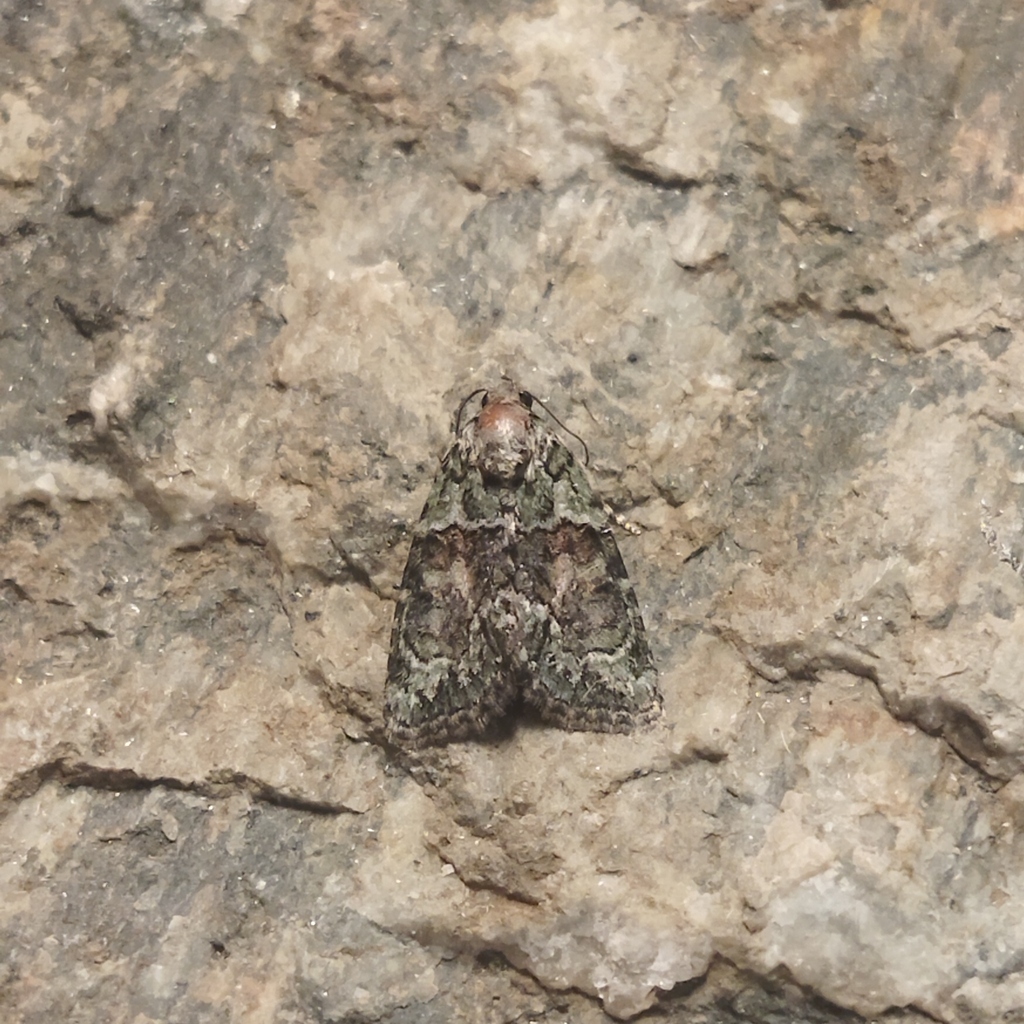
(c) SteveM4560, some rights reserved (CC BY) · licence
Family: Noctuidae · Class: Insecta · Order: Lepidoptera
Cryphia fascia is a California animal in the Noctuidae family.
Cryphia fascia is a moth species in the family Noctuidae, commonly known as owlet moths or cutworm moths. This nocturnal lepidopteran belongs to a diverse family containing over 11,000 described species worldwide. The genus Cryphia comprises small to medium-sized moths characterized by cryptic wing patterns that provide effective camouflage against tree bark and other natural surfaces. Detailed morphological descriptions of Cryphia fascia are limited in the available literature. Like other members of the genus, adults likely possess forewings with mottled gray, brown, and black patterns that create intricate banding or fasciated markings, which may relate to the species epithet 'fascia' meaning band or stripe. The hindwings are typically lighter in coloration, often pale gray or whitish. Wingspan measurements and specific distinguishing features require further documentation through taxonomic studies. The geographic distribution of Cryphia fascia appears restricted to western North America, with records from California. However, the precise range limits and county-level distribution within the state remain poorly documented in current taxonomic and biodiversity databases. The species may have a limited distribution compared to more widespread Cryphia species, though comprehensive surveys are needed to establish definitive range boundaries. Habitat preferences for Cryphia fascia are not well-established in the literature. Members of the genus Cryphia typically inhabit forested and woodland environments, where adults rest on tree trunks during daylight hours. The cryptic wing patterns provide camouflage against bark surfaces of various tree species. Larvae likely develop in association with specific host plants, though the larval ecology and host plant relationships for this species require investigation. Adult moths are presumably nocturnal, following the typical behavior pattern of most Noctuidae species. Adults likely emerge after sunset to mate and seek oviposition sites. Females deposit eggs on or near larval host plants, though the specific reproductive biology, including flight periods, number of generations per year, and overwintering stage, remains undocumented. Larvae presumably feed on leaves or other plant tissues of their host species, though the specific feeding behavior and development cycle require study. The conservation status of Cryphia fascia has not been formally assessed by state or federal agencies. The species lacks federal listing status under the Endangered Species Act and does not appear on California's list of species of special concern as of December 2025. The absence of comprehensive population data and ecological information makes it difficult to evaluate conservation needs. Limited taxonomic and ecological research on this species represents a significant knowledge gap. Further field studies are needed to document distribution, habitat requirements, life history, and potential conservation concerns for Cryphia fascia in California.
Classification
Class: Insecta · Order: Lepidoptera · Family: Noctuidae
Frequently asked questions
How is Cryphia fascia classified?
Cryphia fascia belongs to class Insecta, order Lepidoptera, family Noctuidae.
What family does Cryphia fascia belong to?
Cryphia fascia is in the Noctuidae family.
What is Cryphia fascia?
Cryphia fascia is a moth species in the family Noctuidae, commonly known as owlet moths or cutworm moths.
Is Cryphia fascia found in California?
Yes. Cryphia fascia is recorded in California in The California Species Project's catalogue.
Related species
Other California species in the same genus, family, or bioregion.
Data from The California Species Project — 14,000+ California species with verified data from CNPS, CDFW, USFWS, and more.