Cryptocephalus castaneus
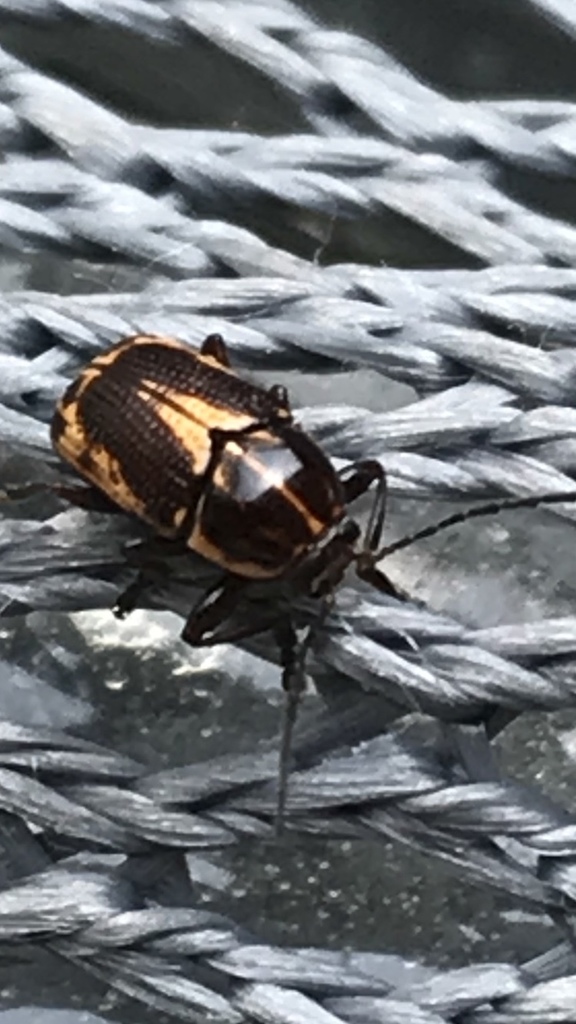
(c) Ryan Donnelly, some rights reserved (CC BY) · licence
Family: Chrysomelidae · Class: Insecta · Order: Coleoptera
Cryptocephalus castaneus is a California animal in the Chrysomelidae family.
Cryptocephalus castaneus is a small leaf beetle in the family Chrysomelidae. Adults are typically 3-6 mm in length with a compact, rounded body form characteristic of the genus. The species exhibits a chestnut-brown to reddish-brown coloration, as suggested by its specific epithet 'castaneus' meaning chestnut-colored. Like other Cryptocephalus species, adults have the ability to retract their head and legs into their body when disturbed, appearing as a small, smooth capsule. This species occurs across western North America, with documented presence in California. Historical records indicate the species has been collected from willow-associated habitats in the Ballona region of Southern California (Schreiber 1981). The species' range likely extends beyond California into other western states, following the distribution patterns typical of many Cryptocephalus species in North America. Cryptocephalus castaneus inhabits areas where its host plants are present, particularly willow species (Salix spp.). Adults have been documented on willows, suggesting a close association with riparian and wetland edge habitats where these trees occur (Schreiber 1981). The species likely occupies diverse elevational ranges within California, from coastal areas to montane regions where suitable willow habitat exists. Riparian corridors, stream margins, and wetland edges provide the primary habitat requirements for both adult feeding and larval development. Adult beetles are herbivorous, feeding on the foliage of their host plants. The larval stage of Cryptocephalus species is distinctive among leaf beetles, as larvae construct portable cases from their own fecal matter mixed with plant material, which they carry as protection while feeding. This case-making behavior is characteristic of the subfamily Cryptocephalinae. Larvae likely feed on willow leaves and organic debris within their constructed cases. Adult activity periods and breeding cycles have not been well documented for this specific species, though related Cryptocephalus species are typically active during warmer months when host plants are actively growing. Cryptocephalus castaneus does not currently hold any federal or state conservation status designations in California. The species appears to be part of the native North American Cryptocephalus fauna, as distinguished from introduced species such as C. irroratus from the Neotropics. No specific population data or trend information is available for this species. Like many specialized herbivorous insects, potential threats could include habitat loss through riparian development, water diversions affecting willow growth, and changes in flood regimes that maintain healthy riparian ecosystems. However, the species' conservation needs and population status remain largely undocumented. The limited scientific literature available for this species reflects the broader challenge of documenting the ecology and conservation status of North America's diverse but understudied beetle fauna.
Classification
Class: Insecta · Order: Coleoptera · Family: Chrysomelidae
Frequently asked questions
How is Cryptocephalus castaneus classified?
Cryptocephalus castaneus belongs to class Insecta, order Coleoptera, family Chrysomelidae.
What family does Cryptocephalus castaneus belong to?
Cryptocephalus castaneus is in the Chrysomelidae family.
What is Cryptocephalus castaneus?
Cryptocephalus castaneus is a small leaf beetle in the family Chrysomelidae.
Is Cryptocephalus castaneus found in California?
Yes. Cryptocephalus castaneus is recorded in California in The California Species Project's catalogue.
Related species
Other California species in the same genus, family, or bioregion.
Data from The California Species Project — 14,000+ California species with verified data from CNPS, CDFW, USFWS, and more.