Cryptocephalus spurcus
Foul Case-bearing Leaf Beetle
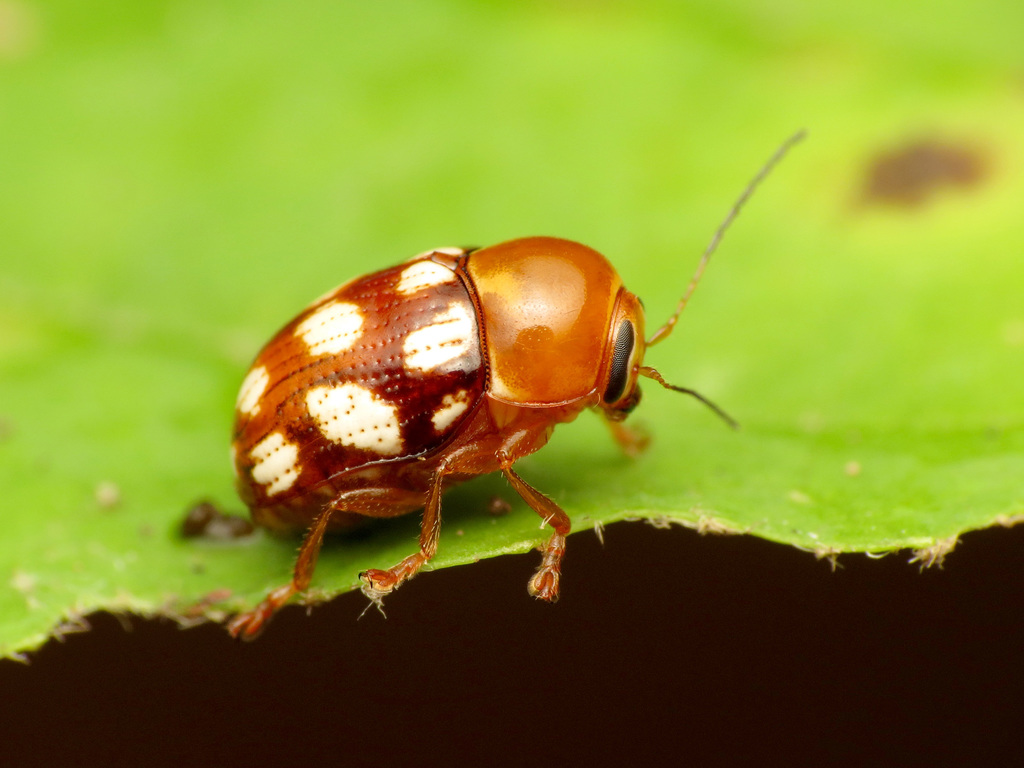
(c) Katja Schulz, some rights reserved (CC BY) · licence
Family: Chrysomelidae · Class: Insecta · Order: Coleoptera
Cryptocephalus spurcus (Foul Case-bearing Leaf Beetle) is a California animal in the Chrysomelidae family.
The Foul Case-bearing Leaf Beetle (Cryptocephalus spurcus) is a member of the case-bearing leaf beetle subfamily Cryptocephalinae within the family Chrysomelidae. This beetle belongs to the diverse genus Cryptocephalus, which comprises numerous species distributed across North America. Adult beetles in this genus are typically small, measuring 3-6 mm in length, with compact, rounded bodies characteristic of chrysomelid beetles. The species exhibits the typical cryptocephaline body form with a retractable head and legs that can be withdrawn into grooves on the underside of the body when disturbed. The distribution and range of Cryptocephalus spurcus in California remains poorly documented in the scientific literature. Like many members of the genus Cryptocephalus, this species likely occurs in areas with suitable host vegetation, though specific locality records within California are limited. The genus Cryptocephalus is widely distributed across North America, with various species occupying diverse habitats from coastal regions to mountainous areas. Habitat requirements for C. spurcus have not been thoroughly studied or documented. Case-bearing leaf beetles in the genus Cryptocephalus typically inhabit areas where their host plants occur, including woodland edges, meadows, and disturbed areas. Many cryptocephaline species show preferences for specific plant families, though the exact host plant relationships for C. spurcus remain unclear from available literature. Adults are generally found on foliage during the growing season, where they feed and mate. The ecology and behavior of Cryptocephalus spurcus follows the general pattern observed in other case-bearing leaf beetles. Adults are leaf-feeding beetles that consume plant tissue, creating characteristic feeding damage on host plants. Like other members of the subfamily, larvae construct protective cases from their own fecal material mixed with plant debris, which they carry as they feed and develop. This case-bearing behavior gives the subfamily its common name and represents a unique adaptation among leaf beetles. Larvae typically feed on detritus and decaying organic matter rather than fresh plant tissue. The life cycle includes egg, larval, pupal, and adult stages, with adults typically active during warmer months of the year. Conservation status information for Cryptocephalus spurcus is not available from standard databases, and the species does not appear on federal or state threatened and endangered species lists as of December 2025. The lack of comprehensive surveys and taxonomic studies of this group means that population trends and conservation needs are poorly understood. Many cryptocephaline beetles may be declining due to habitat loss and fragmentation, but specific data for C. spurcus is lacking. Scientific documentation for this species remains extremely limited despite thorough literature searches. The information presented here represents the current state of knowledge based on available taxonomic and ecological sources. Detailed studies of distribution, host plant relationships, life history, and population status are needed to better understand this species' biology and conservation requirements.
Classification
Class: Insecta · Order: Coleoptera · Family: Chrysomelidae
Frequently asked questions
How is Cryptocephalus spurcus classified?
Cryptocephalus spurcus belongs to class Insecta, order Coleoptera, family Chrysomelidae.
What family does Cryptocephalus spurcus belong to?
Cryptocephalus spurcus is in the Chrysomelidae family.
What is Cryptocephalus spurcus?
The Foul Case-bearing Leaf Beetle (Cryptocephalus spurcus) is a member of the case-bearing leaf beetle subfamily Cryptocephalinae within the family Chrysomelidae.
Is Cryptocephalus spurcus found in California?
Yes. Cryptocephalus spurcus is recorded in California in The California Species Project's catalogue.
Related species
Other California species in the same genus, family, or bioregion.
Data from The California Species Project — 14,000+ California species with verified data from CNPS, CDFW, USFWS, and more.