Ctenolepisma ciliatum
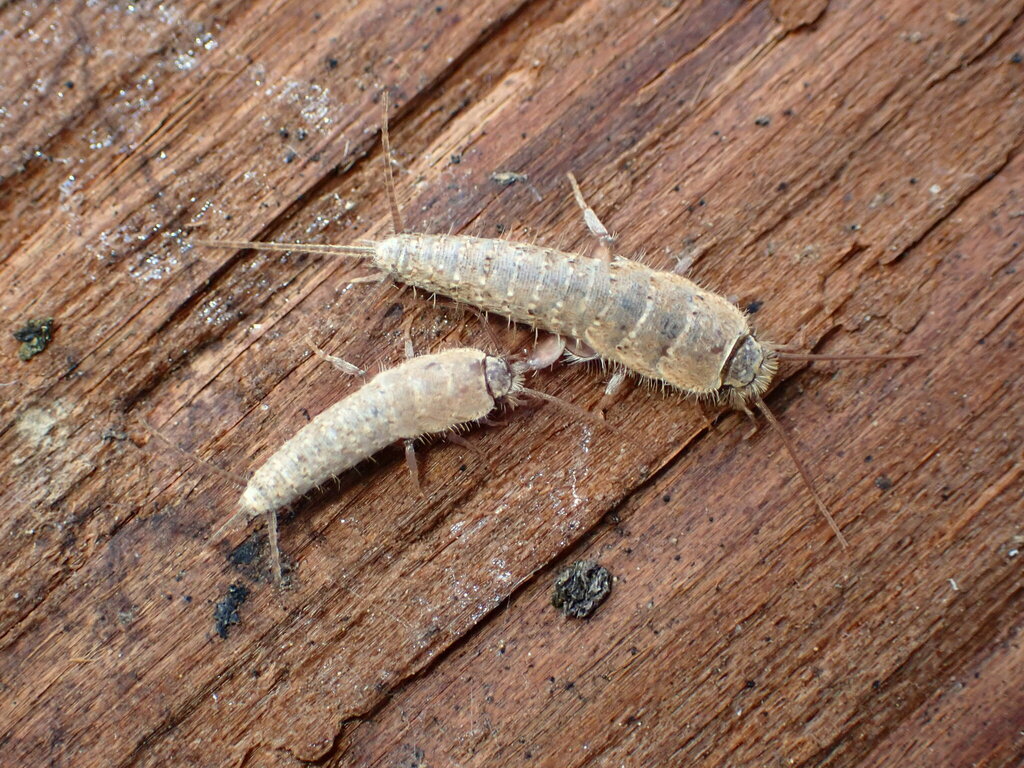
(c) Cricket Raspet, some rights reserved (CC BY) · licence
Family: Lepismatidae · Class: Insecta · Order: Zygentoma
Ctenolepisma ciliatum is a California animal in the Lepismatidae family.
Ctenolepisma ciliatum is a silverfish species belonging to the primitive order Zygentoma within the family Lepismatidae. This wingless insect displays the characteristic elongated, flattened body typical of silverfish, with a tapering posterior end and three prominent cerci extending from the abdomen. The body is covered in silvery scales that give the species its metallic appearance, though specific morphometric data for this species remains limited in published literature. The range and distribution of C. ciliatum in California has not been comprehensively documented in available scientific literature. Like many members of the Lepismatidae family, this species likely occurs in localized populations where suitable microhabitat conditions exist. The genus Ctenolepisma includes both native and introduced species in North America, though the biogeographic origin and current distribution patterns of C. ciliatum specifically require further taxonomic and ecological investigation. Habitat requirements for C. ciliatum have not been well characterized in the scientific literature. Members of the Lepismatidae family typically inhabit environments with stable moisture levels and organic debris, including leaf litter, bark crevices, and areas with accumulated detritus. These insects generally prefer cryptic microhabitats that provide both shelter and food resources, though species-specific habitat associations for C. ciliatum remain poorly documented. The ecological behavior and life history of C. ciliatum follows the general pattern observed in related silverfish species. These insects are primarily nocturnal and feed on organic matter including fungi, lichens, dead plant material, and other detritus. Reproduction involves indirect development without metamorphosis, with juveniles resembling miniature adults. The species likely exhibits the slow development and long lifespan characteristic of primitive insects, though specific data on reproductive cycles, clutch sizes, and developmental timing for C. ciliatum are not available in current literature. No federal or state conservation status has been assigned to C. ciliatum, reflecting the limited ecological and taxonomic knowledge available for this species. The lack of comprehensive distributional data makes assessment of population trends and conservation threats difficult. Like many arthropod species, potential threats may include habitat loss, climate change impacts on microhabitat conditions, and possible competition from introduced species, though specific risk factors have not been evaluated. The taxonomic status and systematic relationships within the genus Ctenolepisma require further research, as molecular and morphological studies may reveal cryptic species complexes or synonymies that could affect conservation priorities. Scientific documentation for this species remains extremely limited. The information presented here synthesizes available taxonomic and ecological knowledge from entomological databases and systematic literature. We welcome contributions of verified scientific data, photographs, or field observations to enhance this species account.
Classification
Class: Insecta · Order: Zygentoma · Family: Lepismatidae
Frequently asked questions
How is Ctenolepisma ciliatum classified?
Ctenolepisma ciliatum belongs to class Insecta, order Zygentoma, family Lepismatidae.
What family does Ctenolepisma ciliatum belong to?
Ctenolepisma ciliatum is in the Lepismatidae family.
What is Ctenolepisma ciliatum?
Ctenolepisma ciliatum is a silverfish species belonging to the primitive order Zygentoma within the family Lepismatidae.
Is Ctenolepisma ciliatum found in California?
Yes. Ctenolepisma ciliatum is recorded in California in The California Species Project's catalogue.
Related species
Other California species in the same genus, family, or bioregion.
Data from The California Species Project — 14,000+ California species with verified data from CNPS, CDFW, USFWS, and more.