Ctenucha multifaria
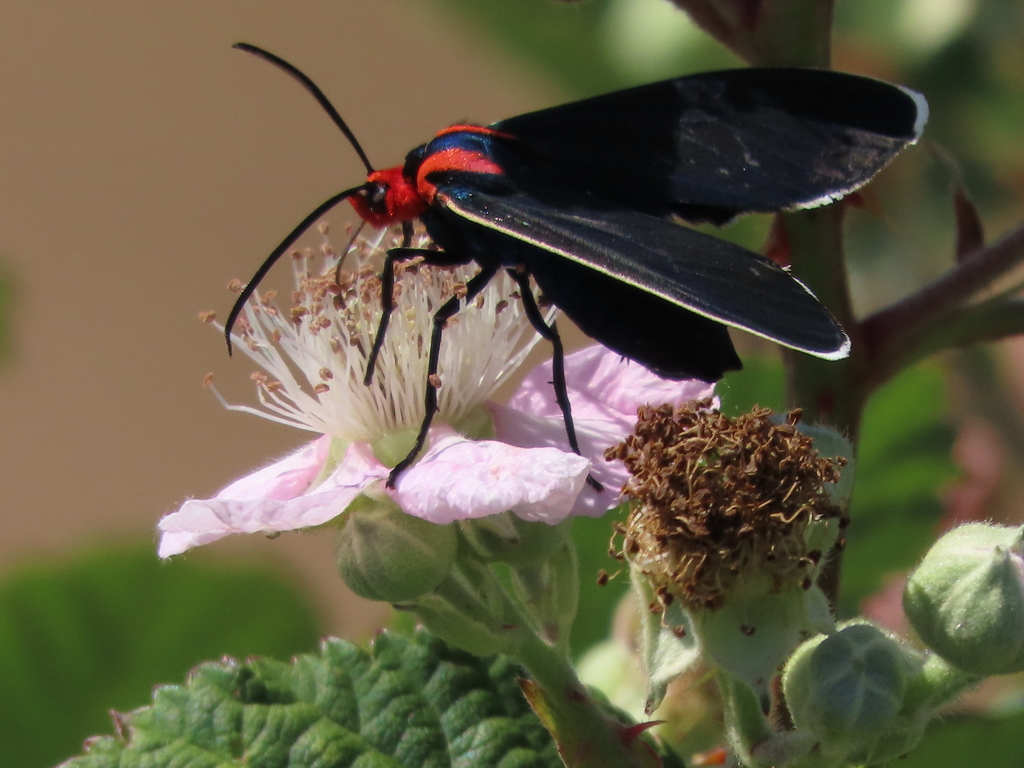
(c) John Hibbard, some rights reserved (CC BY) · licence
Family: Erebidae · Class: Insecta · Order: Lepidoptera
Ctenucha multifaria is a California animal in the Erebidae family.
Ctenucha multifaria is a moth in the family Erebidae, subfamily Arctiinae, commonly known as tiger moths or woolly bears. This species belongs to the genus Ctenucha, which comprises day-flying moths that often mimic wasps or other insects through their coloration and behavior. Adults typically measure 25 to 35 mm (1.0 to 1.4 inches) in wingspan, with narrow forewings and broad hindwings characteristic of the genus. The forewings are generally dark metallic blue-black or greenish-black with a lustrous sheen, while the hindwings may display contrasting colors including orange, red, or yellow patches. The thorax and abdomen are typically dark with metallic reflections, and the antennae are feathery in males and thread-like in females. The species occurs in western North America, with documented populations in California extending from the coastal ranges to the Sierra Nevada foothills. Historical records indicate presence in multiple California counties, though current distribution patterns may be more restricted than historically observed. The species' range likely extends into adjacent states including Oregon and Nevada, following suitable habitat corridors. Ctenucha multifaria inhabits grasslands, meadows, and open woodland areas from near sea level to moderate elevations, typically below 1,500 meters (4,900 feet). Adults are frequently found in areas with abundant wildflowers and native bunch grasses. The species shows preference for habitats that support diverse herbaceous plant communities, particularly those dominated by native perennial grasses and forbs. Larvae likely feed on grasses and low-growing herbaceous plants, following the typical feeding patterns of related Ctenucha species. Adults are diurnal, flying during daylight hours from late spring through early fall, with peak activity typically occurring from May through August. The species exhibits typical arctiinae behavior, with males often patrolling territories in search of females. Mating occurs during daylight hours, and females deposit eggs on or near host plants. Larvae develop through multiple instars, likely overwintering as pupae or late-instar larvae depending on local climate conditions. The species probably completes one generation per year in most locations, though this may vary with elevation and local environmental conditions. No federal or state conservation status has been assigned to Ctenucha multifaria, suggesting the species is not currently considered at risk. However, like many grassland-associated insects, this moth may face pressures from habitat conversion, urban development, and changes in land management practices. California's native grasslands have experienced significant historical losses, with many areas converted to agriculture or urban development. Climate change may also affect the species through alterations in precipitation patterns and temperature regimes that influence host plant communities. The species' current population status and trends remain poorly documented, highlighting the need for targeted surveys to assess its conservation needs.
Classification
Class: Insecta · Order: Lepidoptera · Family: Erebidae
Frequently asked questions
How is Ctenucha multifaria classified?
Ctenucha multifaria belongs to class Insecta, order Lepidoptera, family Erebidae.
What family does Ctenucha multifaria belong to?
Ctenucha multifaria is in the Erebidae family.
What is Ctenucha multifaria?
Ctenucha multifaria is a moth in the family Erebidae, subfamily Arctiinae, commonly known as tiger moths or woolly bears.
Is Ctenucha multifaria found in California?
Yes. Ctenucha multifaria is recorded in California in The California Species Project's catalogue.
Related species
Other California species in the same genus, family, or bioregion.
Data from The California Species Project — 14,000+ California species with verified data from CNPS, CDFW, USFWS, and more.