Cucullia eulepis
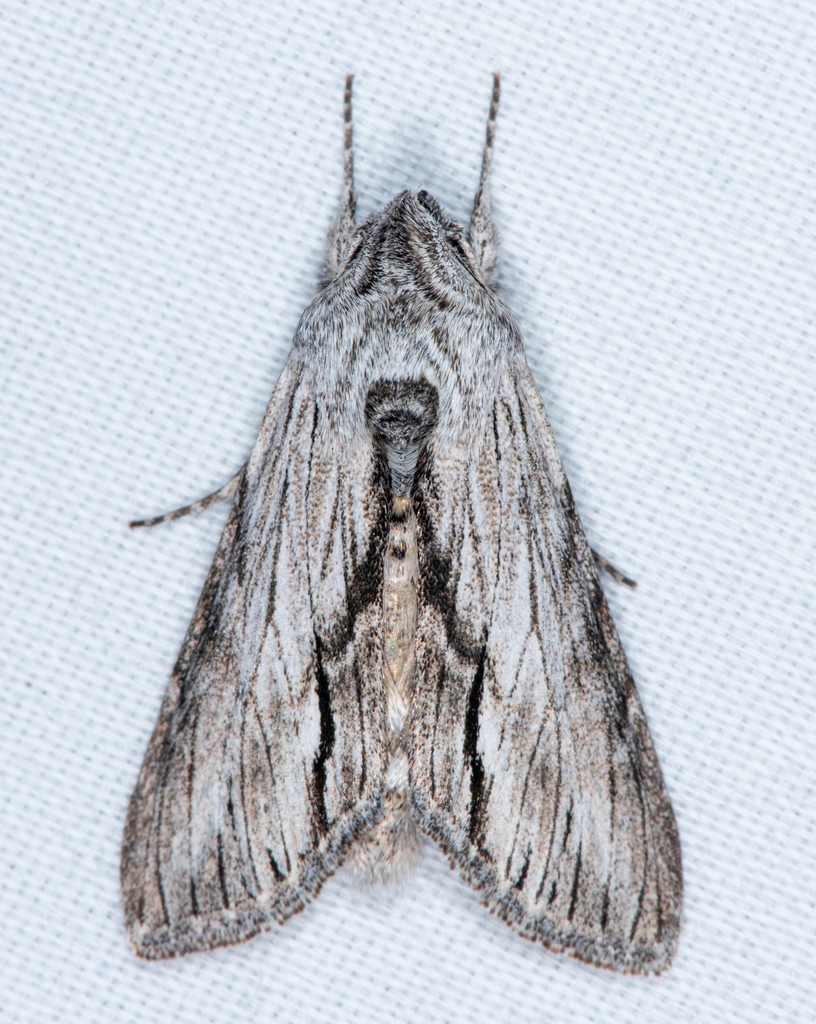
(c) Don Loarie, some rights reserved (CC BY) · licence
Family: Noctuidae · Class: Insecta · Order: Lepidoptera
Cucullia eulepis is a California animal in the Noctuidae family.
Cucullia eulepis is a species of owlet moth in the family Noctuidae. This nocturnal moth exhibits the typical characteristics of the genus Cucullia, with adults displaying cryptic coloration that aids in daytime concealment. The forewings are generally mottled with gray and brown patterns, while the hindwings are lighter in coloration. Like other members of the genus, adults possess a robust body structure and moderately broad wings adapted for their nocturnal lifestyle. The species has a broad distribution across western North America. In California, Cucullia eulepis has been collected throughout the state, though it appears more commonly in southern California. The species extends northward along the eastern, dry edge of the Cascades in Washington and Oregon. Its eastern range limit occurs on the eastern slope of the Rocky Mountains in Colorado. Beyond California, the species is documented from most of Nevada and from Mohave and Maricopa Counties in Arizona (Butterflies and Moths of North America). Cucullia eulepis inhabits arid and semi-arid environments across its range. The species' distribution pattern suggests an association with dry, interior regions rather than coastal areas. In California, specimens have been collected from various elevations and habitat types, indicating some degree of ecological flexibility within suitable climate zones. The moth's presence along the dry eastern slopes of major mountain ranges suggests adaptation to rain shadow environments with reduced precipitation. As a member of the Noctuidae, Cucullia eulepis exhibits typical owlet moth behavior patterns. Adults are active during nighttime hours and are attracted to artificial lights. The species likely follows a univoltine life cycle common to many western Cucullia species, with adults emerging during specific seasonal periods. Larvae, known as cutworms, likely feed on herbaceous plants, though specific host plant relationships for this species have not been well documented in the available literature. The cryptic coloration of adults provides camouflage during daytime rest periods on tree bark, rocks, or other substrates. Cucullia eulepis does not appear on any federal or state conservation lists, suggesting stable populations across its range. However, like many moth species in arid western regions, it may face habitat pressures from development, agricultural conversion, and climate change impacts on its preferred dry environments. The species' broad distribution across multiple states indicates some resilience to environmental variations, though specific population trends have not been systematically monitored. Conservation of native plant communities in arid and semi-arid habitats would benefit this species along with other moths adapted to these ecosystems. Scientific documentation for this species remains limited beyond basic distributional records. The information presented here is based on available sources including museum collections and regional moth databases. Additional research on host plant relationships, detailed life history, and population ecology would enhance understanding of this western North American moth species.
Classification
Class: Insecta · Order: Lepidoptera · Family: Noctuidae
Frequently asked questions
How is Cucullia eulepis classified?
Cucullia eulepis belongs to class Insecta, order Lepidoptera, family Noctuidae.
What family does Cucullia eulepis belong to?
Cucullia eulepis is in the Noctuidae family.
What is Cucullia eulepis?
Cucullia eulepis is a species of owlet moth in the family Noctuidae.
Is Cucullia eulepis found in California?
Yes. Cucullia eulepis is recorded in California in The California Species Project's catalogue.
Related species
Other California species in the same genus, family, or bioregion.
Data from The California Species Project — 14,000+ California species with verified data from CNPS, CDFW, USFWS, and more.