Cucullia florea
Gray Hooded Owlet
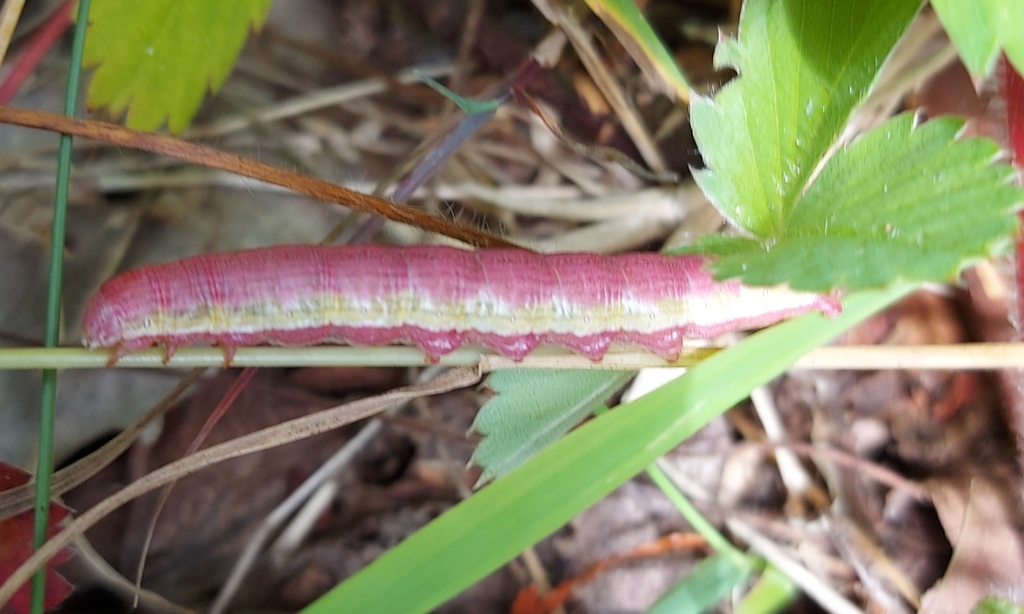
(c) Bex Goreham, some rights reserved (CC BY) · licence
Family: Noctuidae · Class: Insecta · Order: Lepidoptera
Cucullia florea (Gray Hooded Owlet) is a California animal in the Noctuidae family.
The Gray Hooded Owlet (Cucullia florea) is a medium-sized noctuid moth with distinctive gray and white markings. Adults display predominantly gray forewings with subtle darker banding and white-edged wing veins that create a hooded appearance when the wings are folded at rest. The hindwings are lighter, typically pale gray to whitish. Wingspan measurements and specific morphological details for this species have not been well documented in the available literature. Cucullia florea occurs in western North America, with confirmed records from California extending into the Sierra Nevada mountains. The species has been documented at elevations up to 7,500 feet, as recorded at Huntington Lake in Fresno County (Lepidopterists' Society 2013). The moth's range likely extends beyond California, though specific distribution data remains limited in published sources. This species inhabits montane environments, particularly areas with mixed coniferous forests and associated understory vegetation. The elevation preference for higher mountain habitats distinguishes it from some closely related Cucullia species that occur in lower elevation chaparral or desert environments. Specific microhabitat requirements and substrate preferences have not been thoroughly studied. As with other members of the genus Cucullia, the Gray Hooded Owlet is presumed to be nocturnal, with adults attracted to ultraviolet and mercury vapor lights during nighttime surveys (Lepidopterists' Society 2013). Flight period appears to include summer months, with a July record from the Sierra Nevada. The larval host plants for C. florea have not been definitively identified, though other Cucullia species typically utilize plants in the Asteraceae family, particularly goldenrods (Solidago) and asters (Symphyotrichum). Larval biology, including development timing, overwintering strategies, and specific feeding behaviors, remains largely undocumented for this species. The Gray Hooded Owlet does not appear on federal or state conservation lists, and its conservation status has not been formally assessed. The species is tracked in the California Natural Diversity Database as part of the state's broader lepidopteran monitoring efforts (California Department of Fish and Wildlife 2016). Population trends are unknown due to limited systematic survey data. The moth's apparent preference for higher elevation montane habitats may make it vulnerable to climate-related changes in temperature and precipitation patterns, though specific threat assessments have not been conducted. Scientific documentation for this species remains limited despite its inclusion in regional fauna surveys. The information presented here synthesizes available records from lepidopterist society publications and state tracking databases. Additional research is needed to better understand the species' ecology, distribution patterns, and conservation needs. Field observations and verified host plant records would significantly enhance our knowledge of this California endemic moth.
Classification
Class: Insecta · Order: Lepidoptera · Family: Noctuidae
Frequently asked questions
How is Cucullia florea classified?
Cucullia florea belongs to class Insecta, order Lepidoptera, family Noctuidae.
What family does Cucullia florea belong to?
Cucullia florea is in the Noctuidae family.
What is Cucullia florea?
The Gray Hooded Owlet (Cucullia florea) is a medium-sized noctuid moth with distinctive gray and white markings.
Is Cucullia florea found in California?
Yes. Cucullia florea is recorded in California in The California Species Project's catalogue.
Related species
Other California species in the same genus, family, or bioregion.
Data from The California Species Project — 14,000+ California species with verified data from CNPS, CDFW, USFWS, and more.