Cucullia serraticornis
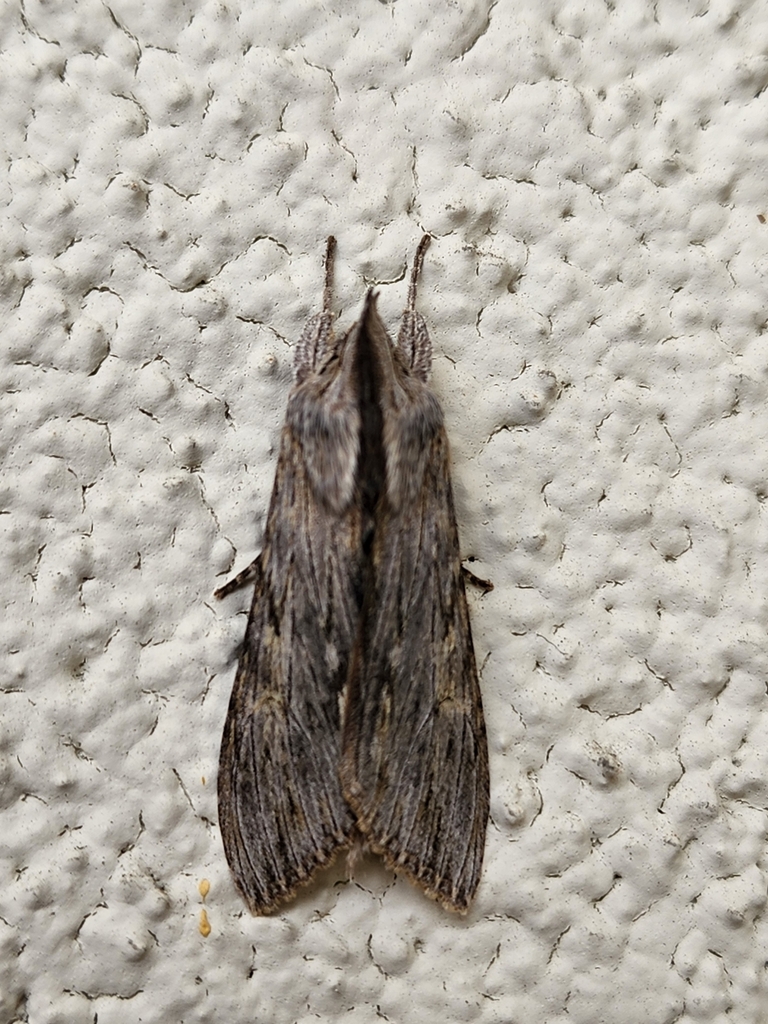
(c) Dan Osipov, some rights reserved (CC BY) · licence
Family: Noctuidae · Class: Insecta · Order: Lepidoptera
Cucullia serraticornis is a California animal in the Noctuidae family.
Cucullia serraticornis is a moth species in the family Noctuidae, commonly known as the serrate-horned cucullia or owlet moth. Adults typically measure 35-45 mm in wingspan, with forewings displaying a mottled gray-brown coloration interspersed with darker longitudinal streaks and subtle whitish markings. The hindwings are lighter, usually pale gray to whitish with darker marginal borders. The species is distinguished by its serrated or saw-toothed antennae, which give rise to its scientific name "serraticornis." The thorax and abdomen are densely covered with gray-brown scales that match the wing coloration. The range and distribution of Cucullia serraticornis in California remains poorly documented in current literature. Limited records suggest the species may occur in scattered locations throughout the state, though specific counties and elevational ranges require further verification. Historical collection data indicates potential presence in both coastal and inland regions, but comprehensive distribution mapping has not been completed. Habitat preferences for this species are not well-established in available sources. Like other Cucullia species, C. serraticornis likely inhabits areas supporting its larval host plants, which typically include members of the Asteraceae family. The species may occur in grasslands, chaparral margins, and disturbed areas where appropriate vegetation is present. Elevation ranges and specific microhabitat requirements remain undocumented. The life cycle of Cucullia serraticornis follows the typical noctuid pattern, with complete metamorphosis through egg, larva, pupa, and adult stages. Adults are nocturnal and are attracted to artificial lights. Flight periods and breeding timing are not well-documented for California populations. Larvae likely feed on asteraceous plants, constructing feeding chambers or shelters within the host plant tissues. Specific host plant relationships and larval feeding behavior require further study. Adults probably feed on nectar from various flowering plants during their active period. The conservation status of Cucullia serraticornis in California is uncertain due to limited survey data and taxonomic confusion within the Cucullia genus. The species lacks state or federal protection status as of December 2025. Population trends are unknown, and no specific conservation measures have been implemented. The primary challenge for assessing this species' status is the lack of comprehensive survey data and potential confusion with closely related Cucullia species. Climate change, habitat loss, and pesticide use may pose threats to populations, though specific impacts have not been quantified. Further research is needed to determine distribution, population status, and ecological requirements before appropriate conservation strategies can be developed.
Classification
Class: Insecta · Order: Lepidoptera · Family: Noctuidae
Frequently asked questions
How is Cucullia serraticornis classified?
Cucullia serraticornis belongs to class Insecta, order Lepidoptera, family Noctuidae.
What family does Cucullia serraticornis belong to?
Cucullia serraticornis is in the Noctuidae family.
What is Cucullia serraticornis?
Cucullia serraticornis is a moth species in the family Noctuidae, commonly known as the serrate-horned cucullia or owlet moth.
Is Cucullia serraticornis found in California?
Yes. Cucullia serraticornis is recorded in California in The California Species Project's catalogue.
Related species
Other California species in the same genus, family, or bioregion.
Data from The California Species Project — 14,000+ California species with verified data from CNPS, CDFW, USFWS, and more.