Cuculus canorus
Common Cuckoo
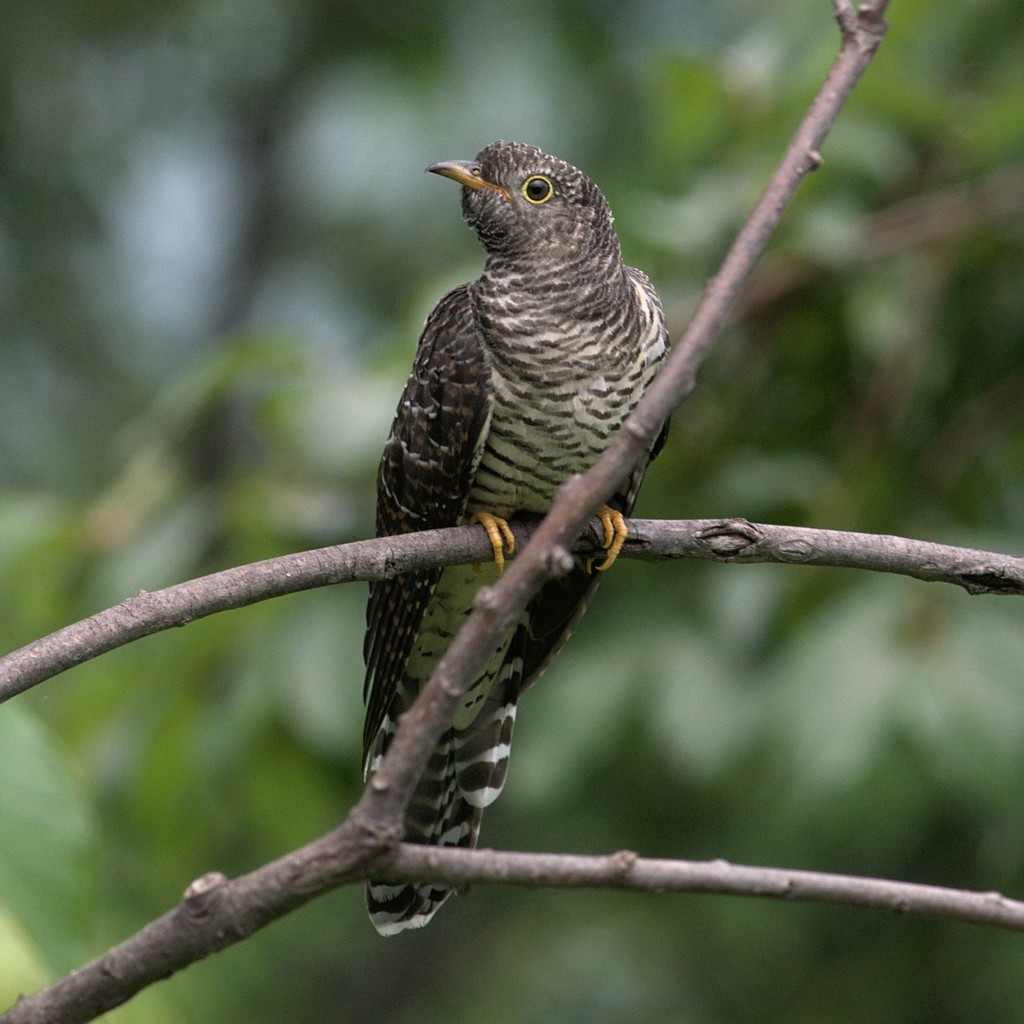
(c) Ramnarayan K, some rights reserved (CC BY) · licence
Family: Cuculidae · Class: Aves · Order: Cuculiformes
Cuculus canorus (Common Cuckoo) is a California animal in the Cuculidae family.
The Common Cuckoo is a medium-sized bird measuring 32 to 34 cm (12.6 to 13.4 inches) in length with a wingspan of 55 to 60 cm (21.7 to 23.6 inches). Adults weigh between 95 and 130 grams. The species exhibits sexual dimorphism in plumage. Males display blue-gray upperparts and head, with white underparts barred in dark gray. Females occur in two color morphs: a gray morph similar to males, and a rufous morph with reddish-brown upperparts barred in black. Both sexes have yellow orbital rings, dark bills, and yellow legs. The tail is long and graduated with white spots along the edges. The Common Cuckoo has a vast global range extending across Europe, Asia, and parts of Africa. In North America, the species is considered a vagrant, with occasional records from Alaska and western Canada. California observations are extremely rare, with only a handful of documented occurrences along the coast and offshore islands. These California records typically involve birds that have strayed far from their normal migration routes or have been assisted by ships. In its native range, the Common Cuckoo inhabits diverse habitats including deciduous and mixed forests, woodland edges, parks, gardens, moorlands, and tundra. The species shows preference for areas with abundant small passerine birds, which serve as host species. During migration and winter, birds utilize more open habitats including scrublands and agricultural areas. The species breeds from sea level to elevations exceeding 2,000 meters in mountainous regions. Common Cuckoos are obligate brood parasites, laying their eggs in the nests of other bird species. Females specialize in parasitizing specific host species, with over 100 documented hosts including robins, warblers, pipits, and wagtails. Each female typically lays 12 to 22 eggs per season, depositing them in different host nests. The cuckoo egg hatches after 11 to 13 days, and the young cuckoo instinctively ejects host eggs and nestlings from the nest. Adults are insectivorous, feeding primarily on caterpillars, beetles, and other insects that many birds avoid due to toxicity. The species is highly migratory, with European populations wintering in sub-Saharan Africa. The Common Cuckoo is not federally listed in the United States, as it is not considered a resident species. Globally, the IUCN Red List classifies the species as Least Concern, though populations in some regions have declined due to habitat loss and changes in agricultural practices. In Europe, the species has experienced significant declines since the 1980s, with breeding bird surveys documenting decreases of 20 to 60 percent in several countries. The decline is attributed to reduced availability of host species, changes in land use, and climate change affecting migration timing and breeding success.
Classification
Class: Aves · Order: Cuculiformes · Family: Cuculidae
Frequently asked questions
How is Cuculus canorus classified?
Cuculus canorus belongs to class Aves, order Cuculiformes, family Cuculidae.
What family does Cuculus canorus belong to?
Cuculus canorus is in the Cuculidae family.
What is Cuculus canorus?
The Common Cuckoo is a medium-sized bird measuring 32 to 34 cm (12.6 to 13.4 inches) in length with a wingspan of 55 to 60 cm (21.7 to 23.6 inches).
Is Cuculus canorus found in California?
Yes. Cuculus canorus is recorded in California in The California Species Project's catalogue.
Related species
Other California species in the same genus, family, or bioregion.
Data from The California Species Project — 14,000+ California species with verified data from CNPS, CDFW, USFWS, and more.