Culiseta incidens
Cold Weather Mosquito
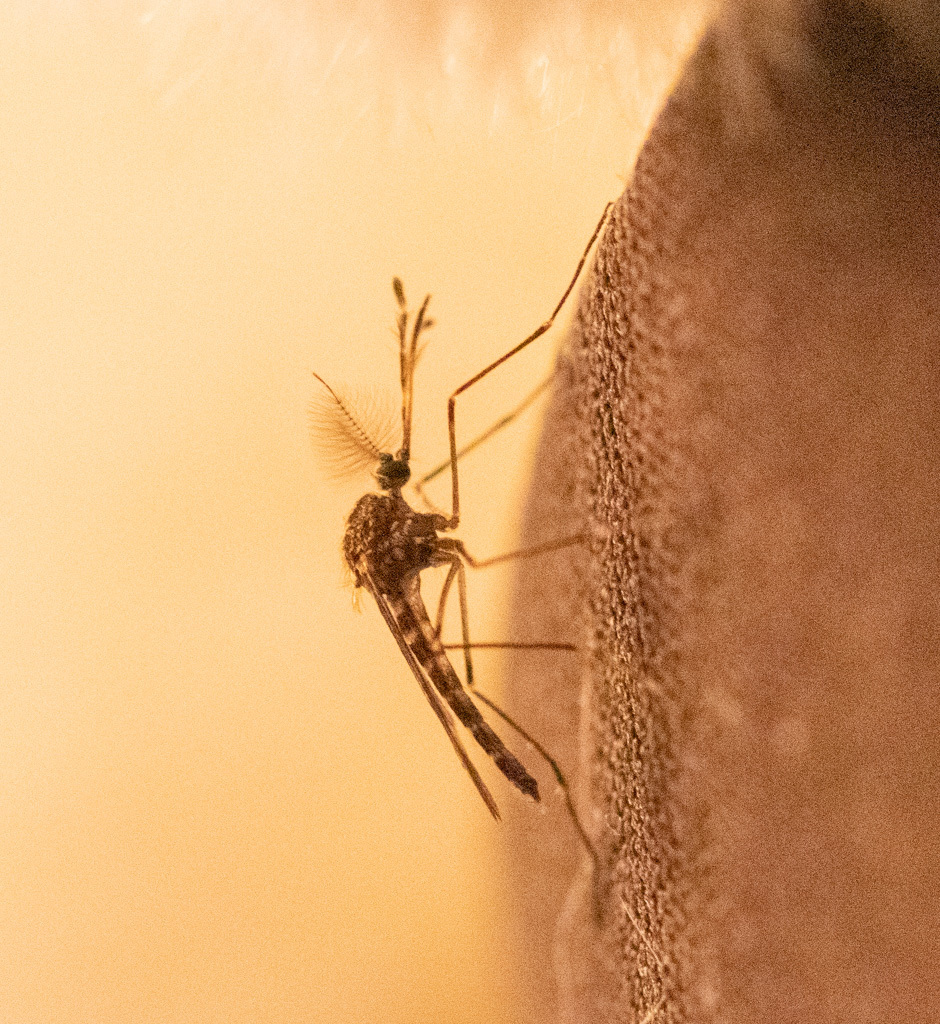
(c) avocat, some rights reserved (CC BY) · licence
Family: Culicidae · Class: Insecta · Order: Diptera
Culiseta incidens (Cold Weather Mosquito) is a California animal in the Culicidae family.
The cold weather mosquito (Culiseta incidens) is a relatively large mosquito species in the family Culicidae. Adults typically measure 4-6 mm in length, with females being slightly larger than males. The species exhibits dark coloration with brownish-black scales on the thorax and abdomen. The wings display mottled patterns with dark and light scales, and the legs show distinctive banding patterns with alternating dark and light segments. Males possess distinctly plumose antennae, while females have simple antennae adapted for host detection. Culiseta incidens occurs throughout much of North America, ranging from Canada south through the United States. In California, the species is distributed across various regions, though specific county-level distribution data requires further documentation. The species demonstrates a broad geographic range that extends across multiple climate zones and elevation gradients. This mosquito inhabits diverse aquatic environments where larvae develop. Breeding sites include temporary and permanent freshwater pools, tree holes, artificial containers, and other water-holding structures. Adults are active during cooler periods, with peak activity often occurring during spring and fall months when temperatures are moderate. The species shows adaptation to cooler climates compared to many other mosquito species, hence its common name. Larvae develop in standing water environments where they filter-feed on organic matter and microorganisms. Females require blood meals for egg development and will feed on various vertebrate hosts including mammals, birds, and occasionally reptiles and amphibians. Males feed exclusively on plant nectar and other sugar sources. Mating typically occurs in swarms near breeding sites. After mating, females seek blood meals and subsequently deposit eggs on water surfaces or moist substrates near water. Larvae undergo four instars before pupating, with development time dependent on water temperature and food availability. Adults may overwinter in protected locations, emerging when conditions become favorable. The species plays ecological roles as both predator and prey within aquatic and terrestrial food webs. Larvae consume organic debris and microorganisms in aquatic environments, while adults serve as food sources for various predators including birds, bats, spiders, and other arthropods. As with other mosquito species, females may serve as vectors for various pathogens, though the specific disease transmission capabilities of Culiseta incidens require further research documentation. Currently, Culiseta incidens does not hold federal or state conservation listing status. The species appears to maintain stable populations across its range, likely benefiting from human-modified environments that create additional breeding habitat through water storage and landscape irrigation. Climate change may affect the species' distribution and seasonal activity patterns, potentially expanding its range northward as temperatures warm. However, comprehensive population monitoring data and specific threat assessments for this species remain limited. Scientific documentation for this species remains limited compared to medically important mosquito species. If you have additional verified information about this species' biology, distribution, or ecology, please contact us to help improve this species account.
Classification
Class: Insecta · Order: Diptera · Family: Culicidae
Frequently asked questions
How is Culiseta incidens classified?
Culiseta incidens belongs to class Insecta, order Diptera, family Culicidae.
What family does Culiseta incidens belong to?
Culiseta incidens is in the Culicidae family.
What is Culiseta incidens?
The cold weather mosquito (Culiseta incidens) is a relatively large mosquito species in the family Culicidae.
Is Culiseta incidens found in California?
Yes. Culiseta incidens is recorded in California in The California Species Project's catalogue.
Related species
Other California species in the same genus, family, or bioregion.
Data from The California Species Project — 14,000+ California species with verified data from CNPS, CDFW, USFWS, and more.