Culiseta inornata
Winter Marsh Mosquito
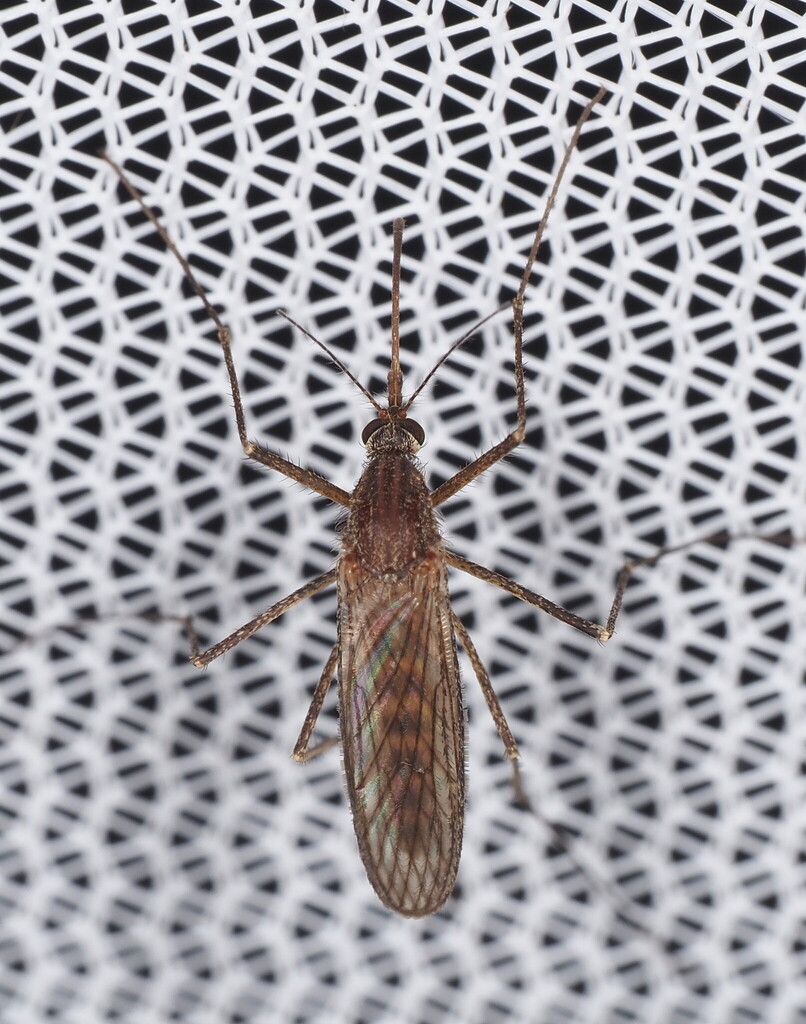
(c) Rosario, some rights reserved (CC BY) · licence
Family: Culicidae · Class: Insecta · Order: Diptera
Culiseta inornata (Winter Marsh Mosquito) is a California animal in the Culicidae family.
The winter marsh mosquito (Culiseta inornata) is a medium-sized mosquito species in the family Culicidae. Adults are characterized by dark brown to black coloration with pale scaling patterns on the wings and legs. Females are typically larger than males, measuring approximately 4-6 mm in length, with the characteristic long proboscis adapted for blood feeding. The species lacks the distinctive markings found on many other mosquito species, hence the name "inornata" meaning unadorned. Culiseta inornata has a broad distribution across North America, including California where it occurs throughout much of the state. The species is found from sea level to moderate elevations, with populations documented in both coastal and inland regions. In California, the winter marsh mosquito occurs in suitable wetland habitats across multiple counties, though specific distribution data within the state requires further documentation. This species inhabits a variety of wetland environments, with a particular preference for marshes, shallow ponds, and other standing water bodies. Unlike many mosquito species that breed primarily in warmer months, C. inornata is adapted to cooler conditions and can be active during fall and winter periods when temperatures permit. The larvae develop in both temporary and semi-permanent water bodies, including marsh edges, shallow pools, and areas with emergent vegetation. Adults seek shelter in vegetation and other protected areas during inactive periods. The winter marsh mosquito exhibits seasonal activity patterns that distinguish it from most other mosquito species. Adults are most active during cooler months, typically fall through early spring, when other mosquito species are dormant. Females require blood meals for egg development and will feed on various vertebrate hosts including birds, mammals, and occasionally humans. After mating, females deposit eggs in batches on water surfaces or moist substrates near water edges. Larvae feed on organic matter, bacteria, and microscopic organisms in the water column, progressing through four instars before pupating. The species can complete multiple generations per year when conditions are favorable. Currently, Culiseta inornata does not have any special conservation status at federal or state levels. As a native species, it plays a role in wetland ecosystems both as a consumer of organic matter in aquatic environments and as prey for various predators including fish, amphibians, and insectivorous birds. However, like many wetland-dependent species, winter marsh mosquitoes may face habitat pressures from wetland loss and degradation. Climate change could potentially affect the species' seasonal activity patterns and geographic distribution, though specific impacts have not been well studied. The species is sometimes subject to mosquito control activities in areas where it overlaps with human populations, though it is generally considered less of a nuisance species compared to summer-active mosquitoes due to its seasonal activity pattern and lower abundance in urban areas.
Classification
Class: Insecta · Order: Diptera · Family: Culicidae
Frequently asked questions
How is Culiseta inornata classified?
Culiseta inornata belongs to class Insecta, order Diptera, family Culicidae.
What family does Culiseta inornata belong to?
Culiseta inornata is in the Culicidae family.
What is Culiseta inornata?
The winter marsh mosquito (Culiseta inornata) is a medium-sized mosquito species in the family Culicidae.
Is Culiseta inornata found in California?
Yes. Culiseta inornata is recorded in California in The California Species Project's catalogue.
Related species
Other California species in the same genus, family, or bioregion.
Data from The California Species Project — 14,000+ California species with verified data from CNPS, CDFW, USFWS, and more.