Cupido amyntula
Western Tailed-Blue
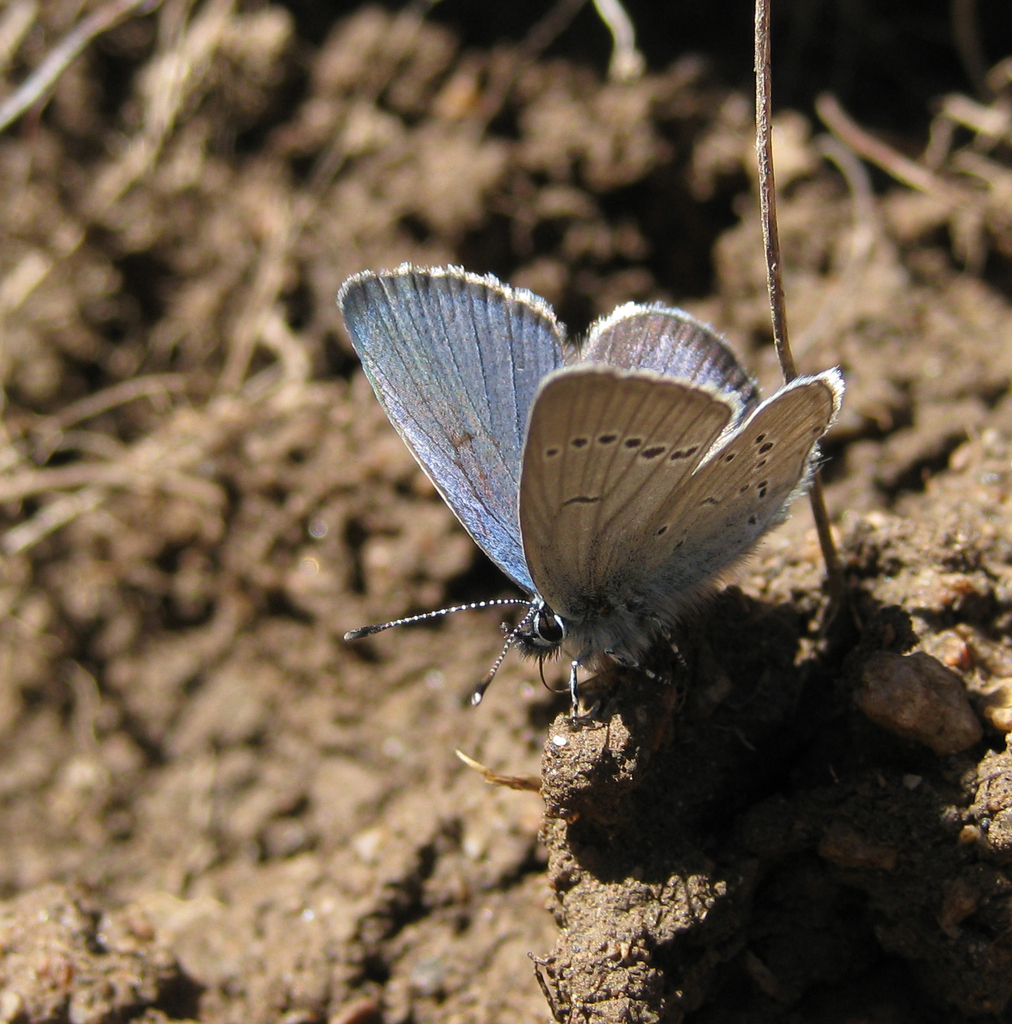
(c) Oleg Kosterin, some rights reserved (CC BY) · licence
Family: Lycaenidae · Class: Insecta · Order: Lepidoptera
Cupido amyntula (Western Tailed-Blue) is a California animal in the Lycaenidae family.
The Western Tailed-Blue is a small butterfly measuring 18 to 25 mm (0.7 to 1.0 inches) in wingspan. Males display bright blue dorsal wing surfaces with narrow black borders, while females are predominantly brown with blue scaling near the wing bases. The ventral surfaces of both sexes are pale gray with small black spots outlined in white. The hindwings feature short, hair-like tails and orange marginal spots near the anal angle. This species is distinguished from similar blues by the combination of tailed hindwings and its association with leguminous host plants. The Western Tailed-Blue exhibits one of the broadest distributions among North American blues, ranging from Alaska south through western North America and all western mountains to northern Baja California, east across Canada's prairie provinces to northern Michigan, Ontario, and the Gaspé Peninsula. In California, the species occurs throughout the Sierra Nevada, Cascade Range, Coast Ranges, and Transverse Ranges, with populations documented from sea level to approximately 3,350 meters (11,000 feet) elevation. This butterfly inhabits diverse environments including mountain meadows, grasslands, prairies, forest clearings, riparian corridors, and disturbed areas such as roadsides and agricultural margins. The species demonstrates considerable ecological flexibility, occupying both mesic mountain habitats and arid lowland sites where suitable host plants occur. Adults are frequently observed nectaring on various wildflowers including asters, clovers, and buckwheats. Western Tailed-Blues are specialized herbivores whose larvae feed exclusively on legumes with inflated pods including false lupine (Thermopsis), milkvetch (Astragalus), crazyweed (Oxytropis), and vetches (Vicia and Lathyrus). Females deposit single eggs on flower buds or young seed pods. Larvae feed internally on developing seeds, completing development within the pod. The species produces one to three generations annually depending on latitude and elevation, with flight periods extending from April through September at lower elevations. Northern and high-elevation populations typically produce one generation, while multiple broods occur in warmer regions. Adults exhibit rapid, erratic flight patterns and males engage in territorial behavior around host plant patches. The Western Tailed-Blue is not federally or state listed and appears to maintain stable populations across most of its extensive range. The species' broad habitat tolerance and utilization of diverse leguminous hosts contribute to its ecological resilience. However, localized declines may occur due to habitat conversion, livestock grazing impacts on native legume communities, and invasive plant species. Agricultural practices that maintain weedy borders and native plant diversity can benefit this species. Climate change may affect high-elevation populations through altered precipitation patterns and temperature regimes that influence host plant phenology and distribution.
Classification
Class: Insecta · Order: Lepidoptera · Family: Lycaenidae
Frequently asked questions
How is Cupido amyntula classified?
Cupido amyntula belongs to class Insecta, order Lepidoptera, family Lycaenidae.
What family does Cupido amyntula belong to?
Cupido amyntula is in the Lycaenidae family.
What is Cupido amyntula?
The Western Tailed-Blue is a small butterfly measuring 18 to 25 mm (0.7 to 1.0 inches) in wingspan.
Is Cupido amyntula found in California?
Yes. Cupido amyntula is recorded in California in The California Species Project's catalogue.
Related species
Other California species in the same genus, family, or bioregion.
Data from The California Species Project — 14,000+ California species with verified data from CNPS, CDFW, USFWS, and more.