Cupido comyntas
Eastern Tailed-Blue
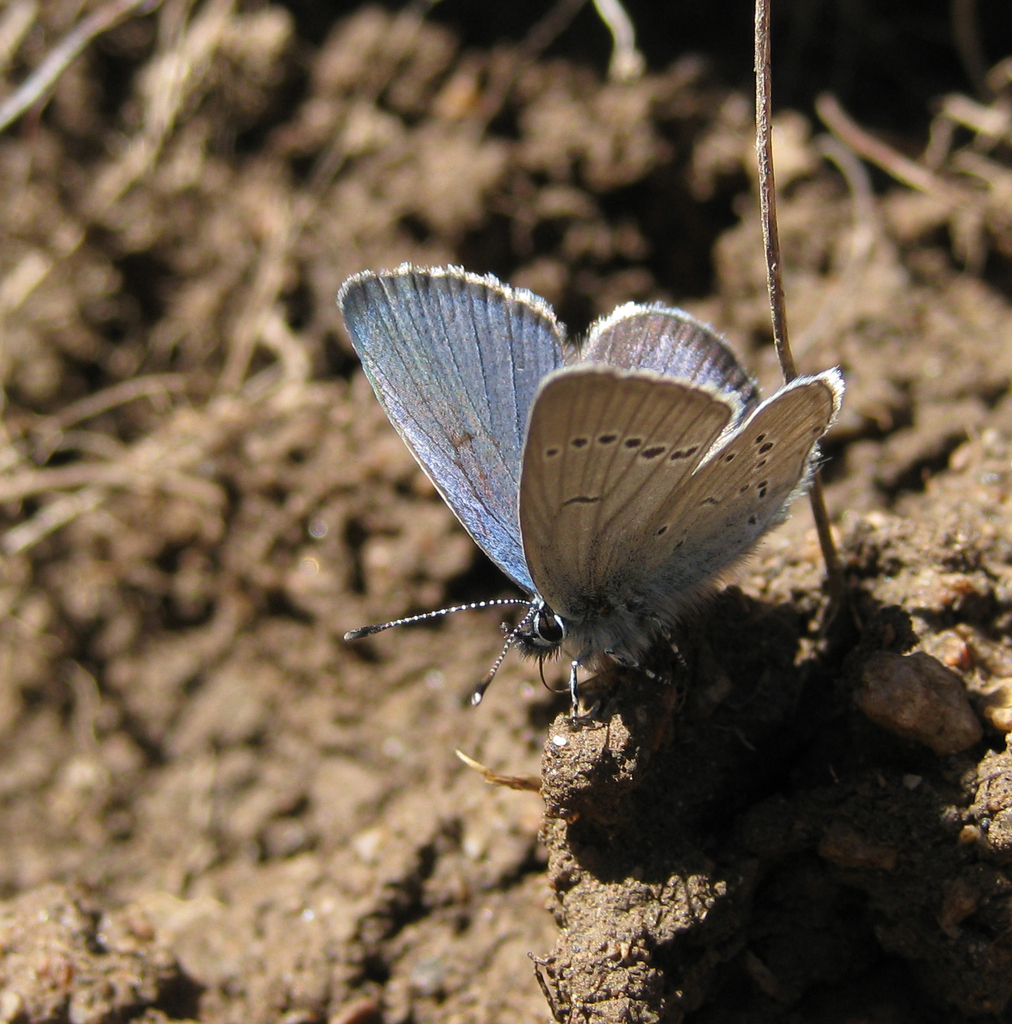
(c) Oleg Kosterin, some rights reserved (CC BY) · licence
Family: Lycaenidae · Class: Insecta · Order: Lepidoptera
Cupido comyntas (Eastern Tailed-Blue) is a California animal in the Lycaenidae family.
The Eastern Tailed-Blue is a small butterfly with a wingspan measuring 18 to 25 millimeters (0.7 to 1.0 inches). Males display bright blue dorsal wing surfaces with narrow black borders, while females are typically brownish-gray with varying amounts of blue coloration near the wing bases. Both sexes exhibit grayish-white undersides marked with small black spots and orange crescents near the hindwing margins. The species is distinguished by characteristic thread-like tails extending from the hindwings and distinctive orange eyespots on the ventral hindwing surface. The Eastern Tailed-Blue ranges across southeast Canada and the eastern United States, extending west to western North Dakota, central Colorado, and central Texas. The species also occurs from southeastern Arizona and western New Mexico through west Texas, with populations extending south to Costa Rica. In California, this species represents a marginal occurrence, primarily documented in southeastern regions where suitable habitat and host plants are present. This butterfly inhabits open areas including fields, meadows, prairies, roadsides, and disturbed sites where leguminous host plants are abundant. The species thrives in areas with sparse to moderate vegetation cover and shows tolerance for human-modified landscapes. Elevational preferences vary across the range, with populations occurring from sea level to moderate elevations in mountainous regions. Eastern Tailed-Blues are multivoltine, producing two to four broods annually depending on latitude and local climate conditions. Adults are active from early spring through late fall, with peak abundance typically occurring in late summer. Females deposit small, white eggs singly on flower buds or young leaves of host plants. Larvae are green with diagonal white stripes and feed primarily on flowers and developing seeds rather than leaves. The species overwinters as pupae in leaf litter or soil debris near host plants. Host plants include numerous species in the pea family (Fabaceae), with documented use of yellow sweet clover (Melilotus officinalis), alfalfa (Medicago sativa), various vetch species (Vicia), clover (Trifolium), wild pea (Lathyrus), and bush clover (Lespedeza). This broad host plant range contributes to the species' adaptability and widespread distribution across diverse habitats. The Eastern Tailed-Blue currently lacks federal or state conservation listing status and maintains stable populations across most of its range. The species benefits from its association with common leguminous plants, many of which thrive in agricultural and disturbed environments. However, intensive agricultural practices and habitat conversion can locally impact populations through elimination of native host plants and application of pesticides. Climate change may affect the northern and southern range limits, potentially altering distribution patterns over time. Conservation efforts focus on maintaining diverse plant communities that support native legume species and reducing pesticide applications in areas where the butterfly occurs.
Classification
Class: Insecta · Order: Lepidoptera · Family: Lycaenidae
Frequently asked questions
How is Cupido comyntas classified?
Cupido comyntas belongs to class Insecta, order Lepidoptera, family Lycaenidae.
What family does Cupido comyntas belong to?
Cupido comyntas is in the Lycaenidae family.
What is Cupido comyntas?
The Eastern Tailed-Blue is a small butterfly with a wingspan measuring 18 to 25 millimeters (0.7 to 1.0 inches).
Is Cupido comyntas found in California?
Yes. Cupido comyntas is recorded in California in The California Species Project's catalogue.
Related species
Other California species in the same genus, family, or bioregion.
Data from The California Species Project — 14,000+ California species with verified data from CNPS, CDFW, USFWS, and more.