Cyanocitta cristata
Blue Jay
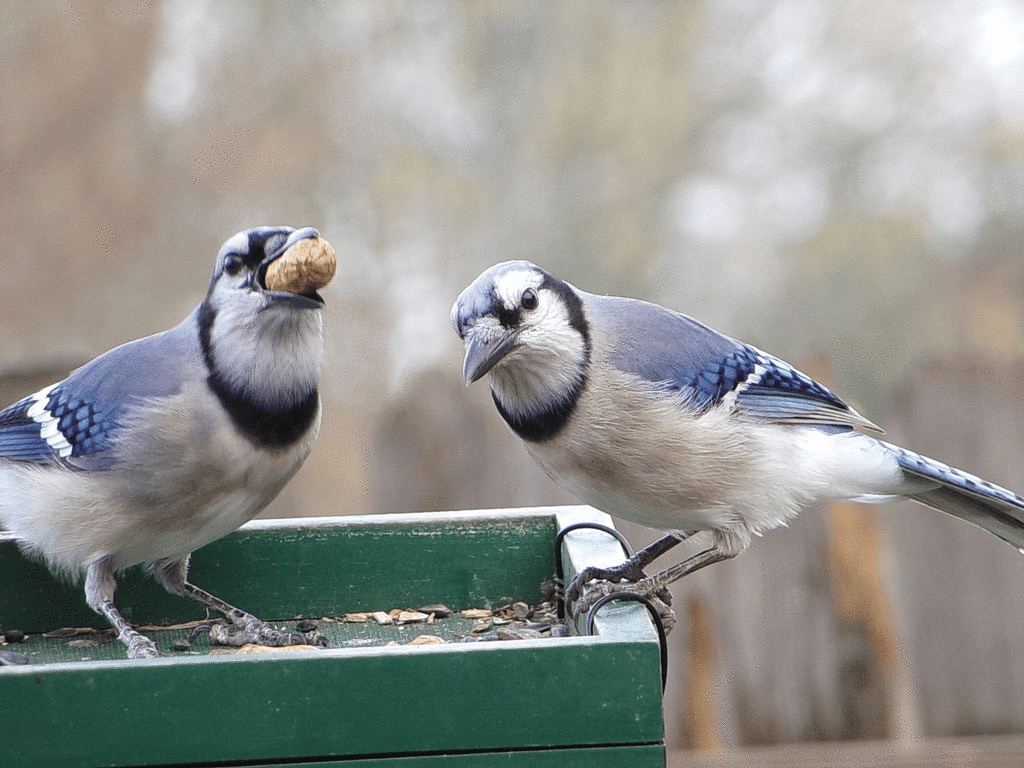
(c) Texas Bird Family, some rights reserved (CC BY) · licence
Family: Corvidae · Class: Aves · Order: Passeriformes
Cyanocitta cristata (Blue Jay) is a California animal in the Corvidae family.
The Blue Jay is a medium-sized corvid measuring 28 to 30 centimeters (11 to 12 inches) in length with a wingspan of 34 to 43 centimeters (13 to 17 inches). Adults weigh between 70 to 100 grams (2.5 to 3.5 ounces). The species displays bright blue upperparts with white underparts and a distinctive blue crest that can be raised or lowered depending on the bird's mood or alertness level. Black markings form a collar around the neck and extend across the face, while the wings and tail feature black barring against the blue background. Males and females appear similar in coloration, though males are typically slightly larger. Historically absent from California, Blue Jays have established populations in the western United States through range expansion beginning in the 1960s. The species now occurs in scattered locations throughout California, with established populations documented in urban and suburban areas of the Central Valley, coastal regions, and foothill communities. Natural range expansion has been supplemented by human-mediated introductions, particularly in residential areas where bird feeding is common. Blue Jays inhabit mixed woodlands, oak forests, residential areas with mature trees, and urban parks. The species shows particular preference for areas with oak trees, which provide both nesting sites and acorns for food storage. In California, they occupy elevations from sea level to approximately 1,200 meters (4,000 feet), favoring edge habitats where forests meet open areas. Suburban neighborhoods with large trees and bird feeders have become important habitat in their expanding western range. Blue Jays are omnivorous, consuming insects, nuts, seeds, eggs, and nestlings of other birds. Acorns constitute a major food source, with individuals capable of storing thousands of acorns for winter consumption. This caching behavior contributes to oak forest regeneration through seed dispersal. The species exhibits complex social behavior, often foraging in family groups and participating in mobbing behavior against predators. Breeding occurs from April through July, with pairs constructing stick nests 3 to 9 meters (10 to 30 feet) high in tree forks. Females lay 3 to 6 eggs, which are incubated for 17 to 18 days. Both parents feed the nestlings, which fledge after 17 to 21 days. Blue Jays are not federally or state listed as threatened or endangered. The species has stable populations throughout most of its range and continues expanding westward. In California, populations appear to be increasing in suitable habitat, particularly in urban and suburban environments. The species faces typical urban wildlife challenges including window strikes, domestic cat predation, and habitat fragmentation, but these threats do not appear to significantly impact overall population stability. Climate change may influence future distribution patterns, potentially facilitating continued range expansion into higher elevations and northern latitudes.
Classification
Class: Aves · Order: Passeriformes · Family: Corvidae
Frequently asked questions
How is Cyanocitta cristata classified?
Cyanocitta cristata belongs to class Aves, order Passeriformes, family Corvidae.
What family does Cyanocitta cristata belong to?
Cyanocitta cristata is in the Corvidae family.
What is Cyanocitta cristata?
The Blue Jay is a medium-sized corvid measuring 28 to 30 centimeters (11 to 12 inches) in length with a wingspan of 34 to 43 centimeters (13 to 17 inches).
Is Cyanocitta cristata found in California?
Yes. Cyanocitta cristata is recorded in California in The California Species Project's catalogue.
Related species
Other California species in the same genus, family, or bioregion.
Data from The California Species Project — 14,000+ California species with verified data from CNPS, CDFW, USFWS, and more.