Cyclocephala pasadenae
Southwestern Masked Chafer
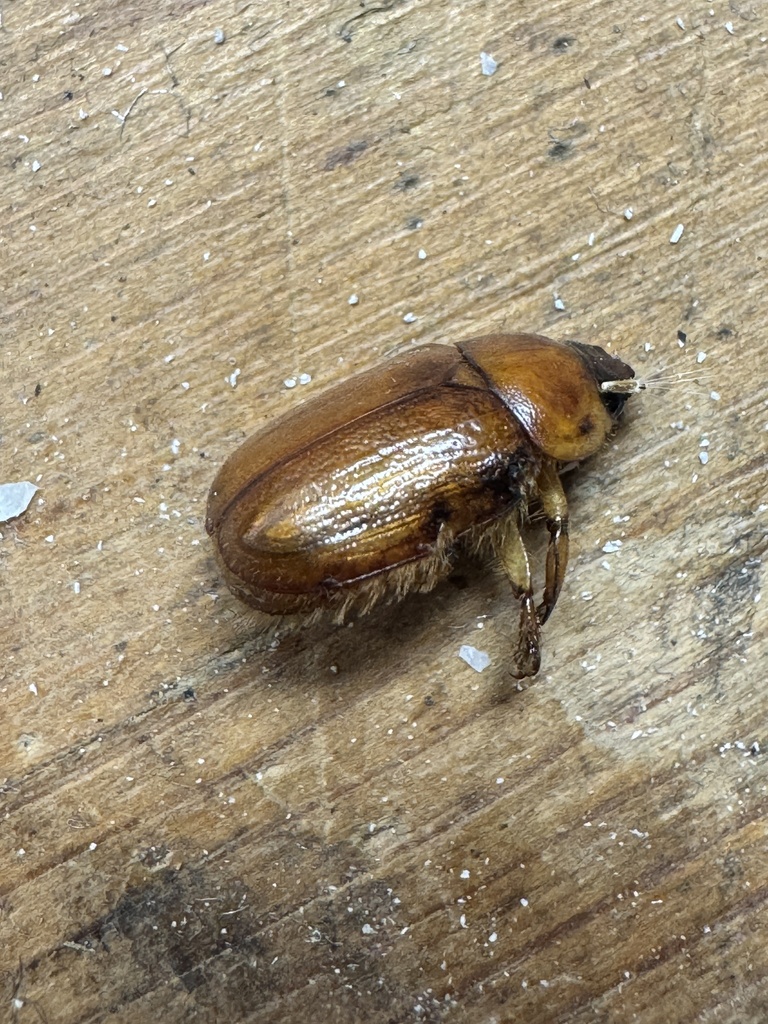
(c) Bob Dodge, some rights reserved (CC BY) · licence
Family: Scarabaeidae · Class: Insecta · Order: Coleoptera
Cyclocephala pasadenae (Southwestern Masked Chafer) is a California animal in the Scarabaeidae family.
The Southwestern Masked Chafer (Cyclocephala pasadenae) is a small scarab beetle belonging to the subfamily Dynastinae. Adults are typically brown in coloration with a robust, oval body characteristic of masked chafers. Like other members of the genus Cyclocephala, adults possess clubbed antennae and strong legs adapted for burrowing. The species can be distinguished from closely related masked chafers through detailed examination of male genitalia and other morphological features, though field identification often requires expert taxonomic verification. Cyclocephala pasadenae occurs in the southwestern United States, with records from California, Arizona, and Nevada. The species appears to have a limited distribution within these states, though specific county-level occurrence data remains poorly documented. Historical records suggest the species may have been more widespread in suitable habitat throughout the southwestern region. The species inhabits open grasslands, prairie environments, and areas with sandy or well-drained soils typical of southwestern ecosystems. Adults are associated with areas containing native bunch grasses and forbs, where they feed on plant materials. The species appears to prefer habitats with minimal disturbance, including remnant grasslands and natural areas that have retained native plant communities. Adult Southwestern Masked Chafers are primarily nocturnal, becoming active during warm evenings when they engage in feeding and mating behaviors. Adults feed on leaves, flowers, and other plant tissues of various herbaceous plants and grasses. The species follows a typical scarab beetle life cycle, with larvae developing in soil where they feed on organic matter and plant roots. Larval development likely requires one to two years, with adults emerging during the summer months. Females deposit eggs in soil, where larvae remain through winter months in a state of reduced activity. The conservation status of Cyclocephala pasadenae has not been formally evaluated by federal or state agencies, and the species lacks specific protection under endangered species legislation. However, the species has been identified as a Species of Greatest Conservation Need in some state wildlife action plans, indicating concerns about population trends and habitat availability (BugGuide). Primary threats to the species likely include habitat loss and fragmentation due to agricultural conversion, urban development, and alteration of native grassland ecosystems. The conversion of native prairies and grasslands to agriculture and development has eliminated much of the species' historical habitat throughout the southwestern United States. Climate change may pose additional challenges through altered precipitation patterns and temperature regimes that affect both adult activity periods and larval development. The species' association with remnant native grasslands makes it particularly vulnerable to ongoing habitat degradation and loss. Scientific documentation of this species' specific ecological requirements, population trends, and current distribution remains limited, hindering comprehensive conservation assessment and management planning.
Classification
Class: Insecta · Order: Coleoptera · Family: Scarabaeidae
Frequently asked questions
How is Cyclocephala pasadenae classified?
Cyclocephala pasadenae belongs to class Insecta, order Coleoptera, family Scarabaeidae.
What family does Cyclocephala pasadenae belong to?
Cyclocephala pasadenae is in the Scarabaeidae family.
What is Cyclocephala pasadenae?
The Southwestern Masked Chafer (Cyclocephala pasadenae) is a small scarab beetle belonging to the subfamily Dynastinae.
Is Cyclocephala pasadenae found in California?
Yes. Cyclocephala pasadenae is recorded in California in The California Species Project's catalogue.
Related species
Other California species in the same genus, family, or bioregion.
Data from The California Species Project — 14,000+ California species with verified data from CNPS, CDFW, USFWS, and more.