Cyclocephala wandae
Wandae Dune Beetle
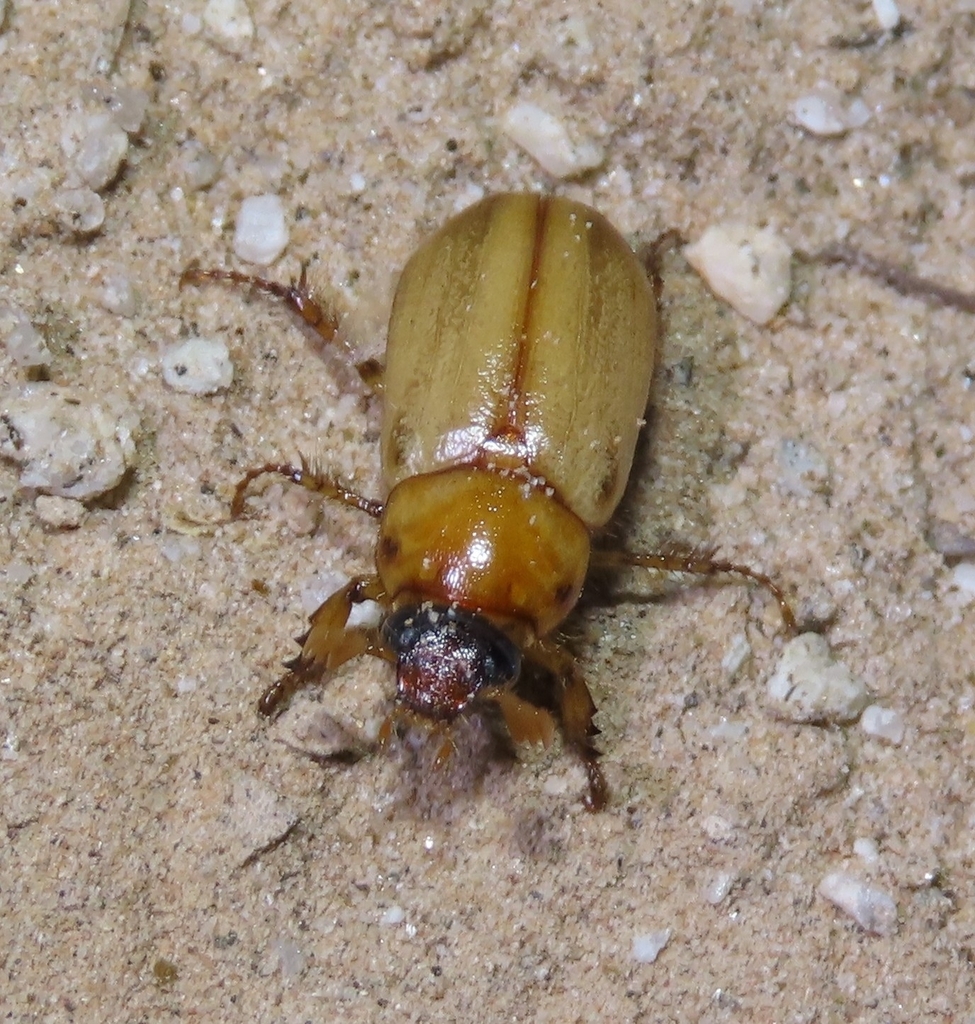
(c) Bob Miller, some rights reserved (CC BY) · licence
Family: Scarabaeidae · Class: Insecta · Order: Coleoptera
Conservation status: G1G2 S1
Cyclocephala wandae (Wandae Dune Beetle) is a California animal in the Scarabaeidae family.
Cyclocephala wandae is a small scarab beetle endemic to the sand dune systems of southeastern California and adjacent Mexico. Adults measure 6.6 to 7.5 mm (0.26 to 0.30 inches) in length and display a light brown coloration that provides camouflage against sandy substrates (Hardy 1974). The species belongs to the tribe Cyclocephalini within the family Scarabaeidae and exhibits the typical robust, oval body form characteristic of scarab beetles. This beetle occurs exclusively in the Algodones Dunes of Imperial County, California, and potentially in the Gran Desierto de Altar dune systems of northwestern Mexico. The species has an extremely restricted range, with evidence suggesting it is endemic to active sand dune environments within this approximately 5,000 square mile region of the Sonoran Desert (Andrews et al. 1979). The California population is confined to the Algodones Dunes, also known as the Imperial Sand Dunes, which represent the largest active sand dune system in California. Cyclocephala wandae inhabits active sand dunes where it has adapted to the shifting sandy environment. The species appears to be closely associated with dune systems that maintain active sand movement and sparse vegetation. Specific microhabitat requirements within the dune environment remain poorly documented, though the beetle's morphology and coloration suggest adaptation to a fossorial or semi-fossorial lifestyle in sandy substrates. Ecological information for this species is extremely limited. Like other members of the genus Cyclocephala, adults likely emerge during specific seasonal periods, possibly coinciding with favorable temperature and moisture conditions. The species' feeding habits, reproductive biology, and life cycle duration have not been documented in the scientific literature. Given the harsh desert dune environment it inhabits, the beetle likely exhibits behavioral and physiological adaptations for water conservation and temperature regulation. Cyclocephala wandae has no current federal listing status under the Endangered Species Act, despite being included in a 2006 petition to list 16 insect species from the Algodones Dunes region as threatened or endangered (Federal Register 2006). The species holds a global rank of G1G2, indicating it is critically imperiled to imperiled globally, with a state rank of S1 in California, signifying critical imperilment at the state level. Population trends and current abundance remain unknown due to limited survey efforts. The primary threats to this species likely include habitat destruction from off-road vehicle recreation, sand mining, renewable energy development, and potential climate change impacts on desert ecosystems. The restricted range and specialized habitat requirements make this beetle particularly vulnerable to human disturbances and environmental changes affecting the Algodones Dunes ecosystem. Comprehensive surveys and ecological studies are needed to assess population status and develop appropriate conservation strategies for this poorly known desert endemic.
Classification
Class: Insecta · Order: Coleoptera · Family: Scarabaeidae
Conservation status
G1G2 S1
Frequently asked questions
How is Cyclocephala wandae classified?
Cyclocephala wandae belongs to class Insecta, order Coleoptera, family Scarabaeidae.
What family does Cyclocephala wandae belong to?
Cyclocephala wandae is in the Scarabaeidae family.
Is Cyclocephala wandae protected or of conservation concern?
Cyclocephala wandae carries the following status: G1G2 S1.
What is Cyclocephala wandae?
Cyclocephala wandae is a small scarab beetle endemic to the sand dune systems of southeastern California and adjacent Mexico.
Is Cyclocephala wandae found in California?
Yes. Cyclocephala wandae is recorded in California in The California Species Project's catalogue.
Related species
Other California species in the same genus, family, or bioregion.
Data from The California Species Project — 14,000+ California species with verified data from CNPS, CDFW, USFWS, and more.