Cycloneda polita
Western Polished Lady Beetle
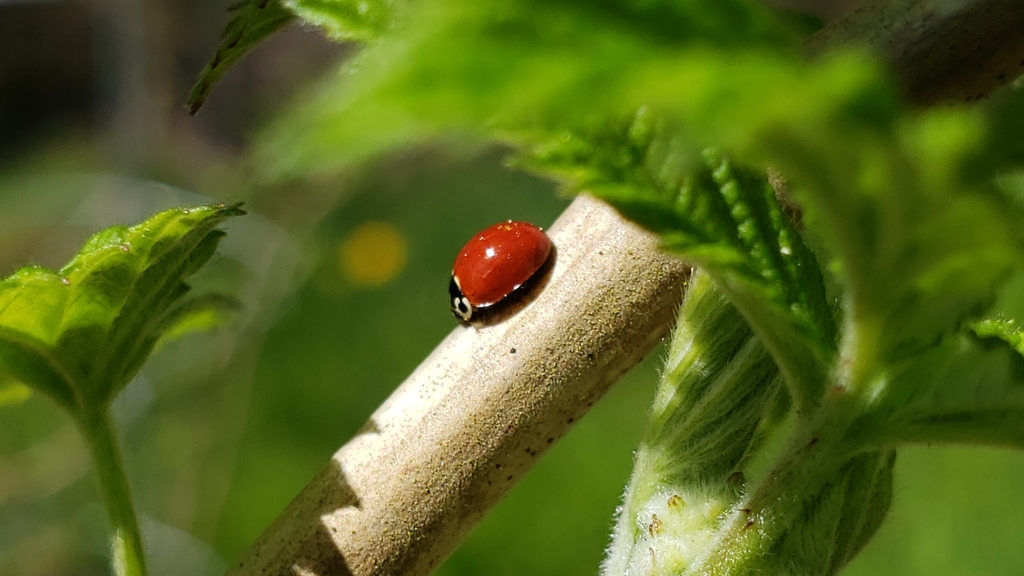
(c) Gavin Slater, some rights reserved (CC BY) · licence
Family: Coccinellidae · Class: Insecta · Order: Coleoptera
Cycloneda polita (Western Polished Lady Beetle) is a California animal in the Coccinellidae family.
The Western Polished Lady Beetle is a small predatory beetle in the family Coccinellidae. Adults are typically oval-shaped with a glossy, polished appearance that gives the species its common name. Like other lady beetles, they exhibit the characteristic dome-shaped body form with short, clubbed antennae. The elytra (wing covers) are smooth and reflective, distinguishing this species from more textured relatives. Cycloneda polita occurs across western North America, with populations documented from California through the Pacific Northwest and extending into parts of the interior western United States. The species' range overlaps with agricultural areas and natural habitats where aphid populations provide abundant prey resources. Distribution patterns suggest adaptation to diverse climatic conditions from Mediterranean to temperate zones. This lady beetle inhabits a variety of terrestrial environments including agricultural fields, grasslands, shrublands, and forest edges. Adults are commonly found on vegetation where aphid colonies concentrate, particularly on cultivated crops, native shrubs, and herbaceous plants. The species shows preference for areas with structural diversity that provide both foraging opportunities and overwintering shelter. Like other western lady beetles, C. polita likely seeks protected sites such as native bunch grass clumps, leaf litter, or bark crevices during winter months (Xerces Society 2018). As a predatory beetle, the Western Polished Lady Beetle feeds primarily on soft-bodied insects, especially aphids. Both adults and larvae are active hunters that consume significant numbers of pest insects, making them valuable biological control agents in agricultural systems. Adults are mobile and capable of dispersing between habitat patches in search of prey concentrations. Reproduction occurs during warmer months, with females laying clusters of yellow eggs on plant surfaces near aphid colonies. Larvae are also predaceous, developing through multiple instars before pupating on vegetation. The Western Polished Lady Beetle currently has no federal or state conservation listing status and appears to maintain stable populations across its range. As a beneficial predatory species, C. polita contributes to natural pest suppression in both agricultural and wild ecosystems. The species may benefit from habitat management practices that maintain diverse plant communities and minimize pesticide applications that could reduce prey availability or directly impact beetle populations. Conservation of native bunch grasses and other structural habitat elements supports overwintering survival and population persistence. Climate change and agricultural intensification represent potential long-term threats to habitat quality and prey resources, though specific population trend data for this species are limited. Continued monitoring of beneficial predator communities would help assess conservation status and inform management recommendations for supporting natural biological control services.
Classification
Class: Insecta · Order: Coleoptera · Family: Coccinellidae
Frequently asked questions
How is Cycloneda polita classified?
Cycloneda polita belongs to class Insecta, order Coleoptera, family Coccinellidae.
What family does Cycloneda polita belong to?
Cycloneda polita is in the Coccinellidae family.
What is Cycloneda polita?
The Western Polished Lady Beetle is a small predatory beetle in the family Coccinellidae.
Is Cycloneda polita found in California?
Yes. Cycloneda polita is recorded in California in The California Species Project's catalogue.
Related species
Other California species in the same genus, family, or bioregion.
Data from The California Species Project — 14,000+ California species with verified data from CNPS, CDFW, USFWS, and more.