Cyclophora nanaria
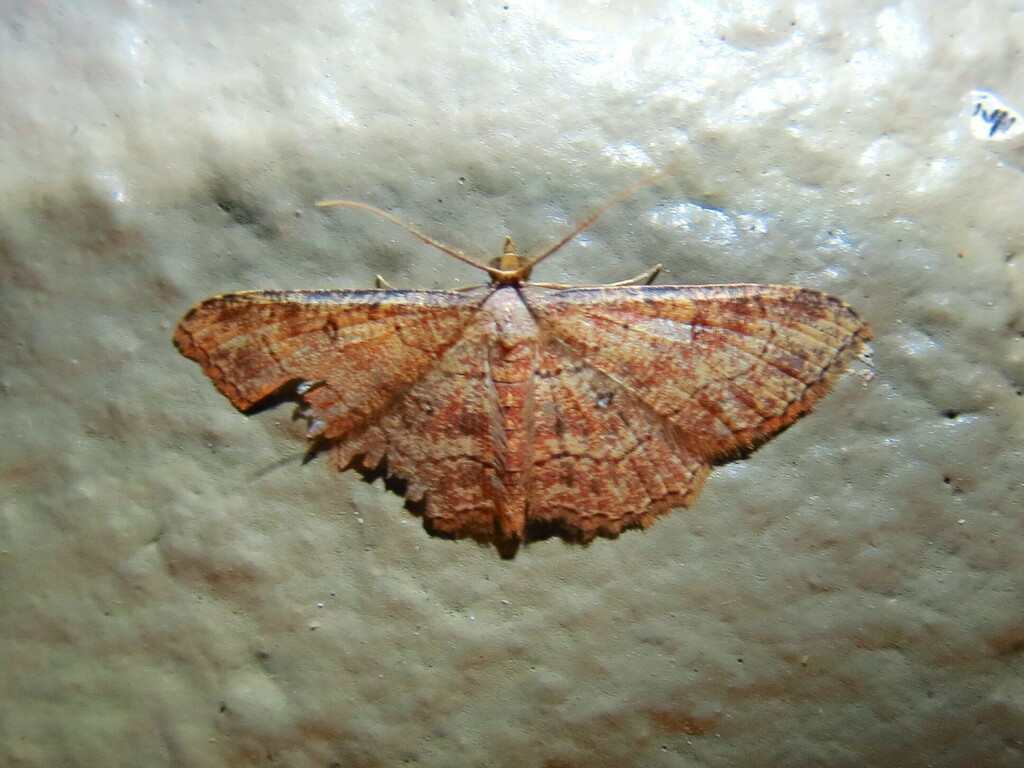
(c) Annika Lindqvist, some rights reserved (CC BY) · licence
Family: Geometridae · Class: Insecta · Order: Lepidoptera
Cyclophora nanaria is a California animal in the Geometridae family.
Cyclophora nanaria is a small moth in the family Geometridae, commonly known as geometrids or inchworm moths. This species belongs to the subfamily Sterrhinae, which includes many small, delicate moths with relatively simple wing patterns. Adults typically measure 15-20 mm in wingspan, displaying the characteristic broad wings and slender body typical of geometrid moths. The forewings are pale gray to light brown with subtle darker markings, while the hindwings are similarly colored but often slightly paler. Like other members of the genus Cyclophora, this species likely exhibits sexual dimorphism, with males possessing more feathered or bipectinate antennae compared to the simpler antennae of females. The distribution and range of Cyclophora nanaria in California remains poorly documented in readily available literature. Many geometrid species have restricted ranges tied to specific host plant distributions or microhabitat requirements. Without comprehensive survey data, the current range of this species within California cannot be definitively established. The species may occur in multiple biogeographic regions depending on the availability of suitable habitat and host plants. Habitat preferences for Cyclophora nanaria are not well-documented in current literature. Geometridae moths typically inhabit areas where their larval host plants occur, which can range from coastal scrublands to montane forests depending on the species. Many Cyclophora species are associated with deciduous trees and shrubs, suggesting this species may require similar vegetation communities. Elevation preferences and specific microhabitat requirements remain unknown without additional field studies. The life cycle of Cyclophora nanaria likely follows the typical geometrid pattern of complete metamorphosis. Larvae, known as inchworms or loopers, move with a characteristic measuring motion due to their lack of prolegs in the middle segments. Adult flight periods are unknown but may follow seasonal patterns related to host plant phenology and local climate conditions. Feeding habits of larvae are undocumented, though most geometrid caterpillars are herbivorous, feeding on leaves of specific host plants. Adults typically feed on nectar from flowers or may not feed at all, focusing energy on reproduction during their brief adult stage. The conservation status of Cyclophora nanaria is not established through federal or state listing processes. No population data or trend information is readily available for this species. The lack of comprehensive survey data makes it difficult to assess potential threats or conservation needs. Many small moth species face challenges from habitat loss, light pollution, and climate change, but specific threats to C. nanaria cannot be determined without additional research. The species does not appear on current federal or California state endangered species lists, though this may reflect limited knowledge rather than stable populations. Further taxonomic work and field surveys would be necessary to establish the current status and distribution of this species within California.
Classification
Class: Insecta · Order: Lepidoptera · Family: Geometridae
Frequently asked questions
How is Cyclophora nanaria classified?
Cyclophora nanaria belongs to class Insecta, order Lepidoptera, family Geometridae.
What family does Cyclophora nanaria belong to?
Cyclophora nanaria is in the Geometridae family.
What is Cyclophora nanaria?
Cyclophora nanaria is a small moth in the family Geometridae, commonly known as geometrids or inchworm moths.
Is Cyclophora nanaria found in California?
Yes. Cyclophora nanaria is recorded in California in The California Species Project's catalogue.
Related species
Other California species in the same genus, family, or bioregion.
Data from The California Species Project — 14,000+ California species with verified data from CNPS, CDFW, USFWS, and more.