Cyclosa turbinata
Humped Trashline Orbweaver
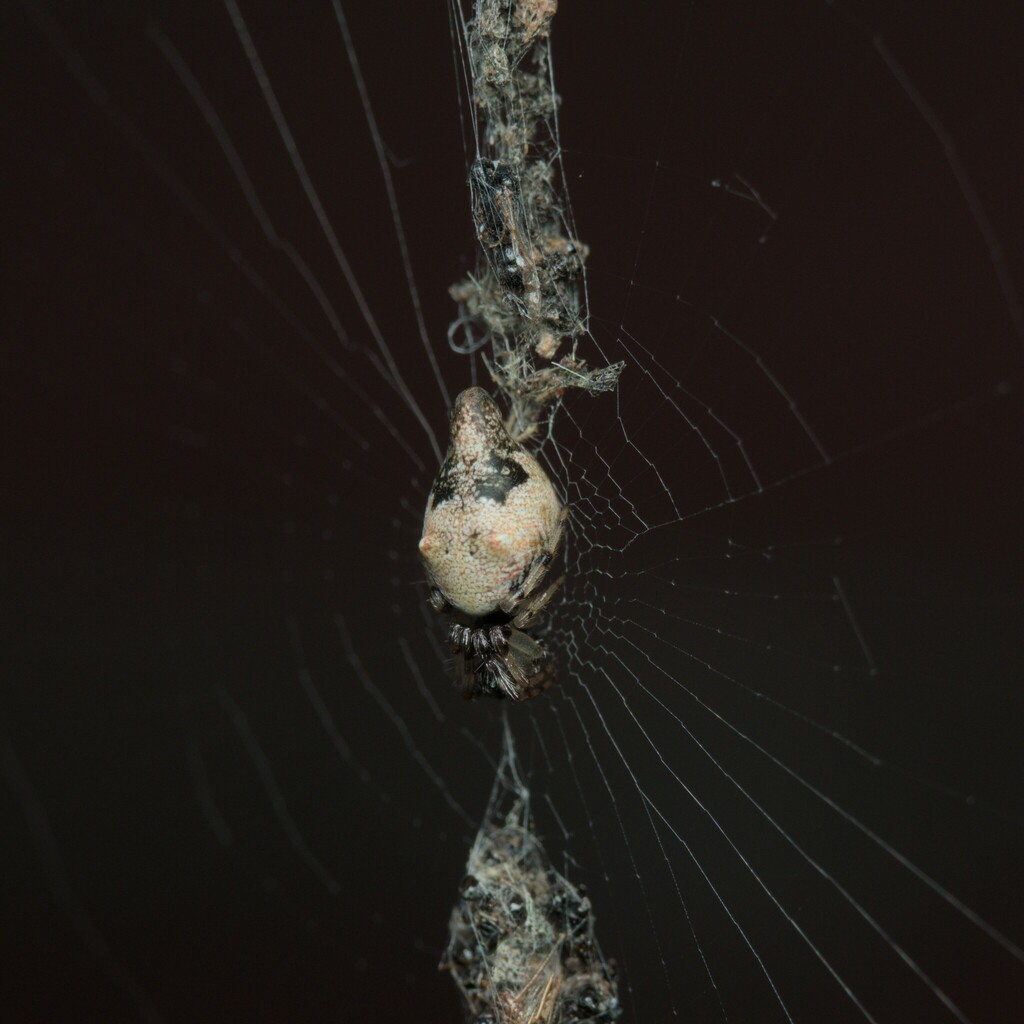
(c) a6475, some rights reserved (CC BY-SA) · licence
Family: Araneidae · Class: Arachnida · Order: Araneae
Cyclosa turbinata (Humped Trashline Orbweaver) is a California animal in the Araneidae family.
Cyclosa turbinata is a small orbweaver spider in the family Araneidae, commonly known as the humped trashline orbweaver. Adult females typically measure 4-6 mm in body length, while males are smaller at 3-4 mm. The species exhibits pronounced sexual dimorphism in coloration and body structure. Females display a distinctive humped or turbinate abdomen with variable coloration ranging from light brown to dark gray, often with white or yellowish markings. The carapace is typically brown with a darker median stripe. Males are generally darker and possess a more elongated abdomen with less pronounced humping. Cyclosa turbinata has a widespread distribution across North America, ranging from Washington to New York and extending south through Central America (BugGuide 2025). The species occurs throughout much of the continental United States, including California, where it has been documented in locations such as the Ballona Wetlands in Los Angeles County (Mattoni 1991). However, NatureServe currently lists the global status as GNR (Global Not Ranked), with some regional populations showing concerning trends. This orbweaver inhabits diverse ecosystems including woodlands, gardens, shrublands, and urban environments. The species demonstrates considerable habitat flexibility, constructing webs in vegetation ranging from low shrubs to tree branches. In California, C. turbinata has been observed in coastal wetland areas and urban landscapes. The species typically builds webs 0.5-2 meters above ground level, showing preference for areas with moderate vegetation density that provides suitable anchor points for web construction. Cyclosa turbinata constructs distinctive orb webs incorporating a characteristic "trashline" or stabilimentum made from prey remains, molted exoskeletons, and debris. This linear decoration typically extends vertically through the web's center, serving both as camouflage and structural reinforcement. The spider positions itself along this trashline, making detection by predators more difficult. Females produce egg sacs in late summer and fall, containing 50-100 eggs. The species is primarily active during warmer months, with adults most commonly observed from late spring through early fall. Diet consists of small flying insects including flies, mosquitoes, gnats, and small moths captured in the sticky spiral of the orb web. Currently, Cyclosa turbinata lacks formal conservation status listings at federal or state levels. However, like many arthropod species, it faces potential threats from habitat loss, urbanization, and pesticide use. The species' adaptability to various habitats, including disturbed and urban environments, suggests moderate resilience to human activities. Climate change may affect population distributions, particularly at range margins. The species' widespread distribution across North America indicates relatively stable populations, though localized declines may occur in heavily developed areas. Continued monitoring through citizen science projects and biodiversity surveys will be important for tracking population trends and identifying conservation needs.
Classification
Class: Arachnida · Order: Araneae · Family: Araneidae
Frequently asked questions
How is Cyclosa turbinata classified?
Cyclosa turbinata belongs to class Arachnida, order Araneae, family Araneidae.
What family does Cyclosa turbinata belong to?
Cyclosa turbinata is in the Araneidae family.
What is Cyclosa turbinata?
Cyclosa turbinata is a small orbweaver spider in the family Araneidae, commonly known as the humped trashline orbweaver.
Is Cyclosa turbinata found in California?
Yes. Cyclosa turbinata is recorded in California in The California Species Project's catalogue.
Related species
Other California species in the same genus, family, or bioregion.
Data from The California Species Project — 14,000+ California species with verified data from CNPS, CDFW, USFWS, and more.