Cycnia oregonensis
Oregon Cycnia
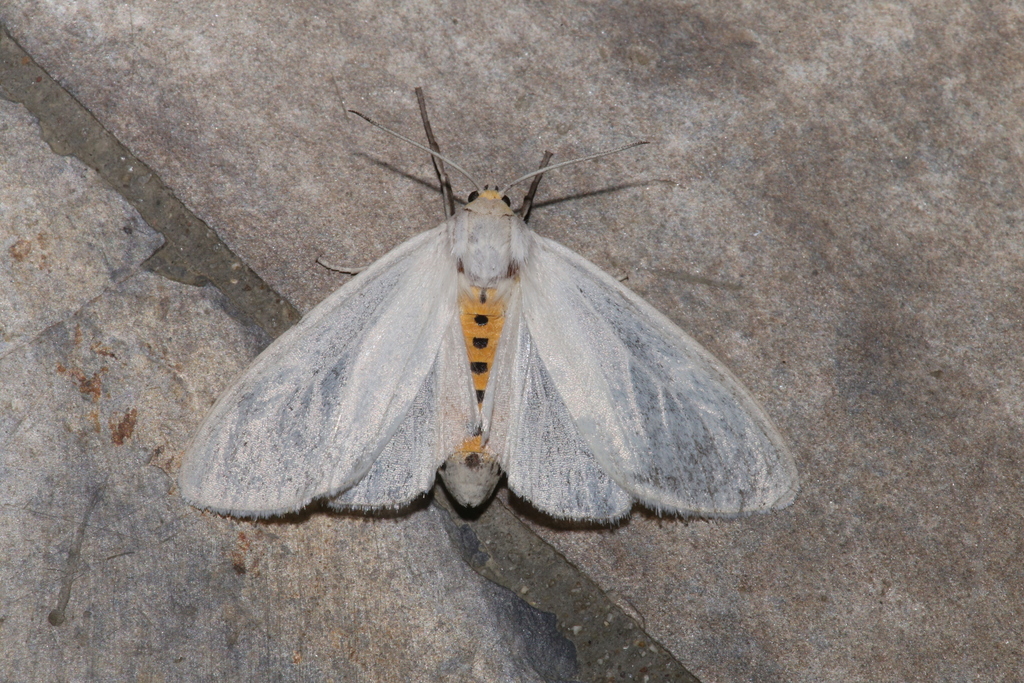
(c) Laura Gaudette, some rights reserved (CC BY) · licence
Family: Erebidae · Class: Insecta · Order: Lepidoptera
Cycnia oregonensis (Oregon Cycnia) is a California animal in the Erebidae family.
Cycnia oregonensis, commonly known as the Oregon Cycnia, is a moth species in the family Erebidae. This medium-sized moth exhibits sexual dimorphism in wing coloration and pattern. Males typically display forewings with a ground color ranging from pale gray to brownish-gray, marked with darker irregular lines and spots. The hindwings are generally lighter, often whitish to pale gray. Females tend to be larger than males and may show more subdued coloration patterns. The wingspan ranges from approximately 25 to 35 mm (1.0 to 1.4 inches), though precise measurements vary among individuals. The Oregon Cycnia has a limited distribution along the Pacific Coast of North America. The species occurs primarily in Oregon, as suggested by its common name, with documented populations extending into northern California. In California, the species has been recorded from coastal counties, particularly in areas with suitable habitat conditions. The range appears to be restricted to a narrow coastal zone, reflecting the species' specific ecological requirements. This moth inhabits coastal and near-coastal environments, showing a preference for areas with native vegetation communities. The species is typically found in coastal scrub, grasslands, and edge habitats where its larval host plants occur. Elevation ranges from sea level to approximately 500 meters (1,640 feet), though most populations occur at lower elevations near the coast. The habitat preference suggests adaptation to the mild, Mediterranean-like climate of the coastal zone, with its characteristic fog patterns and moderate temperatures. Like other members of the Erebidae family, Oregon Cycnia undergoes complete metamorphosis. Adult moths are primarily nocturnal, with flight activity concentrated during warmer months, typically from late spring through early fall. Mating occurs during night hours, with females releasing pheromones to attract males. Larvae feed on various herbaceous plants and low shrubs, though specific host plant relationships for this species require further documentation. The caterpillars are likely polyphagous, feeding on multiple plant species within their habitat range. Development from egg to adult typically requires one year, with overwintering likely occurring in the pupal stage. The conservation status of Cycnia oregonensis remains poorly documented, reflecting the limited research attention given to many moth species. No federal or state listing status has been assigned to this species. Population trends are unknown due to lack of systematic monitoring efforts. Potential threats may include habitat loss from coastal development, invasive plant species that alter native plant communities, and climate change effects on coastal ecosystems. Light pollution in coastal areas may also affect adult moth behavior and reproduction success. The species' apparent restriction to coastal habitats makes it potentially vulnerable to sea level rise and changes in fog patterns associated with climate change. Conservation efforts would benefit from systematic surveys to determine current population status and distribution, as well as identification of critical habitat areas requiring protection.
Classification
Class: Insecta · Order: Lepidoptera · Family: Erebidae
Frequently asked questions
How is Cycnia oregonensis classified?
Cycnia oregonensis belongs to class Insecta, order Lepidoptera, family Erebidae.
What family does Cycnia oregonensis belong to?
Cycnia oregonensis is in the Erebidae family.
What is Cycnia oregonensis?
Cycnia oregonensis, commonly known as the Oregon Cycnia, is a moth species in the family Erebidae.
Is Cycnia oregonensis found in California?
Yes. Cycnia oregonensis is recorded in California in The California Species Project's catalogue.
Related species
Other California species in the same genus, family, or bioregion.
Data from The California Species Project — 14,000+ California species with verified data from CNPS, CDFW, USFWS, and more.