Cycnia tenera
Delicate Cycnia or Dogbane Tiger Moth
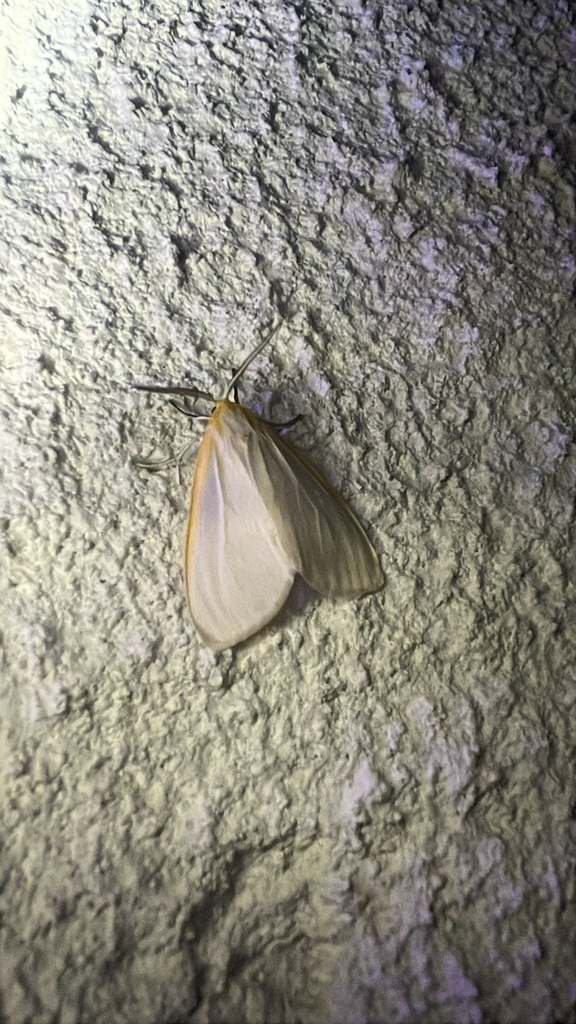
(c) Chelsea, some rights reserved (CC BY) · licence
Family: Erebidae · Class: Insecta · Order: Lepidoptera
Cycnia tenera (Delicate Cycnia or Dogbane Tiger Moth) is a California animal in the Erebidae family.
The Delicate Cycnia (Cycnia tenera), also known as the Dogbane Tiger Moth, is a member of the family Erebidae within the order Lepidoptera. This moth species exhibits the characteristic features of tiger moths, with adults displaying a wingspan ranging from 32 to 42 millimeters (1.3 to 1.7 inches). The forewings are typically cream-colored to pale yellow with distinctive dark brown or black markings that form irregular bands and spots. The hindwings are lighter, often white or pale yellow, with reduced dark markings. The thorax and abdomen are covered in dense, pale-colored scales, and the antennae are feathered in males and thread-like in females. Cycnia tenera occurs across much of North America, with its range extending from southern Canada southward through the United States into Mexico. Within California, the species has been documented in various regions, though specific distribution data remains limited. The moth's range appears to correlate with the distribution of its host plants, particularly members of the dogbane family (Apocynaceae). This species inhabits diverse environments where its larval host plants occur, including open woodlands, forest edges, prairies, and disturbed areas. The moths are typically found at elevations ranging from sea level to moderate mountainous regions. Adults are attracted to artificial lights and can be found in suburban and urban environments where suitable vegetation exists. The species shows preference for areas with well-drained soils that support robust populations of dogbane and related plants. Delicate Cycnia moths are primarily nocturnal, with adults active during warm summer months, typically from June through August. Males are attracted to pheromones released by females, and mating occurs during nighttime hours. Females deposit eggs singly or in small clusters on host plant foliage. The larvae, commonly called woolly bears, feed on various species within the dogbane family (Apocynaceae), including spreading dogbane (Apocynum androsaemifolium) and Indian hemp (Apocynum cannabinum). Caterpillars are covered in dense, bristle-like setae and typically undergo five to six molts before pupating. The species overwinters as pupae in cocoons constructed among leaf litter or in shallow soil depressions. Adults emerge the following summer, completing an annual life cycle. Currently, Cycnia tenera does not hold federal or state listing status in California, and comprehensive population data are not readily available. The species appears to maintain stable populations where suitable habitat exists, though like many moth species, it may face pressures from habitat modification, pesticide use, and light pollution. The moth's dependence on dogbane plants makes it vulnerable to herbicide applications and removal of native vegetation. Climate change may affect the species through alterations in host plant distribution and phenology. Conservation of native plant communities, particularly those containing dogbane species, benefits this moth and associated pollinator communities.
Classification
Class: Insecta · Order: Lepidoptera · Family: Erebidae
Frequently asked questions
How is Cycnia tenera classified?
Cycnia tenera belongs to class Insecta, order Lepidoptera, family Erebidae.
What family does Cycnia tenera belong to?
Cycnia tenera is in the Erebidae family.
What is Cycnia tenera?
The Delicate Cycnia (Cycnia tenera), also known as the Dogbane Tiger Moth, is a member of the family Erebidae within the order Lepidoptera.
Is Cycnia tenera found in California?
Yes. Cycnia tenera is recorded in California in The California Species Project's catalogue.
Related species
Other California species in the same genus, family, or bioregion.
Data from The California Species Project — 14,000+ California species with verified data from CNPS, CDFW, USFWS, and more.