Cydia pomonella
Codling Moth
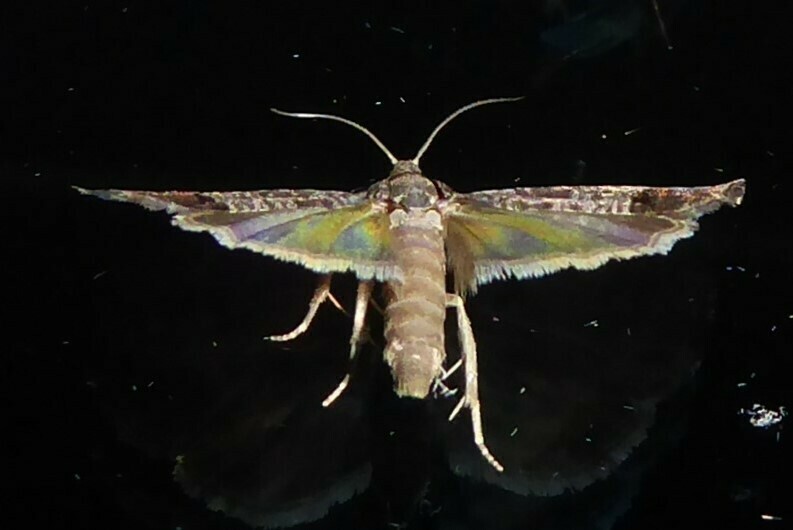
(c) Aalbert Rebergen, some rights reserved (CC BY) · licence
Family: Tortricidae · Class: Insecta · Order: Lepidoptera
Cydia pomonella (Codling Moth) is a California animal in the Tortricidae family.
The codling moth is a small lepidopteran pest measuring 15 to 20 mm (0.6 to 0.8 inches) in wingspan. Adults display gray-brown forewings with distinctive copper-colored patches near the wing tips and numerous fine, dark crosslines. The hindwings are pale brown to gray with darker margins. Males possess feathery antennae, while female antennae are thread-like. Larvae are cream-colored to pinkish caterpillars with brown heads, reaching 18 to 20 mm (0.7 to 0.8 inches) in length when fully mature. Native to Europe and Asia, the codling moth has established populations worldwide, including throughout California. The species occurs from sea level to elevations exceeding 1,500 meters (4,900 feet) in suitable habitat. In California, populations are present in all fruit-growing regions, from the Central Valley to coastal areas and mountain foothills. The species has spread globally through human commerce and is now found on every continent except Antarctica. Codeling moths inhabit orchards, gardens, and wild areas containing host plants from the Rosaceae family. Primary hosts include apple, pear, quince, and walnut trees, though the species also utilizes wild relatives such as hawthorn and mountain ash. Adults prefer areas with moderate temperatures and adequate shelter for overwintering. Larvae develop within fruit, creating the characteristic "worm holes" associated with this pest species. Adults are primarily nocturnal, with peak flight activity occurring during twilight hours. Mating takes place shortly after emergence, with females releasing pheromones to attract males. Females deposit 30 to 70 eggs individually on fruit surfaces or nearby leaves, typically within two weeks of emergence. Eggs hatch in 6 to 20 days depending on temperature. Larvae bore directly into developing fruit, feeding on flesh and seeds for 3 to 5 weeks before pupating. In California, the species typically completes two to three generations per year, with timing dependent on local climate conditions. Overwintering occurs as mature larvae in cocoons beneath bark or in soil. Codeling moth populations undergo natural fluctuations but are not considered threatened or endangered. The species is classified as an agricultural pest rather than a conservation concern. Population densities are primarily regulated by temperature, host plant availability, and management practices. Biological control agents include parasitic wasps, predatory beetles, and fungal pathogens. Integrated pest management programs utilize pheromone traps, mating disruption, and selective pesticide applications to control populations in commercial orchards. Climate change may expand the species' range and increase generation numbers in some regions, potentially intensifying agricultural impacts. While not requiring conservation protection, monitoring continues due to the species' significant economic importance in fruit production systems.
Classification
Class: Insecta · Order: Lepidoptera · Family: Tortricidae
Frequently asked questions
How is Cydia pomonella classified?
Cydia pomonella belongs to class Insecta, order Lepidoptera, family Tortricidae.
What family does Cydia pomonella belong to?
Cydia pomonella is in the Tortricidae family.
What is Cydia pomonella?
The codling moth is a small lepidopteran pest measuring 15 to 20 mm (0.6 to 0.8 inches) in wingspan.
Is Cydia pomonella found in California?
Yes. Cydia pomonella is recorded in California in The California Species Project's catalogue.
Related species
Other California species in the same genus, family, or bioregion.
Data from The California Species Project — 14,000+ California species with verified data from CNPS, CDFW, USFWS, and more.