Cygnus columbianus
Tundra Swan
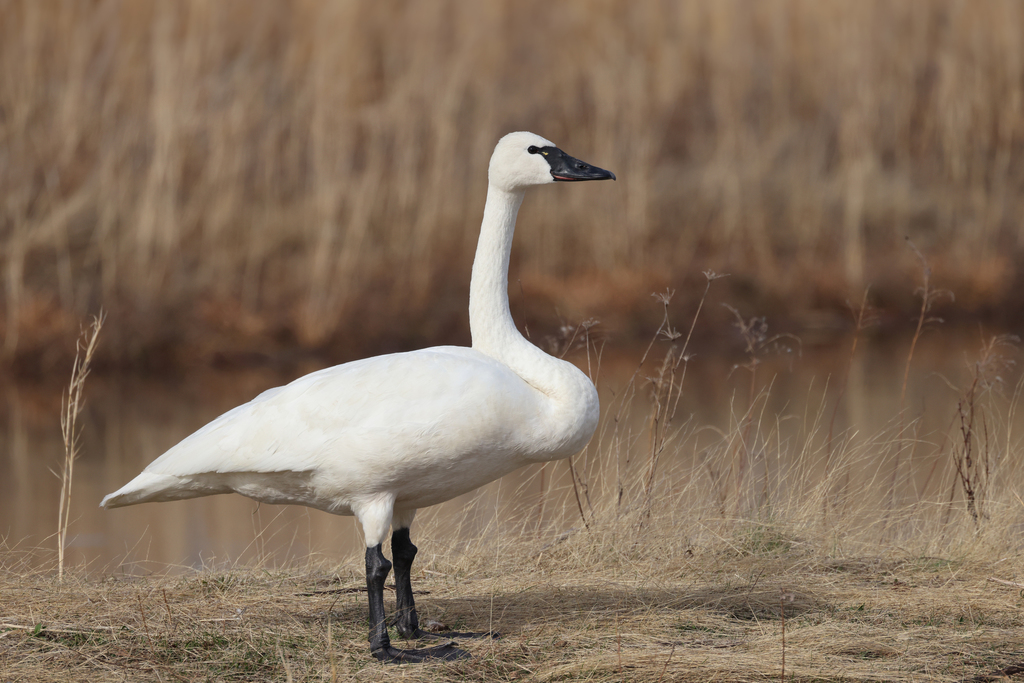
no rights reserved · CC0
Family: Anatidae · Class: Aves · Order: Anseriformes
Cygnus columbianus (Tundra Swan) is a California animal in the Anatidae family.
The Tundra Swan is a large waterfowl species and the smaller of North America's two native swan species. Adults measure 120 to 150 centimeters (47 to 59 inches) in length with a wingspan reaching 165 to 185 centimeters (65 to 73 inches). Males typically weigh 7.5 to 9.6 kilograms (16.5 to 21.2 pounds), while females weigh 6.4 to 7.9 kilograms (14.1 to 17.4 pounds). The plumage is entirely white in adults, with a black bill featuring a distinctive yellow patch at the base near the eye. Juveniles display gray plumage that gradually whitens during their first year. The neck is proportionally shorter and straighter than that of the Trumpeter Swan, and the bill profile is more concave. Tundra Swans breed across the Arctic tundra from Alaska to Hudson Bay and migrate along two primary flyways to wintering grounds. The western population winters primarily along the Pacific Coast from southern Alaska to California, with significant numbers utilizing California's Central Valley, San Francisco Bay, and coastal wetlands. The eastern population winters along the Atlantic Coast from New Jersey to North Carolina. In California, they occur regularly from October through March, with peak numbers typically observed from December through February. During winter in California, Tundra Swans inhabit shallow freshwater and brackish wetlands, flooded agricultural fields, reservoirs, and protected bays. They prefer areas with water depths of 30 to 60 centimeters (12 to 24 inches) that allow access to submerged aquatic vegetation. Key habitat areas include the Sacramento and San Joaquin valleys, Suisun Marsh, San Francisco Bay, and coastal lagoons. They utilize both natural wetlands and managed waterfowl areas. Tundra Swans are primarily herbivorous, feeding on submerged aquatic vegetation, roots, tubers, and agricultural grains. Common food sources include pondweeds, wigeon grass, and waste grain from rice and barley fields. They feed by dabbling at the surface and upending to reach vegetation up to one meter below the surface. The species exhibits strong family bonds, with young remaining with parents through their first winter migration. Flocks often exceed 100 individuals during migration and on wintering grounds. The Tundra Swan is not federally listed and maintains stable continental populations estimated at approximately 290,000 individuals. The North American population has shown increasing trends over recent decades, attributed to effective habitat conservation and hunting regulations established under the Migratory Bird Treaty Act. However, the species faces ongoing challenges from habitat loss in wintering areas, particularly wetland conversion and agricultural intensification. Climate change may affect Arctic breeding habitats and alter migration timing. In California, habitat protection through the North American Waterfowl Management Plan and state wildlife refuges provides critical support for wintering populations.
Classification
Class: Aves · Order: Anseriformes · Family: Anatidae
Frequently asked questions
How is Cygnus columbianus classified?
Cygnus columbianus belongs to class Aves, order Anseriformes, family Anatidae.
What family does Cygnus columbianus belong to?
Cygnus columbianus is in the Anatidae family.
What is Cygnus columbianus?
The Tundra Swan is a large waterfowl species and the smaller of North America's two native swan species.
Is Cygnus columbianus found in California?
Yes. Cygnus columbianus is recorded in California in The California Species Project's catalogue.
Related species
Other California species in the same genus, family, or bioregion.
Data from The California Species Project — 14,000+ California species with verified data from CNPS, CDFW, USFWS, and more.