Cygnus cygnus
Whooper Swan
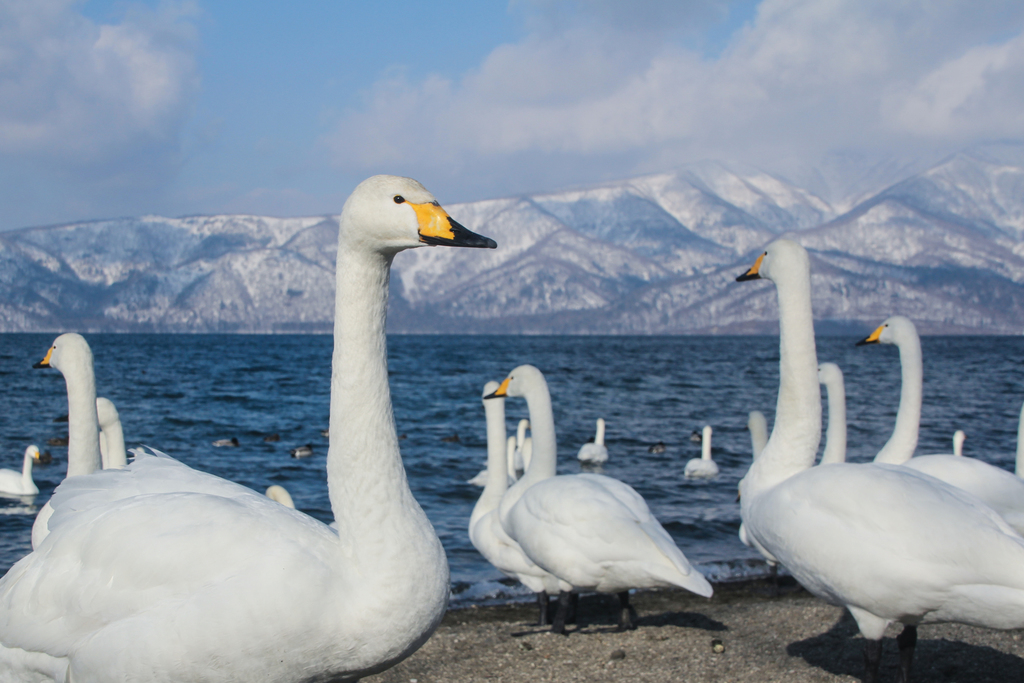
(c) Austin 0201, some rights reserved (CC BY) · licence
Family: Anatidae · Class: Aves · Order: Anseriformes
Cygnus cygnus (Whooper Swan) is a California animal in the Anatidae family.
The Whooper Swan is a large waterfowl species and one of the heaviest flying birds in North America. Adults measure 140 to 165 cm (55 to 65 inches) in length with a wingspan reaching 205 to 275 cm (81 to 108 inches). Adult birds weigh between 7.4 to 14 kg (16 to 31 pounds), with males typically larger than females. The species displays entirely white plumage in adults, with a long, straight neck and distinctive black bill featuring a yellow base that extends to the nostrils. Juveniles are grayish-brown with pinkish bills that gradually develop adult coloration. The species produces loud, trumpet-like calls that carry over long distances, distinguishing it from the similar Tundra Swan. Whooper Swans breed across northern Eurasia from Iceland and Scandinavia eastward through Siberia to Kamchatka. In North America, the species occurs primarily in Alaska, with occasional records in the Pacific Northwest and Great Lakes region. California records are extremely rare, with documented sightings occurring as vagrant individuals during winter months. Most North American populations migrate between Alaska breeding grounds and wintering areas in the Pacific Northwest. Breeding habitat consists of shallow lakes, ponds, and wetlands in tundra and boreal regions. Nesting sites require water bodies with emergent vegetation and minimal human disturbance. During winter, the species utilizes coastal bays, estuaries, and inland lakes with adequate food resources. Whooper Swans prefer areas with water depths of 0.4 to 1.5 meters (1.3 to 4.9 feet) for optimal foraging. Whooper Swans are primarily herbivorous, feeding on aquatic vegetation, roots, and shoots. Their diet includes pondweeds, sedges, grasses, and agricultural crops during winter. The species feeds by dabbling at the surface, up-ending, and occasionally diving in shallow water. Breeding occurs from May through August, with pairs constructing large nests of vegetation near water edges. Females lay 4 to 7 creamy-white eggs, which are incubated for 35 to 42 days. Cygnets fledge at 120 to 150 days and remain with parents through their first winter migration. Globally, Whooper Swans are classified as Least Concern by the International Union for Conservation of Nature, with stable populations estimated at 180,000 to 290,000 individuals worldwide as of 2023. The species has recovered significantly from historical hunting pressure and habitat loss. In North America, the population remains small but stable, with approximately 60,000 to 80,000 individuals primarily in Alaska. Climate change poses potential long-term threats through altered precipitation patterns and shifting vegetation zones in breeding areas. Habitat conservation efforts focus on protecting wetland systems and maintaining migration corridors between breeding and wintering grounds.
Classification
Class: Aves · Order: Anseriformes · Family: Anatidae
Frequently asked questions
How is Cygnus cygnus classified?
Cygnus cygnus belongs to class Aves, order Anseriformes, family Anatidae.
What family does Cygnus cygnus belong to?
Cygnus cygnus is in the Anatidae family.
What is Cygnus cygnus?
The Whooper Swan is a large waterfowl species and one of the heaviest flying birds in North America.
Is Cygnus cygnus found in California?
Yes. Cygnus cygnus is recorded in California in The California Species Project's catalogue.
Related species
Other California species in the same genus, family, or bioregion.
Data from The California Species Project — 14,000+ California species with verified data from CNPS, CDFW, USFWS, and more.