Cygnus olor
Mute Swan
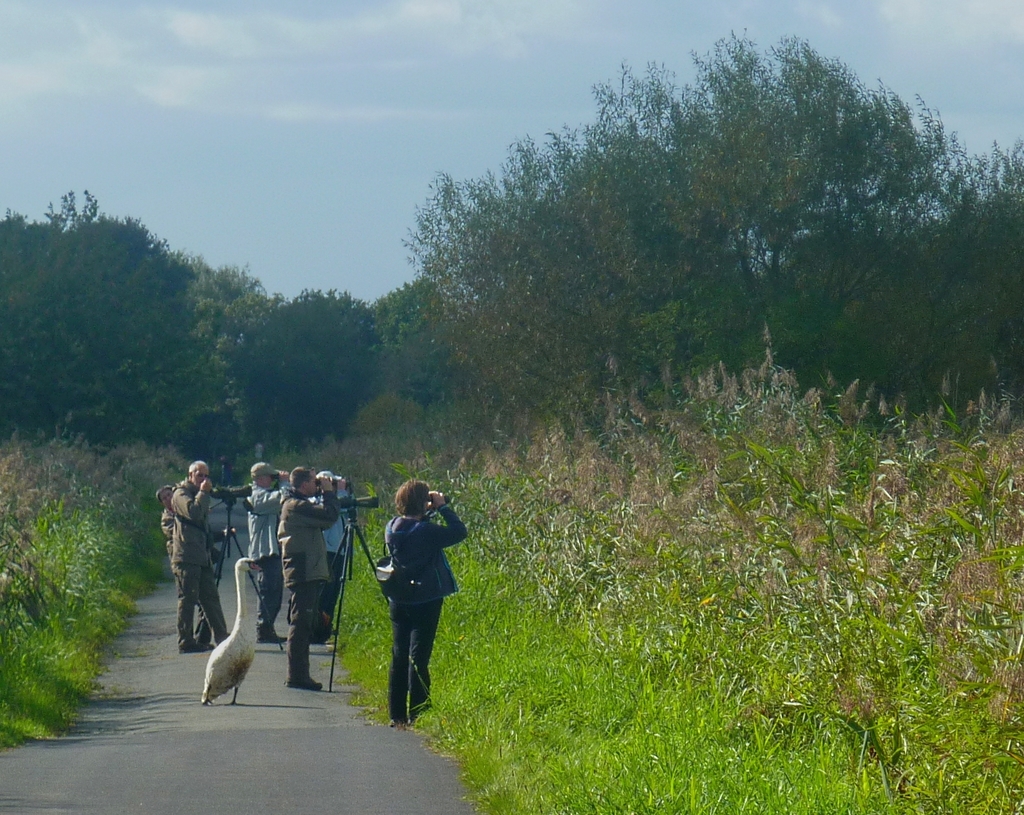
(c) carnifex, some rights reserved (CC BY) · licence
Family: Anatidae · Class: Aves · Order: Anseriformes
Cygnus olor (Mute Swan) is a California animal in the Anatidae family.
The Mute Swan is a large waterfowl species native to Europe and Asia that has established non-native populations in California and other parts of North America. Adults measure 125 to 170 cm (49 to 67 inches) in length with a wingspan of 200 to 240 cm (79 to 94 inches). Males (cobs) typically weigh 10 to 12 kg (22 to 26 pounds), while females (pens) weigh 8.5 to 10 kg (19 to 22 pounds), making them among the heaviest flying birds. The plumage is entirely white in adults, with a long, curved neck and distinctive orange bill marked by a black knob at the base that is more prominent in males. Juveniles are grayish-brown with a pinkish-gray bill. In California, Mute Swans occur primarily as isolated populations in urban and suburban areas, including city parks, golf course ponds, and residential lakes. The species is not native to North America and populations are largely derived from escaped or released captive birds. Small breeding populations have been documented in the San Francisco Bay Area and Southern California, though numbers remain limited compared to established populations in the Great Lakes region and Atlantic Coast. Mute Swans inhabit shallow freshwater and brackish water environments including lakes, ponds, slow-moving rivers, and coastal lagoons. They prefer areas with abundant submerged aquatic vegetation and typically avoid waters deeper than 1.5 meters where they cannot reach bottom vegetation while feeding. The species shows tolerance for human-modified habitats and often thrives in urban park settings with minimal natural predation pressure. Despite their name, Mute Swans are not silent and produce various hissing, grunting, and snoring sounds. They are primarily herbivorous, feeding on submerged aquatic plants, algae, and occasionally small invertebrates. The species feeds by dabbling at the surface or by submerging the head and neck while the body remains on the surface. Breeding occurs from March through July, with pairs constructing large nests of vegetation near water edges. Females lay 4 to 7 eggs that are incubated for 35 to 38 days. Cygnets remain with parents for 4 to 5 months and reach sexual maturity at 2 to 3 years. Mute Swans are not federally or state listed in California, reflecting their non-native status. The species is considered invasive in many parts of North America due to aggressive territorial behavior during breeding season and potential negative impacts on native waterfowl and aquatic vegetation. In some regions, Mute Swan populations have been actively managed or removed to protect native ecosystems. California populations remain small and localized, primarily sustained by continued releases from captive collections rather than natural population growth. The species' long-term establishment in California is uncertain given the state's Mediterranean climate and limited suitable habitat compared to other regions where Mute Swans have successfully colonized.
Classification
Class: Aves · Order: Anseriformes · Family: Anatidae
Frequently asked questions
How is Cygnus olor classified?
Cygnus olor belongs to class Aves, order Anseriformes, family Anatidae.
What family does Cygnus olor belong to?
Cygnus olor is in the Anatidae family.
What is Cygnus olor?
The Mute Swan is a large waterfowl species native to Europe and Asia that has established non-native populations in California and other parts of North America.
Is Cygnus olor found in California?
Yes. Cygnus olor is recorded in California in The California Species Project's catalogue.
Related species
Other California species in the same genus, family, or bioregion.
Data from The California Species Project — 14,000+ California species with verified data from CNPS, CDFW, USFWS, and more.