Cylindromyia intermedia
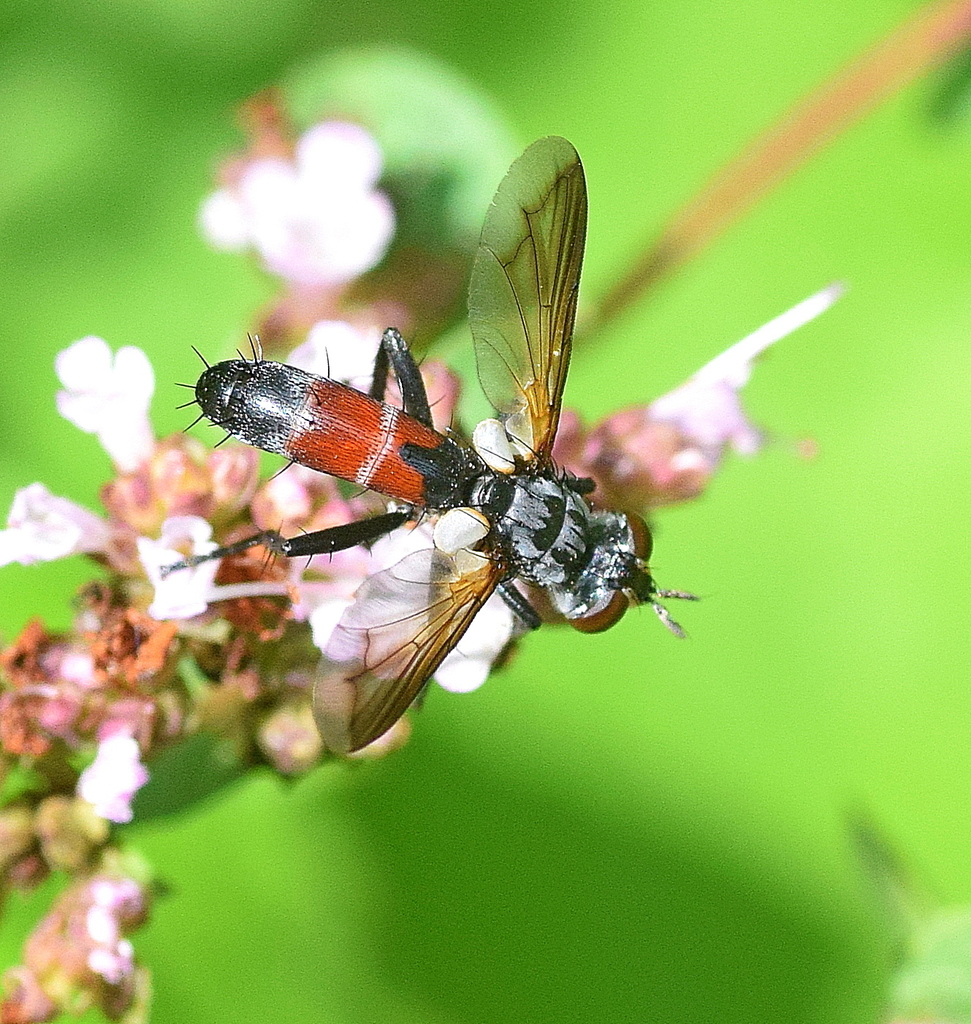
(c) Kostas Zontanos, some rights reserved (CC BY) · licence
Family: Tachinidae · Class: Insecta · Order: Diptera
Cylindromyia intermedia is a California animal in the Tachinidae family.
Cylindromyia intermedia is a parasitic fly in the family Tachinidae, subfamily Phasiinae. This species belongs to a genus of robust flies characterized by distinctive coloration patterns and parasitic lifestyle. Adults exhibit the typical cylindrical body shape that gives the genus its name, with females measuring approximately 8-12 mm in length based on available specimens. The species displays characteristic Cylindromyia coloration with white bands at the base of abdominal segments and variable red coloration on the dorsal abdomen surface. According to BugGuide observations, C. intermedia shows red coloration covering the top of the abdomen, distinguishing it from other congeners like C. atra or C. mirabilis which lack this red area. The thorax is typically dark with pale markings, and the legs are generally yellowish to brown. Cylindromyia intermedia occurs in western North America, with documented records from California's San Gabriel Mountains in Los Angeles County. A specimen was photographed at Angeles Crest at approximately 7,000 feet elevation, indicating the species inhabits montane environments (BugGuide). The genus Cylindromyia is more diverse in western North America compared to eastern regions, suggesting C. intermedia may have a broader western distribution beyond California. The species inhabits mountain forests and open areas at moderate to high elevations. The documented occurrence at 7,000 feet in the San Gabriel Mountains suggests adaptation to montane conditions. Adults are commonly observed as flower visitors in open weedy areas and are active throughout summer months. The photographed specimen was observed feeding on nectar from Chrysothamnus (rabbitbrush) florets, indicating the species visits composite flowers for nectar resources. As a member of the Tachinidae, C. intermedia exhibits parasitic behavior during its larval stage. Adult females deposit eggs on or near host insects, and the developing larvae parasitize their hosts internally. The genus Cylindromyia has recorded hosts including various shield bugs (Pentatomidae), some moth species, and grasshoppers (Acrididae), though specific host relationships for C. intermedia have not been documented. Adults are active flower visitors, feeding on nectar and likely mating on flowering plants during summer months. Cylindromyia intermedia currently has no formal conservation status designation. NatureServe lists the species as GNR (Global Not Ranked), indicating insufficient data for conservation assessment. The limited documentation suggests either restricted distribution or insufficient survey effort for this montane species. Like many specialized parasitic flies, the species may be sensitive to habitat changes affecting both host insect populations and flowering plant communities in mountain ecosystems. Climate change impacts on montane habitats could potentially affect species distribution and abundance, though current population trends remain unknown.
Classification
Class: Insecta · Order: Diptera · Family: Tachinidae
Frequently asked questions
How is Cylindromyia intermedia classified?
Cylindromyia intermedia belongs to class Insecta, order Diptera, family Tachinidae.
What family does Cylindromyia intermedia belong to?
Cylindromyia intermedia is in the Tachinidae family.
What is Cylindromyia intermedia?
Cylindromyia intermedia is a parasitic fly in the family Tachinidae, subfamily Phasiinae.
Is Cylindromyia intermedia found in California?
Yes. Cylindromyia intermedia is recorded in California in The California Species Project's catalogue.
Related species
Other California species in the same genus, family, or bioregion.
Data from The California Species Project — 14,000+ California species with verified data from CNPS, CDFW, USFWS, and more.