Cymaenes trebius
Fawn-spotted Skipper
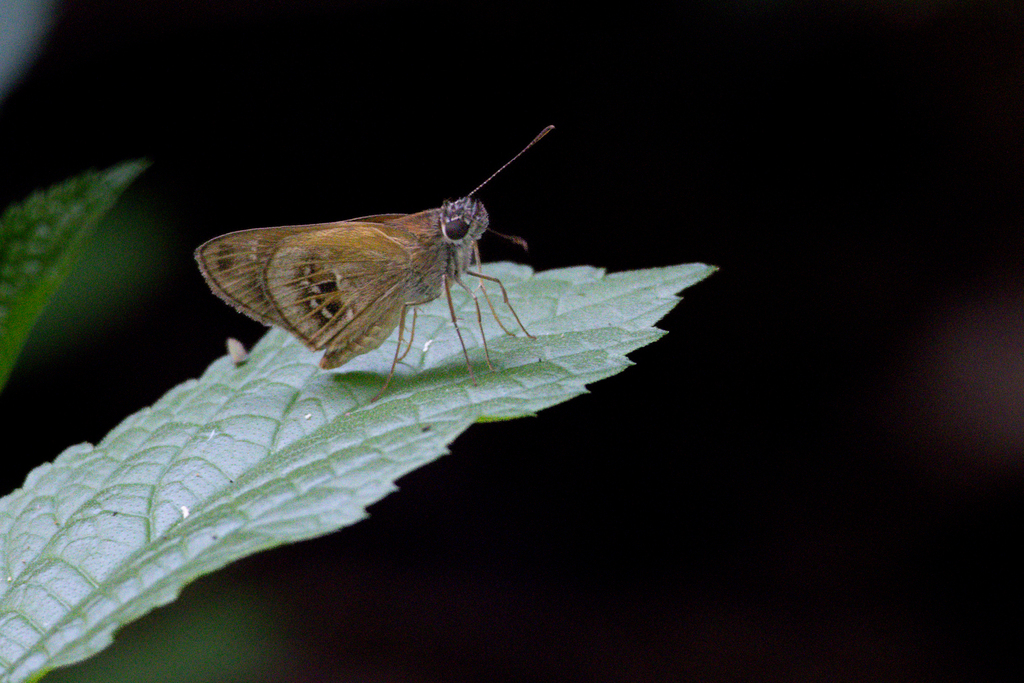
(c) Francisco V. Bezerra Neto, some rights reserved (CC BY-SA) · licence
Family: Hesperiidae · Class: Insecta · Order: Lepidoptera
Cymaenes trebius (Fawn-spotted Skipper) is a California animal in the Hesperiidae family.
The Fawn-spotted Skipper (Cymaenes trebius) is a small butterfly in the family Hesperiidae, representing a rare vagrant species that occasionally strays into the extreme southern United States. This skipper exhibits the typical compact build characteristic of its family, with relatively short, triangular forewings and rounded hindwings. The species displays muted brown coloration with subtle fawn-colored spotting patterns that give it its common name, though detailed morphological descriptions are limited in the scientific literature. The primary range of Cymaenes trebius extends from Argentina northward through Central America to northern Mexico. Within this extensive Neotropical distribution, the species occurs across diverse habitats from lowland areas to moderate elevations. In the United States, this skipper is documented only as a rare stray reaching South Texas, representing the extreme northern limit of its range. These occasional occurrences likely result from favorable weather patterns or population dispersals from established Mexican populations. The species is associated with grassland habitats where its larval host plant, Paspalum grass, occurs. Paspalum represents a large genus of tropical and subtropical grasses that provide the primary food source for developing larvae. The availability and distribution of suitable Paspalum species likely influences the skipper's local abundance and reproductive success throughout its range. As with most skipper species, Cymaenes trebius exhibits a complete metamorphosis with egg, larval, pupal, and adult stages. The larvae develop within grass sheaths or folded leaf structures, feeding on Paspalum tissues. Adult skippers typically display rapid, darting flight patterns and are often observed nectaring on various flowering plants. Males may engage in territorial behaviors around host plant patches or nectar sources, though specific behavioral observations for this species remain limited in the literature. Cymaenes trebius currently holds no formal conservation listing at federal or state levels in the United States, which is appropriate given its status as an occasional vagrant rather than an established resident species. According to butterfliesandmoths.org, the species receives a global conservation rank of G5, indicating it is demonstrably secure globally, though it may be quite rare in parts of its range, especially at the periphery of its distribution. The lack of established breeding populations in the United States means that conservation efforts focus on monitoring vagrant occurrences and documenting range extensions. Climate change could potentially influence the frequency of vagrant appearances in South Texas, as shifting weather patterns may affect dispersal events from source populations in Mexico. For this primarily tropical species, conservation priorities center on habitat protection within its core Central and South American range rather than management actions in areas where it appears only as a rare stray. Scientific documentation for this species remains limited in North American contexts. The information presented here is based on available sources including taxonomic databases and regional butterfly surveys. If you have additional verified information about this species' biology, distribution, or ecology, please contact us to help improve this species account.
Classification
Class: Insecta · Order: Lepidoptera · Family: Hesperiidae
Frequently asked questions
How is Cymaenes trebius classified?
Cymaenes trebius belongs to class Insecta, order Lepidoptera, family Hesperiidae.
What family does Cymaenes trebius belong to?
Cymaenes trebius is in the Hesperiidae family.
What is Cymaenes trebius?
The Fawn-spotted Skipper (Cymaenes trebius) is a small butterfly in the family Hesperiidae, representing a rare vagrant species that occasionally strays into the extreme southern United States.
Is Cymaenes trebius found in California?
Yes. Cymaenes trebius is recorded in California in The California Species Project's catalogue.
Related species
Other California species in the same genus, family, or bioregion.
Data from The California Species Project — 14,000+ California species with verified data from CNPS, CDFW, USFWS, and more.