Cynanthus latirostris
Broad-billed Hummingbird
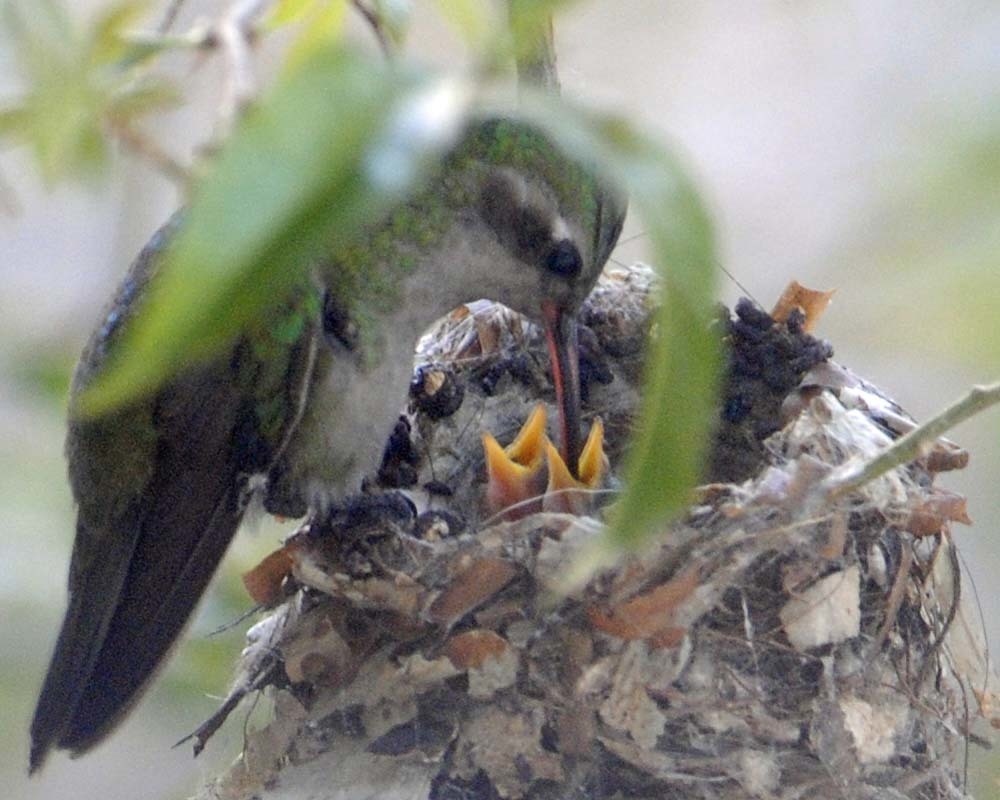
(c) Gonzalo Zepeda Martínez, some rights reserved (CC BY-SA) · licence
Family: Trochilidae · Class: Aves · Order: Apodiformes
Cynanthus latirostris (Broad-billed Hummingbird) is a California animal in the Trochilidae family.
The Broad-billed Hummingbird is a medium-sized hummingbird measuring 9 to 10 cm (3.5 to 4.0 inches) in length with a wingspan of approximately 13 cm (5.1 inches). Males display distinctive iridescent blue-green upperparts and throat, with the gorget extending down to the upper breast. The underparts are grayish-white, and the tail is dark blue-green with slightly forked tips. Females are less colorful, showing green upperparts, grayish-white underparts, and a white stripe above and below the eye. Both sexes possess the species' characteristic broad, slightly curved, bright red bill with a black tip, which distinguishes them from other southwestern hummingbirds. The Broad-billed Hummingbird's primary range extends from central Arizona through western Mexico to southern Mexico. In California, this species occurs only as an occasional vagrant, with rare sightings documented primarily in the southeastern desert regions near the Arizona border. Most California records come from Imperial and eastern Riverside counties, typically during late summer and fall migration periods. The species is considered accidental in California, with fewer than 50 documented occurrences in the state's birding records. This species inhabits desert washes, riparian corridors, and oak-pine woodlands at elevations ranging from sea level to 3,000 meters (9,840 feet). In its core range, Broad-billed Hummingbirds prefer areas with reliable water sources and diverse flowering plants. They utilize both native vegetation and cultivated gardens, showing particular attraction to red tubular flowers. Desert willow, penstemon, and various agave species serve as important nectar sources. The species also requires suitable nesting sites, typically selecting protected locations in shrubs or small trees 1 to 3 meters (3.3 to 9.8 feet) above ground. Broad-billed Hummingbirds are territorial, with males defending feeding areas through aggressive displays and chase behaviors. Their diet consists primarily of nectar from flowers, supplemented by small insects and spiders for protein. Males produce a distinctive wing trill during territorial flights and courtship displays. The breeding season extends from March through September, with females constructing cup-shaped nests using plant fibers, spider silk, and lichens. Typical clutch size is two white eggs, which females incubate for 14 to 16 days. Young fledge after 18 to 23 days but may return to the nest for several additional days. The Broad-billed Hummingbird is not federally or state-listed in California, reflecting its status as an occasional vagrant rather than a resident species. The species maintains stable populations throughout its primary range in Arizona and Mexico, with no immediate conservation concerns. Climate change may potentially affect the frequency of California sightings by altering migration patterns and habitat availability in the southwestern United States. Habitat destruction in riparian areas and urban development in desert regions represent localized threats within the species' core range.
Classification
Class: Aves · Order: Apodiformes · Family: Trochilidae
Frequently asked questions
How is Cynanthus latirostris classified?
Cynanthus latirostris belongs to class Aves, order Apodiformes, family Trochilidae.
What family does Cynanthus latirostris belong to?
Cynanthus latirostris is in the Trochilidae family.
What is Cynanthus latirostris?
The Broad-billed Hummingbird is a medium-sized hummingbird measuring 9 to 10 cm (3.5 to 4.0 inches) in length with a wingspan of approximately 13 cm (5.1 inches).
Is Cynanthus latirostris found in California?
Yes. Cynanthus latirostris is recorded in California in The California Species Project's catalogue.
Related species
Other California species in the same genus, family, or bioregion.
Data from The California Species Project — 14,000+ California species with verified data from CNPS, CDFW, USFWS, and more.