Cynomya cadaverina
Shiny Blue Bottle Fly
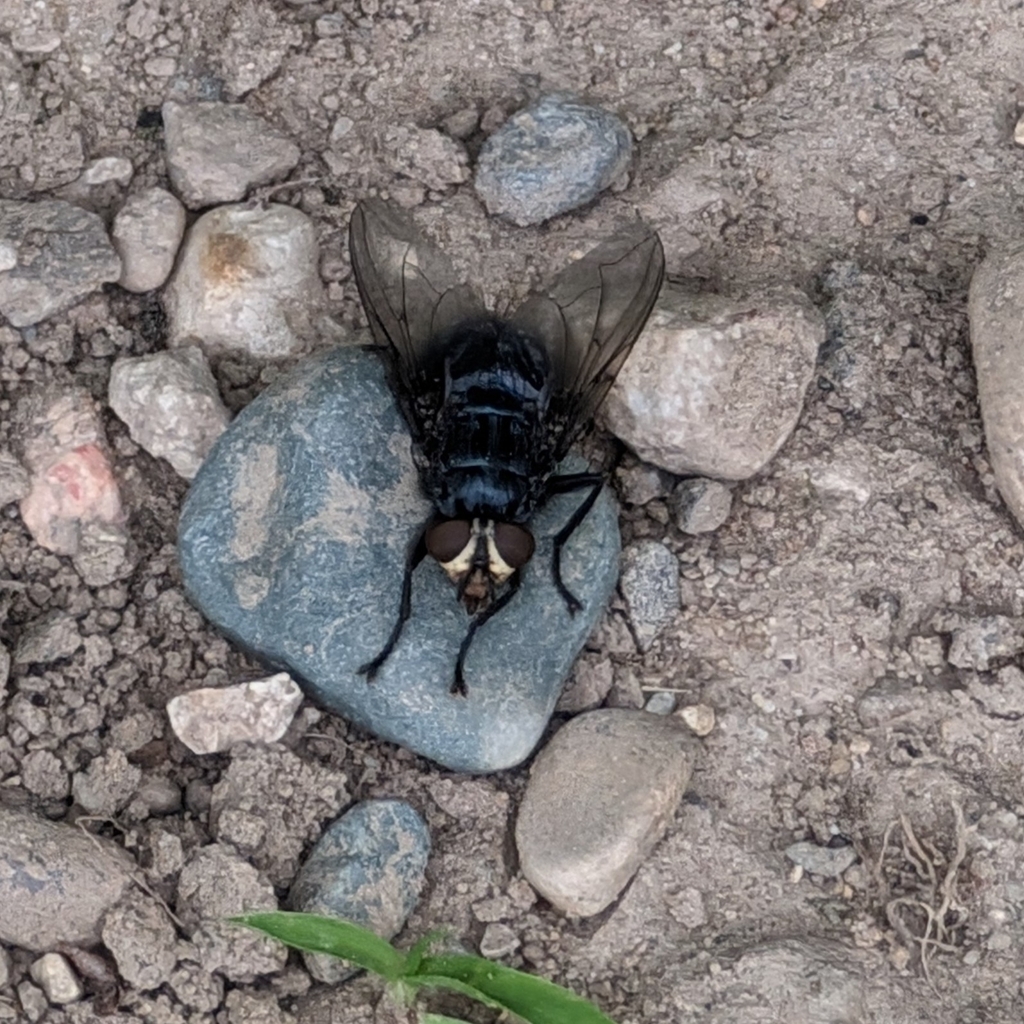
(c) Alan Prather, some rights reserved (CC BY) · licence
Family: Calliphoridae · Class: Insecta · Order: Diptera
Cynomya cadaverina (Shiny Blue Bottle Fly) is a California animal in the Calliphoridae family.
The shiny blue bottle fly (Cynomya cadaverina) is a medium-sized blow fly in the family Calliphoridae, measuring approximately 6-12 mm in length. Adults display a distinctive metallic blue-green sheen on the thorax and abdomen, with the head typically appearing more greenish. The body is robust and covered with short, dark bristles. The eyes are large and reddish-brown, and the wings are clear with prominent veins. Males can be distinguished from females by their closer-set eyes and slightly smaller size. This species occurs throughout North America, with documented range extending from southern Canada to northern Mexico (Stone et al. 1965). In California, Cynomya cadaverina is found statewide, from coastal regions to inland valleys and mountainous areas. The species has been recorded from sea level to moderate elevations, though specific altitudinal limits have not been well documented. Cynomya cadaverina inhabits diverse environments but shows particular association with areas containing carrion and decaying organic matter. Adults are commonly found in urban, suburban, and rural settings, including residential areas, agricultural lands, and natural habitats. The species demonstrates considerable tolerance for varying climatic conditions and is active during warmer months, with peak activity typically occurring from late spring through early fall. As a necrophagous species, Cynomya cadaverina plays an important ecological role in decomposition processes. Adults feed on nectar, plant exudates, and other sugar sources, while also visiting carrion and decaying organic material for both feeding and oviposition. Females deposit eggs in batches on fresh carrion, typically within the first 24-48 hours after death. Larvae develop through three instars, feeding on decomposing tissue and associated microorganisms. Development from egg to adult typically takes 2-4 weeks under favorable conditions, with temperature being the primary factor affecting development rate. The species exhibits multiple generations per year in warmer climates. Cynomya cadaverina has significant forensic importance due to its predictable colonization patterns on carrion, making it valuable for estimating post-mortem intervals in legal investigations. The species is among the first colonizers of carrion, often arriving within minutes to hours of death. This rapid response, combined with well-studied developmental parameters, makes it a key species in forensic entomology. Currently, Cynomya cadaverina holds no special conservation status and appears stable throughout its range. The species benefits from human activities that provide suitable breeding substrates and is not considered threatened by habitat loss or other anthropogenic factors. As a synanthropic species, it has adapted well to human-modified environments and may have even expanded its range in association with human settlement patterns. The species serves important ecological functions in nutrient cycling and decomposition, contributing to ecosystem health across its range.
Classification
Class: Insecta · Order: Diptera · Family: Calliphoridae
Frequently asked questions
How is Cynomya cadaverina classified?
Cynomya cadaverina belongs to class Insecta, order Diptera, family Calliphoridae.
What family does Cynomya cadaverina belong to?
Cynomya cadaverina is in the Calliphoridae family.
What is Cynomya cadaverina?
The shiny blue bottle fly (Cynomya cadaverina) is a medium-sized blow fly in the family Calliphoridae, measuring approximately 6-12 mm in length.
Is Cynomya cadaverina found in California?
Yes. Cynomya cadaverina is recorded in California in The California Species Project's catalogue.
Related species
Other California species in the same genus, family, or bioregion.
Data from The California Species Project — 14,000+ California species with verified data from CNPS, CDFW, USFWS, and more.