Cyphomyrmex wheeleri
Wheeler’s Fungus-farming Ant
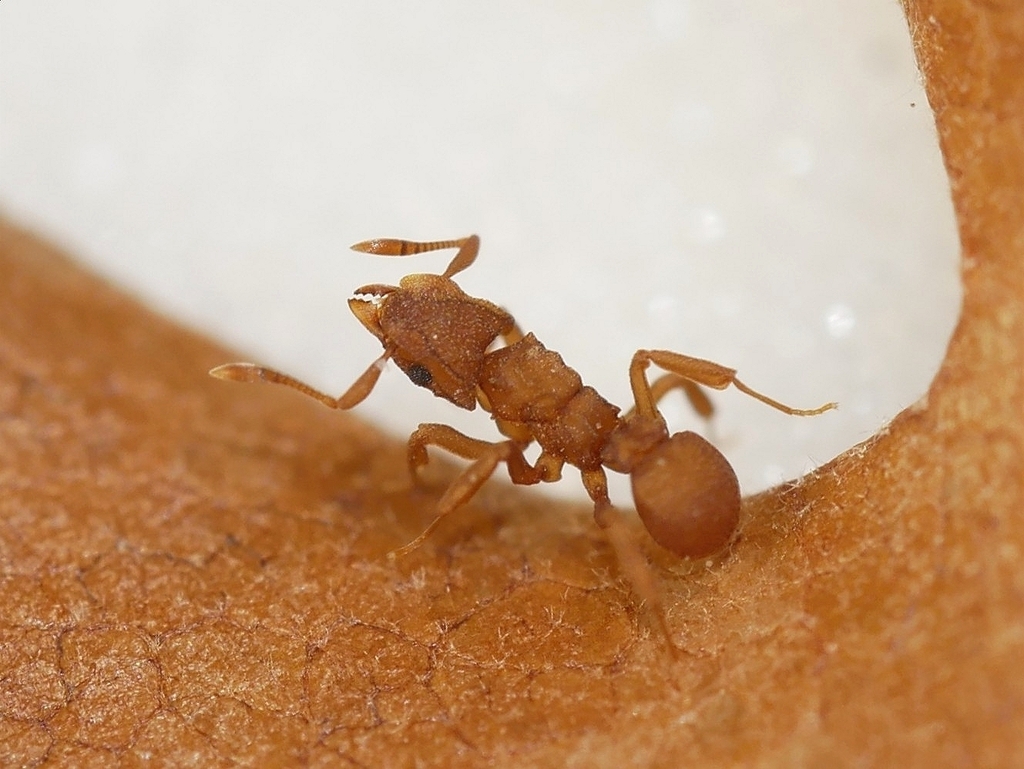
(c) Toby, some rights reserved (CC BY) · licence
Family: Formicidae · Class: Insecta · Order: Hymenoptera
Cyphomyrmex wheeleri (Wheeler’s Fungus-farming Ant) is a California animal in the Formicidae family.
Wheeler's Fungus-farming Ant (Cyphomyrmex wheeleri) is a small myrmicine ant species belonging to the tribe Attini, which includes all fungus-growing ant species. Workers are typically 2-3 mm in length with a yellowish to light brown coloration. The species exhibits the characteristic polymorphic caste system of social ants, with workers, reproductive females (queens), and males. Like other members of the genus Cyphomyrmex, workers possess a distinctive tuberculate or spiny integument and relatively large eyes compared to other fungus-farming ants. Cyphomyrmex wheeleri occurs in the southwestern United States and northern Mexico (Wheeler 1907; Snelling 1976). In the United States, the species has been documented from Arizona, New Mexico, and Texas. California records are limited, with the species primarily found in the southeastern desert regions of the state, including documented occurrences in San Bernardino and Riverside counties (iNaturalist 2025; GBIF 2025). The species extends southward through Mexico to Central America, representing one of the northernmost distributions among fungus-growing ants. This species inhabits arid and semi-arid environments, including Sonoran and Chihuahuan desert scrublands, oak woodlands, and pine-oak forests. Based on collection records, elevational distribution appears to range from desert floors to mid-elevation mountain slopes, though specific elevation limits require further documentation (Snelling 1976; GBIF 2025). Colonies are typically established in well-drained sandy or rocky soils, often under stones, fallen logs, or at the base of desert shrubs. The species shows specific adaptations to water-limited environments, with colonies showing reduced activity during the hottest and driest periods. As a member of the fungus-farming ant complex, C. wheeleri cultivates specialized fungi for food rather than foraging for insects or plant materials like most ant species (Weber 1972). Workers collect organic matter including plant debris, insect frass, and other detritus, which they process into a substrate for growing their fungal gardens. The fungus provides the primary nutrition source for the colony. Colony founding occurs when winged reproductive females disperse carrying fungal inoculum, ensuring continuity of the agricultural system (Hölldobler & Wilson 1990). Nuptial flights in desert fungus-farming ants typically coincide with periods of increased moisture availability, though specific timing for C. wheeleri has not been well documented. Little is known about the specific conservation status of Wheeler's Fungus-farming Ant, as it is not currently listed under federal or state endangered species programs. However, like many desert-adapted species, populations may face pressure from habitat fragmentation, urban development, and climate change impacts on desert ecosystems. The species' dependence on specific fungal cultivars and moisture requirements for successful reproduction may make it particularly vulnerable to environmental changes. The limited distribution in California and specialized ecological requirements suggest that monitoring of populations would be valuable for understanding long-term population trends. Detailed ecological studies of this species remain limited, with much of the available information derived from general knowledge of the Cyphomyrmex genus and observations from the broader fungus-farming ant literature. Additional research on colony structure, seasonal activity patterns, specific elevation ranges, and habitat requirements would enhance understanding of this desert-adapted species.
Classification
Class: Insecta · Order: Hymenoptera · Family: Formicidae
Frequently asked questions
How is Cyphomyrmex wheeleri classified?
Cyphomyrmex wheeleri belongs to class Insecta, order Hymenoptera, family Formicidae.
What family does Cyphomyrmex wheeleri belong to?
Cyphomyrmex wheeleri is in the Formicidae family.
What is Cyphomyrmex wheeleri?
Wheeler's Fungus-farming Ant (Cyphomyrmex wheeleri) is a small myrmicine ant species belonging to the tribe Attini, which includes all fungus-growing ant species.
Is Cyphomyrmex wheeleri found in California?
Yes. Cyphomyrmex wheeleri is recorded in California in The California Species Project's catalogue.
Related species
Other California species in the same genus, family, or bioregion.
Data from The California Species Project — 14,000+ California species with verified data from CNPS, CDFW, USFWS, and more.