Cyprinodon diabolis
Devils Hole pupfish
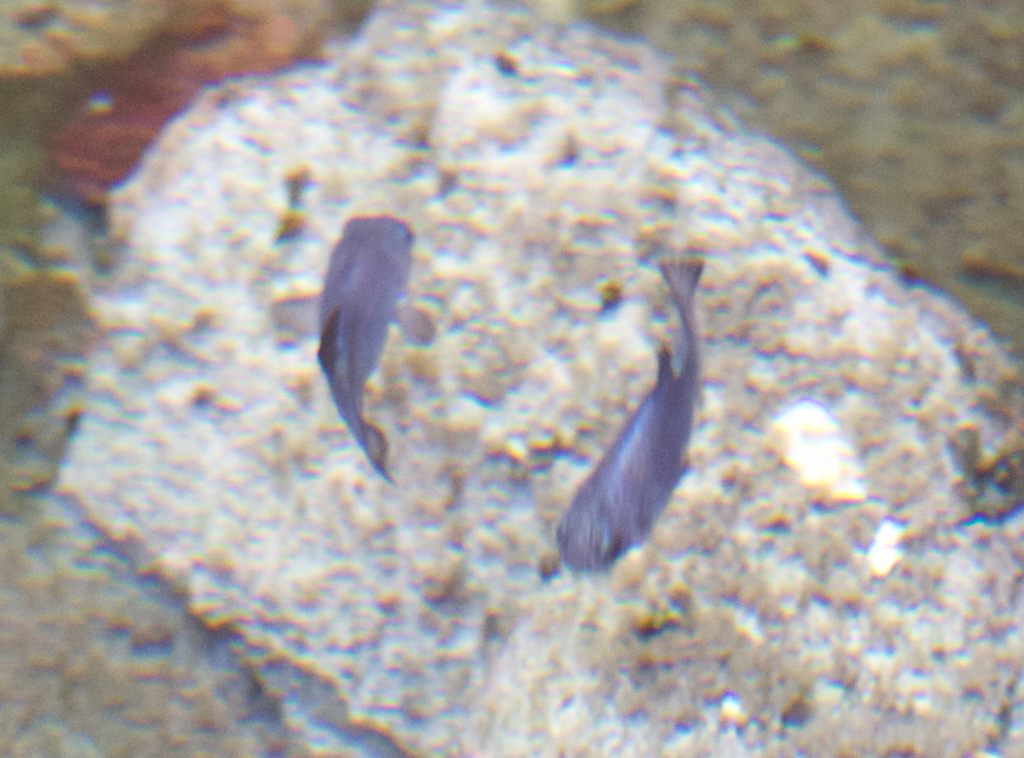
(c) Jonathan Eisen, some rights reserved (CC BY) · licence
Family: Cyprinodontidae · Class: Actinopterygii · Order: Cyprinodontiformes
Conservation status: Endangered
Cyprinodon diabolis (Devils Hole pupfish) is a California animal in the Cyprinodontidae family.
The Devils Hole pupfish is a small freshwater fish measuring approximately 25-30 mm (1.0-1.2 inches) in total length. The species is distinguished from other members of the genus Cyprinodon by its lack of pelvic fins and scales in the preorbital region, along with vertical crossbars in males, a posterior dorsal fin, long anal fin, and large head and eyes (Wales 1930). The body is small and compressed, adapted to the unique constraints of its singular habitat. This species has the most restricted range of any vertebrate on Earth, occurring naturally only in Devils Hole, a deep limestone cavern located in Nye County, Nevada. Devils Hole is a detached unit of Death Valley National Park, surrounded by the Ash Meadows National Wildlife Refuge. The entire natural population inhabits only the upper 80 feet of the water-filled cavern and a shallow, sun-lit pool at the cavern's entrance (USFWS 2022). The opening measures approximately 10 feet wide by 60 feet in length, with the fish utilizing roughly the top 15 feet of the water column. The Devils Hole pupfish feeds and breeds exclusively on a shallow limestone shelf covering just 215 square feet (20 square meters) along one side of Devils Hole. This species feeds primarily on algae growing on the limestone shelf and small invertebrates. Diatoms serve as a major food source during winter and spring months, while Spirogyra algae provides sustenance in summer and fall. The fish spend most of their time feeding on the south end of the limestone shelf. Historically, the population ranged between 200-250 individuals in spring and 450-500 fish in fall prior to the mid-1990s. However, the species experienced significant decline beginning in the mid-1990s, with numbers dropping to critically low levels. The species has been isolated in Devils Hole for approximately 10,000-15,000 years, with no connections to other aquatic systems for an extended period. The Devils Hole pupfish was listed as endangered under the Endangered Species Act on March 11, 1967, making it one of the first species protected under federal legislation. As of December 2025, the wild population remains precariously small, fluctuating between a few dozen to a few hundred individuals. To guard against extinction, a captive breeding program operates at the Ash Meadows Fish Conservation Facility, maintaining approximately 300 individuals in a specially constructed 100,000-gallon tank that replicates natural conditions (USFWS 2022). Primary threats include water level fluctuations, vandalism, and the inherent vulnerability of such a small, isolated population. Recovery efforts focus on habitat protection, water level management, and maintaining the captive insurance population to prevent extinction of this unique endemic species.
Classification
Class: Actinopterygii · Order: Cyprinodontiformes · Family: Cyprinodontidae
Conservation status
Endangered
Frequently asked questions
How is Cyprinodon diabolis classified?
Cyprinodon diabolis belongs to class Actinopterygii, order Cyprinodontiformes, family Cyprinodontidae.
What family does Cyprinodon diabolis belong to?
Cyprinodon diabolis is in the Cyprinodontidae family.
Is Cyprinodon diabolis protected or of conservation concern?
Cyprinodon diabolis carries the following status: Endangered.
What is Cyprinodon diabolis?
The Devils Hole pupfish is a small freshwater fish measuring approximately 25-30 mm (1.0-1.2 inches) in total length.
Is Cyprinodon diabolis found in California?
Yes. Cyprinodon diabolis is recorded in California in The California Species Project's catalogue.
Related species
Other California species in the same genus, family, or bioregion.
Data from The California Species Project — 14,000+ California species with verified data from CNPS, CDFW, USFWS, and more.