Cyprinodon macularius
Desert pupfish
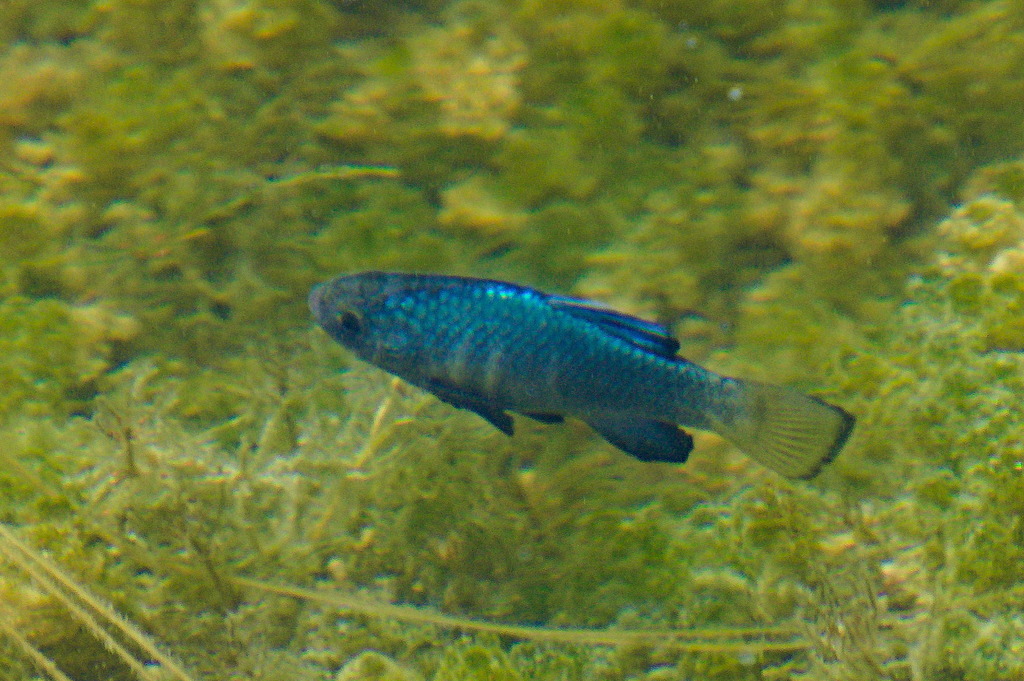
(c) Mike Ostrowski, some rights reserved (CC BY-SA) · licence
Family: Cyprinodontidae · Class: Actinopterygii · Order: Cyprinodontiformes
Conservation status: SE · Endangered · G1 S1
Cyprinodon macularius (Desert pupfish) is a California animal in the Cyprinodontidae family.
The desert pupfish is a small, robust fish endemic to the Colorado River basin and associated desert springs. Adults typically measure 25 to 75 mm (1 to 3 inches) in total length, with females generally larger than males. The body is deep and laterally compressed with a blunt, rounded snout. During breeding season, males develop intense blue coloration on the head and body with bright yellow fins, while females and non-breeding males display more subdued olive-brown coloration with darker vertical bars along the sides. The species possesses a terminal mouth with small, tricuspid teeth adapted for scraping algae and detritus. Historically, desert pupfish ranged throughout the lower Colorado River system from southern Nevada to the Colorado River Delta in Mexico, including the Salton Sea basin in California. The species occurred in backwaters, sloughs, and tributary mouths along the Colorado River, as well as in natural springs and desert streams. Today, the California population is restricted to a few isolated locations, primarily in the Salton Sea drainage system and scattered desert springs in Imperial and Riverside counties. Remnant populations also persist in Arizona and northwestern Mexico. Desert pupfish inhabit shallow, often highly saline waters with extreme environmental conditions. The species demonstrates exceptional tolerance to salinity levels up to 70 parts per thousand, nearly twice the salinity of seawater. They also withstand temperature extremes ranging from near freezing to 45°C (113°F) and oxygen levels as low as 0.1 mg/L. Preferred habitats include shallow pools, springs, and slow-moving streams with sandy or muddy substrates and abundant vegetation or algal growth. Water depths typically range from 0.3 to 1.5 meters. Desert pupfish are omnivorous, feeding primarily on blue-green algae, diatoms, detritus, and small invertebrates. The species exhibits opportunistic feeding behavior, adapting diet composition based on seasonal availability. Breeding occurs from February through November, with peak activity during spring months when water temperatures reach 20 to 30°C. Males establish and defend small territories in shallow areas, displaying intensified coloration to attract females. Females deposit 50 to 800 eggs over the breeding season, with individual spawning events producing 10 to 50 adhesive eggs attached to vegetation or substrate. Sexual maturity is reached at approximately six months, and maximum lifespan rarely exceeds two years. The U.S. Fish and Wildlife Service listed the desert pupfish as endangered in 1986 due to severe population declines and habitat loss. Primary threats include habitat destruction from water diversions, groundwater pumping, and agricultural development. Introduction of non-native fish species, particularly mosquitofish and tilapia, has led to competition and predation pressure. Water quality degradation from agricultural runoff, urban development, and geothermal activities further threatens remaining populations. Climate change poses additional challenges through increased temperatures and altered precipitation patterns affecting spring flows. Current populations in California consist of fewer than 10 distinct localities, with most containing fewer than 1,000 individuals. Recovery efforts focus on habitat restoration, non-native species control, and establishment of refuge populations in protected habitats.
Classification
Class: Actinopterygii · Order: Cyprinodontiformes · Family: Cyprinodontidae
Conservation status
SE · Endangered · G1 S1
Frequently asked questions
How is Cyprinodon macularius classified?
Cyprinodon macularius belongs to class Actinopterygii, order Cyprinodontiformes, family Cyprinodontidae.
What family does Cyprinodon macularius belong to?
Cyprinodon macularius is in the Cyprinodontidae family.
Is Cyprinodon macularius protected or of conservation concern?
Cyprinodon macularius carries the following status: SE · Endangered · G1 S1.
What is Cyprinodon macularius?
The desert pupfish is a small, robust fish endemic to the Colorado River basin and associated desert springs.
Is Cyprinodon macularius found in California?
Yes. Cyprinodon macularius is recorded in California in The California Species Project's catalogue.
Related species
Other California species in the same genus, family, or bioregion.
Data from The California Species Project — 14,000+ California species with verified data from CNPS, CDFW, USFWS, and more.