Cyprinodon nevadensis amargosae
Amargosa Pupfish
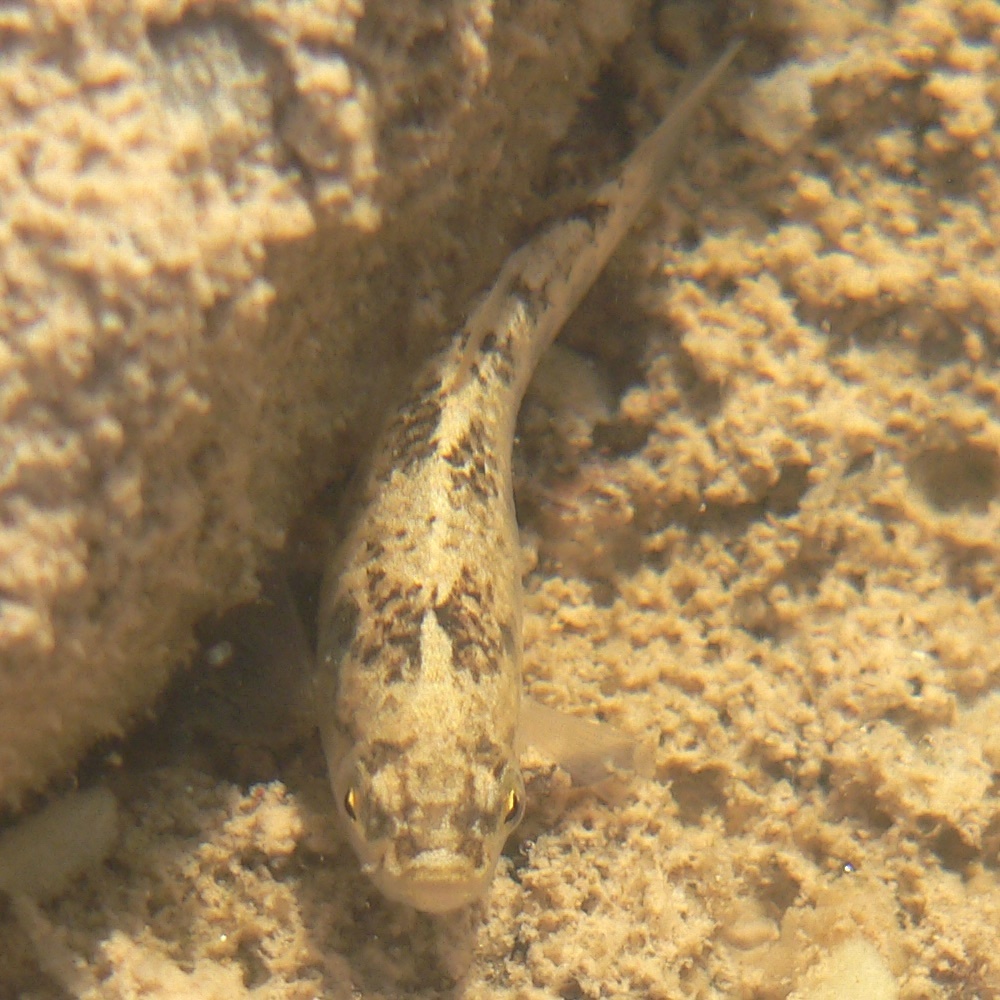
(c) Stan Shebs, some rights reserved (CC BY-SA) · licence
Family: Cyprinodontidae · Class: Actinopterygii · Order: Cyprinodontiformes
Conservation status: G2T1T2 S1S2
Cyprinodon nevadensis amargosae (Amargosa Pupfish) is a California animal in the Cyprinodontidae family.
The Amargosa pupfish (Cyprinodon nevadensis amargosae) is a small, endemic subspecies of the Amargosa pupfish found exclusively in the Amargosa River system of California and Nevada. Adults typically measure 25 to 50 mm (1.0 to 2.0 inches) in total length. Males exhibit sexual dimorphism during breeding season, developing bright blue coloration on the head and body with yellow-orange fins, while females and non-breeding males remain olive-brown to gray with darker vertical bars along the sides. The species possesses a deep, compressed body typical of pupfishes, with a small, upturned mouth adapted for surface feeding. Historically, the Amargosa pupfish inhabited multiple spring-fed pools and stretches of the Amargosa River system in Inyo County, California, and Nye County, Nevada. Current distribution is severely restricted to isolated spring systems and remnant pools within this desert region. The subspecies occurs at elevations ranging from approximately 600 to 1,200 meters (2,000 to 4,000 feet) in the Mojave Desert ecosystem. This subspecies inhabits desert springs, spring-fed pools, and associated marshes characterized by high water temperatures, elevated salinity levels, and low dissolved oxygen concentrations. Water temperatures in occupied habitats range from 20 to 43 degrees Celsius (68 to 109 degrees Fahrenheit), with some populations tolerating near-lethal thermal conditions. The species demonstrates specialized physiological adaptations to extreme environmental conditions, including tolerance for salinity levels exceeding those of seawater and oxygen concentrations as low as 0.1 parts per million. Amargosa pupfish are omnivorous, feeding on algae, detritus, small invertebrates, and occasionally conspecific eggs and larvae. Breeding occurs year-round in thermally stable habitats, with peak spawning activity during warmer months. Males establish and defend small territories around suitable spawning sites, typically areas with algal mats or submerged vegetation. Females deposit adhesive eggs singly on substrates, with clutch sizes ranging from 50 to 200 eggs depending on female size and condition. Generation time is approximately one year, though some individuals may live up to two years in optimal conditions. The Amargosa pupfish faces critical conservation challenges due to its extremely limited distribution and small population sizes. Primary threats include groundwater pumping that reduces spring flows, habitat modification from recreational activities, introduction of non-native species, and climate change effects on desert hydrology. Water diversions and agricultural development have eliminated several historical populations. The subspecies' global rank of G2T1T2 and state rank of S1S2 reflect its precarious conservation status, indicating it is critically imperiled with very high risk of extinction. Current population estimates suggest fewer than 1,000 individuals persist across all remaining habitats, making this one of North America's rarest freshwater fish subspecies.
Classification
Class: Actinopterygii · Order: Cyprinodontiformes · Family: Cyprinodontidae
Conservation status
G2T1T2 S1S2
Frequently asked questions
How is Cyprinodon nevadensis amargosae classified?
Cyprinodon nevadensis amargosae belongs to class Actinopterygii, order Cyprinodontiformes, family Cyprinodontidae.
What family does Cyprinodon nevadensis amargosae belong to?
Cyprinodon nevadensis amargosae is in the Cyprinodontidae family.
Is Cyprinodon nevadensis amargosae protected or of conservation concern?
Cyprinodon nevadensis amargosae carries the following status: G2T1T2 S1S2.
What is Cyprinodon nevadensis amargosae?
The Amargosa pupfish (Cyprinodon nevadensis amargosae) is a small, endemic subspecies of the Amargosa pupfish found exclusively in the Amargosa River system of California and Nevada.
Is Cyprinodon nevadensis amargosae found in California?
Yes. Cyprinodon nevadensis amargosae is recorded in California in The California Species Project's catalogue.
Related species
Other California species in the same genus, family, or bioregion.
Data from The California Species Project — 14,000+ California species with verified data from CNPS, CDFW, USFWS, and more.