Cyprinodon nevadensis pectoralis
Warm Springs pupfish
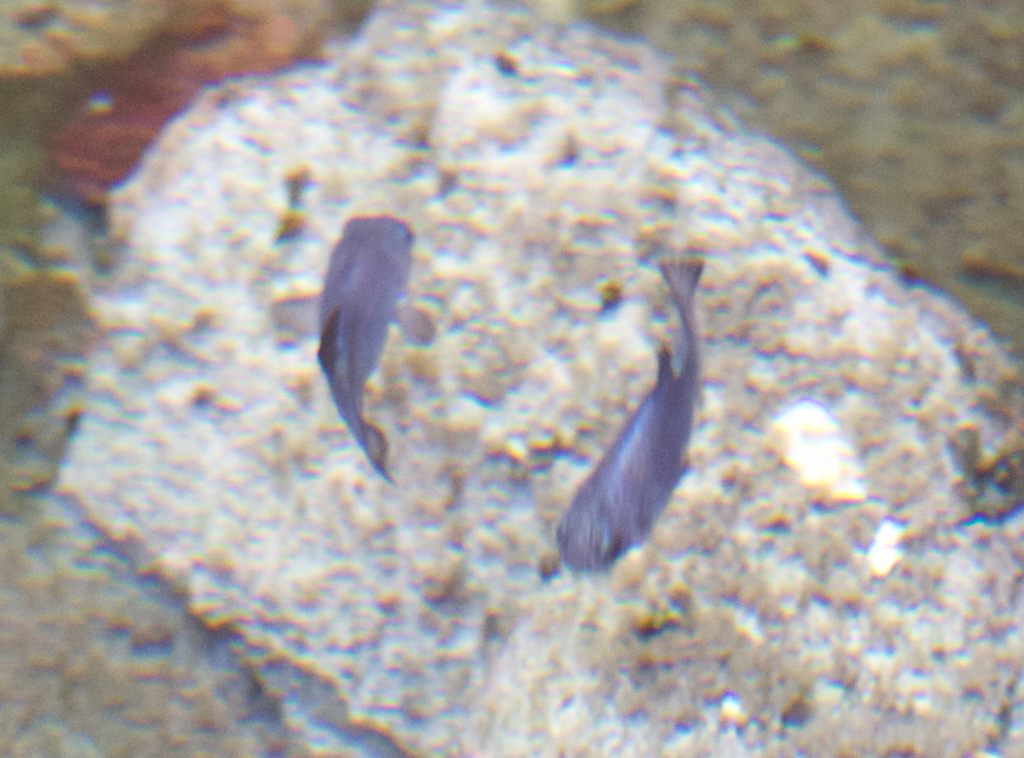
(c) Jonathan Eisen, some rights reserved (CC BY) · licence
Family: Cyprinodontidae · Class: Actinopterygii · Order: Cyprinodontiformes
Conservation status: Endangered
Cyprinodon nevadensis pectoralis (Warm Springs pupfish) is a California animal in the Cyprinodontidae family.
The Warm Springs pupfish is a small, critically endangered freshwater fish endemic to thermal springs in southern Nevada. Adults typically measure 25 to 50 millimeters (1.0 to 2.0 inches) in total length. The species was originally described by Miller in 1948 as distinguished from other Cyprinodon species by its lack of pelvic fins and scales in the preorbital region, vertical crossbars in males, posterior dorsal fin positioning, elongated anal fin, and proportionally large head and eye (Miller 1948). Males display more pronounced vertical banding during breeding season, while females maintain a more uniform coloration. Historically, the Warm Springs pupfish was found in the Warm Springs system within the Ash Meadows complex of Nye County, Nevada. The species occurs exclusively in Nevada and represents one of six subspecies of Cyprinodon nevadensis originally described by Miller (1948). According to NatureServe, the entire known population consists of five isolated populations that are within the Ash Meadows National Wildlife Refuge, providing critical habitat protection for this endemic subspecies. The species inhabits thermal spring pools and their associated outflows, where water temperatures remain consistently elevated year-round, typically ranging from 30 to 34 degrees Celsius (86 to 93 degrees Fahrenheit). These spring systems feature shallow, clear water with minimal vegetation and substrates consisting primarily of sand, gravel, and limestone deposits. The fish occupies both spring sources and downstream channels where thermal waters mix with cooler groundwater, creating temperature gradients that provide diverse microhabitat conditions. Warm Springs pupfish are opportunistic omnivores, feeding on algae, small invertebrates, detritus, and occasionally consuming their own eggs and larvae during spawning periods. Reproduction occurs throughout much of the year in these thermally stable environments, with peak spawning activity during warmer months. Males establish and defend small territories around suitable spawning substrates, displaying intensified coloration and aggressive behaviors toward competing males. Females deposit adhesive eggs on hard surfaces or vegetation, with larvae hatching within several days depending on water temperature. The U.S. Fish and Wildlife Service listed the Warm Springs pupfish as endangered under the Endangered Species Act, with current protection status as "Endangered - Wherever found." NatureServe ranks the subspecies as critically imperiled (G2T1), reflecting its extremely limited distribution and small population size. Primary threats historically included habitat modification, groundwater pumping, and introduction of non-native fish species such as mosquitofish (Gambusia affinis). However, establishment of the Ash Meadows National Wildlife Refuge has provided crucial protection for remaining populations. According to the 1990 recovery program report, the species' status had improved considerably compared to earlier decades, though populations remain persistently small and localized (USFWS 1990). Conservation efforts focus on habitat protection, water level maintenance, and monitoring of population trends within the refuge boundaries.
Classification
Class: Actinopterygii · Order: Cyprinodontiformes · Family: Cyprinodontidae
Conservation status
Endangered
Frequently asked questions
How is Cyprinodon nevadensis pectoralis classified?
Cyprinodon nevadensis pectoralis belongs to class Actinopterygii, order Cyprinodontiformes, family Cyprinodontidae.
What family does Cyprinodon nevadensis pectoralis belong to?
Cyprinodon nevadensis pectoralis is in the Cyprinodontidae family.
Is Cyprinodon nevadensis pectoralis protected or of conservation concern?
Cyprinodon nevadensis pectoralis carries the following status: Endangered.
What is Cyprinodon nevadensis pectoralis?
The Warm Springs pupfish is a small, critically endangered freshwater fish endemic to thermal springs in southern Nevada.
Is Cyprinodon nevadensis pectoralis found in California?
Yes. Cyprinodon nevadensis pectoralis is recorded in California in The California Species Project's catalogue.
Related species
Other California species in the same genus, family, or bioregion.
Data from The California Species Project — 14,000+ California species with verified data from CNPS, CDFW, USFWS, and more.