Cyprinodon radiosus
Owens pupfish
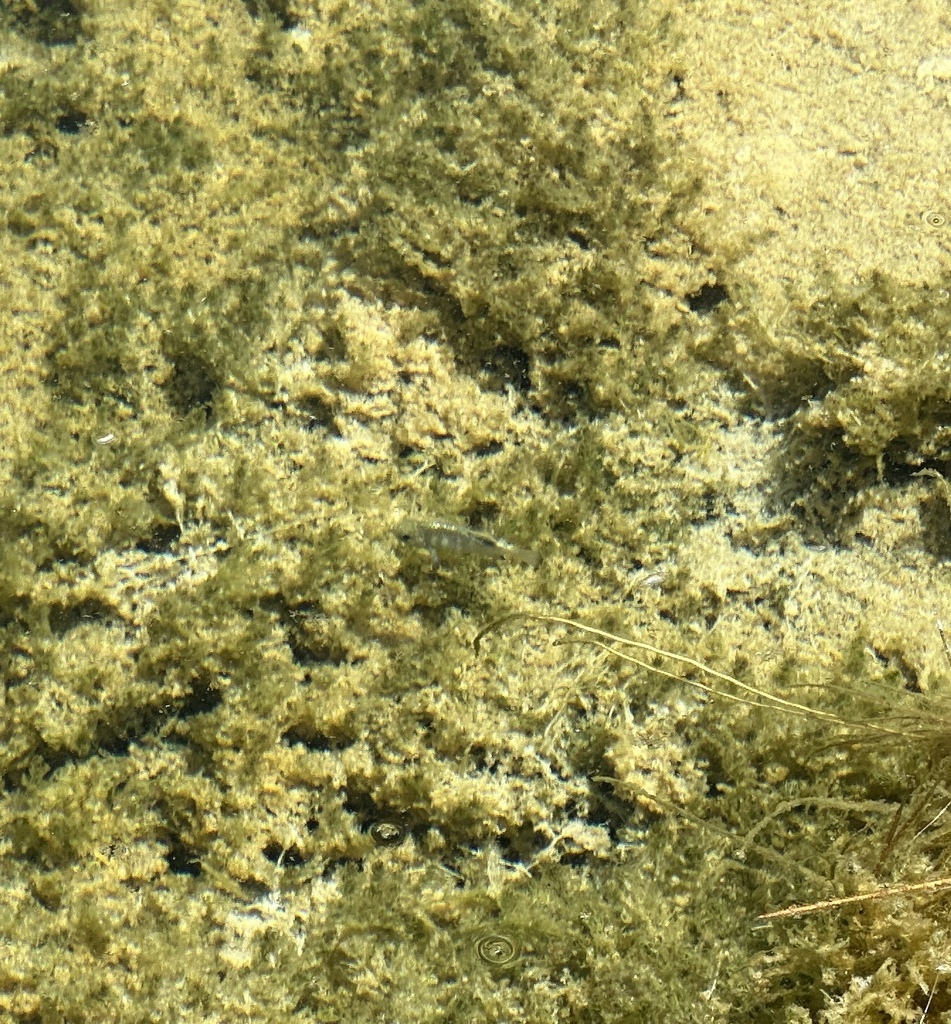
(c) Matt Berger, some rights reserved (CC BY) · licence
Family: Cyprinodontidae · Class: Actinopterygii · Order: Cyprinodontiformes
Conservation status: FP · Endangered · G1 S1
Cyprinodon radiosus (Owens pupfish) is a California animal in the Cyprinodontidae family.
The Owens pupfish (Cyprinodon radiosus) is a small, endemic freshwater fish restricted to the Owens Valley of eastern California. Adults typically measure 25 to 50 mm (1.0 to 2.0 inches) in total length, with males slightly larger than females. During breeding season, males develop distinctive coloration with bright blue dorsal and anal fins, yellow-orange body sides, and dark vertical bars. Females and non-breeding males are olive-brown with faint barring. Both sexes possess a terminal mouth, single dorsal fin, and deeply forked caudal fin typical of pupfishes. Historically, the Owens pupfish inhabited springs, creeks, and shallow areas of Owens Lake in Inyo County, California. The species was endemic to the Owens River drainage system, which flows southward from the Sierra Nevada mountains. Following extensive water diversions beginning in the early 1900s, the natural range has been drastically reduced. Currently, the species persists only in a few isolated refugia, including springs and constructed habitats within its historical range in the Owens Valley. Owens pupfish occupy shallow, warm-water habitats with temperatures ranging from 10 to 40°C (50 to 104°F). They demonstrate exceptional tolerance for high salinity and alkaline conditions, surviving in waters with salt concentrations several times greater than seawater. The species inhabits areas with sandy or muddy substrates and sparse aquatic vegetation. Water depths typically range from a few centimeters to 2 meters, with fish often congregating in the warmest, shallowest zones during cooler months. The species exhibits omnivorous feeding behavior, consuming algae, detritus, small invertebrates, and occasionally conspecific eggs. Breeding occurs from March through September, with peak activity during warmer months. Males establish and defend small territories in shallow water, displaying intensified coloration to attract females. Females deposit adhesive eggs on substrates or vegetation, with clutches ranging from 50 to 200 eggs. Generation time is typically one year, though some individuals may survive multiple breeding seasons. The species demonstrates high reproductive potential under favorable conditions. The U.S. Fish and Wildlife Service listed the Owens pupfish as endangered in 1967, making it among the first fish species protected under federal endangered species legislation. California designates it as fully protected. According to the U.S. Fish and Wildlife Service, fewer than 1,000 individuals remain in the wild as of 2023. Primary threats include habitat loss from water diversions, groundwater pumping, drought, and competition with introduced species. The species faces ongoing challenges from climate change and potential contamination. Recovery efforts include captive breeding programs, habitat restoration, and construction of refuge ponds. Fish Springs, BLM Spring, and several constructed habitats now serve as critical refugia for the species. The California Department of Fish and Wildlife maintains captive populations as genetic insurance against extinction.
Classification
Class: Actinopterygii · Order: Cyprinodontiformes · Family: Cyprinodontidae
Conservation status
FP · Endangered · G1 S1
Frequently asked questions
How is Cyprinodon radiosus classified?
Cyprinodon radiosus belongs to class Actinopterygii, order Cyprinodontiformes, family Cyprinodontidae.
What family does Cyprinodon radiosus belong to?
Cyprinodon radiosus is in the Cyprinodontidae family.
Is Cyprinodon radiosus protected or of conservation concern?
Cyprinodon radiosus carries the following status: FP · Endangered · G1 S1.
What is Cyprinodon radiosus?
The Owens pupfish (Cyprinodon radiosus) is a small, endemic freshwater fish restricted to the Owens Valley of eastern California.
Is Cyprinodon radiosus found in California?
Yes. Cyprinodon radiosus is recorded in California in The California Species Project's catalogue.
Related species
Other California species in the same genus, family, or bioregion.
Data from The California Species Project — 14,000+ California species with verified data from CNPS, CDFW, USFWS, and more.