Cyprinodon salinus milleri
Cottonball Marsh pupfish
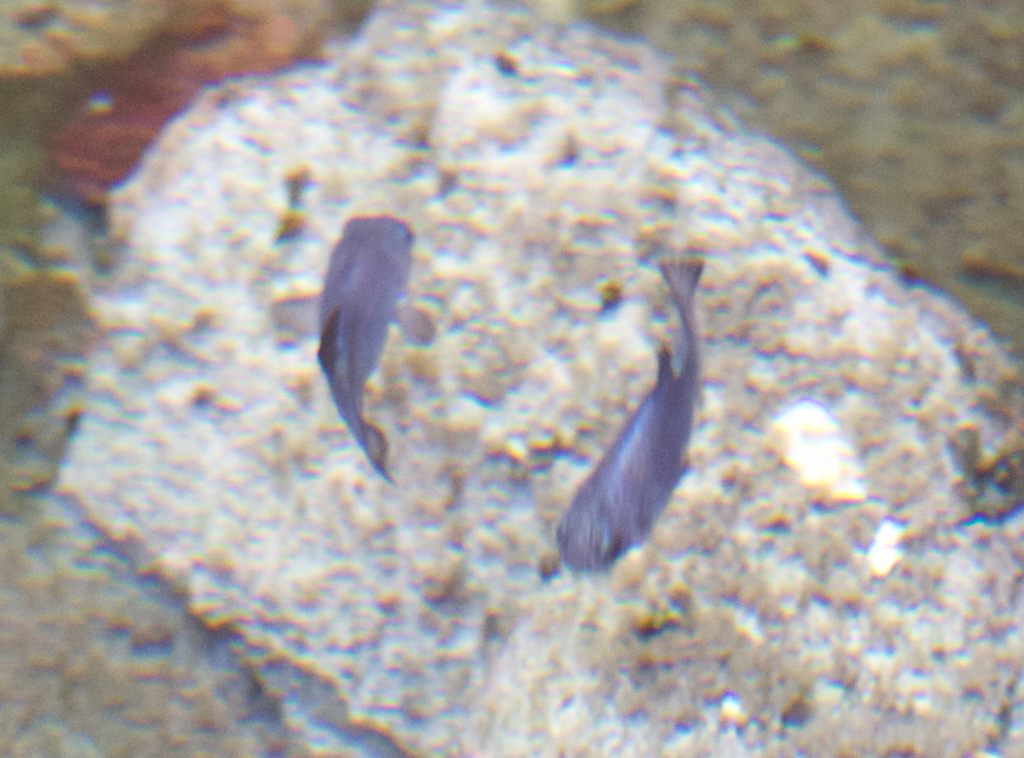
(c) Jonathan Eisen, some rights reserved (CC BY) · licence
Family: Cyprinodontidae · Class: Actinopterygii · Order: Cyprinodontiformes
Conservation status: ST · G1T1Q S1
Cyprinodon salinus milleri (Cottonball Marsh pupfish) is a California animal in the Cyprinodontidae family.
The Cottonball Marsh pupfish (Cyprinodon salinus milleri) is a small freshwater fish endemic to Death Valley National Park in California. Adults typically measure 25 to 50 mm (1.0 to 2.0 inches) in total length, with males generally larger than females. The species exhibits sexual dimorphism in coloration, particularly during breeding season. Males develop bright blue coloration on the head and sides with yellow-orange fins, while females remain more subdued with olive-brown to gray coloration and darker vertical bars along the flanks. The body is deep and laterally compressed, typical of desert pupfishes, with a small terminal mouth adapted for surface feeding. This subspecies is restricted to Cottonball Marsh, a small spring-fed wetland located in the central portion of Death Valley, Inyo County, California. The marsh represents one of the most geographically isolated pupfish populations in North America, situated at approximately 85 meters (280 feet) below sea level. The species' extremely limited range covers less than one hectare of suitable habitat, making it one of the most range-restricted fish species in North America. Cottonball Marsh pupfish inhabit shallow, warm saline pools and channels within the marsh system. Water temperatures can exceed 40°C (104°F) during summer months, while salinity levels fluctuate seasonally from brackish to hypersaline conditions, sometimes reaching three times the salinity of seawater. The fish occupy areas with soft mud substrates interspersed with salt-tolerant vegetation including pickleweed (Salicornia) and saltgrass (Distichlis spicata). Water depth in occupied areas typically ranges from 5 to 30 cm (2 to 12 inches). The species exhibits specialized physiological adaptations to extreme environmental conditions. Adults are omnivorous, feeding on algae, detritus, small invertebrates, and occasionally conspecific eggs and larvae. Breeding occurs primarily from March through October, with peak spawning activity during spring and early summer months. Females deposit adhesive eggs on vegetation or substrate, with clutch sizes typically ranging from 50 to 200 eggs. The species demonstrates rapid generation time and high reproductive potential, characteristics typical of desert pupfishes in unstable environments. Cottonball Marsh pupfish is listed as state threatened in California and ranked G1T1Q globally, indicating it is critically imperiled with questionable taxonomic status. According to National Park Service monitoring reports, the total population is estimated at fewer than 1,000 individuals, with numbers fluctuating dramatically based on hydrological conditions. Primary threats include habitat loss from groundwater pumping, climate change effects on spring flow, and potential hybridization with other Death Valley pupfish populations. The National Park Service monitors the population regularly and has implemented habitat protection measures within Death Valley National Park. Recovery efforts focus on maintaining spring flows and preventing introduction of non-native species that could compete with or prey upon this critically endangered subspecies.
Classification
Class: Actinopterygii · Order: Cyprinodontiformes · Family: Cyprinodontidae
Conservation status
ST · G1T1Q S1
Frequently asked questions
How is Cyprinodon salinus milleri classified?
Cyprinodon salinus milleri belongs to class Actinopterygii, order Cyprinodontiformes, family Cyprinodontidae.
What family does Cyprinodon salinus milleri belong to?
Cyprinodon salinus milleri is in the Cyprinodontidae family.
Is Cyprinodon salinus milleri protected or of conservation concern?
Cyprinodon salinus milleri carries the following status: ST · G1T1Q S1.
What is Cyprinodon salinus milleri?
The Cottonball Marsh pupfish (Cyprinodon salinus milleri) is a small freshwater fish endemic to Death Valley National Park in California.
Is Cyprinodon salinus milleri found in California?
Yes. Cyprinodon salinus milleri is recorded in California in The California Species Project's catalogue.
Related species
Other California species in the same genus, family, or bioregion.
Data from The California Species Project — 14,000+ California species with verified data from CNPS, CDFW, USFWS, and more.