Cyprinodon salinus salinus
Salt Creek pupfish
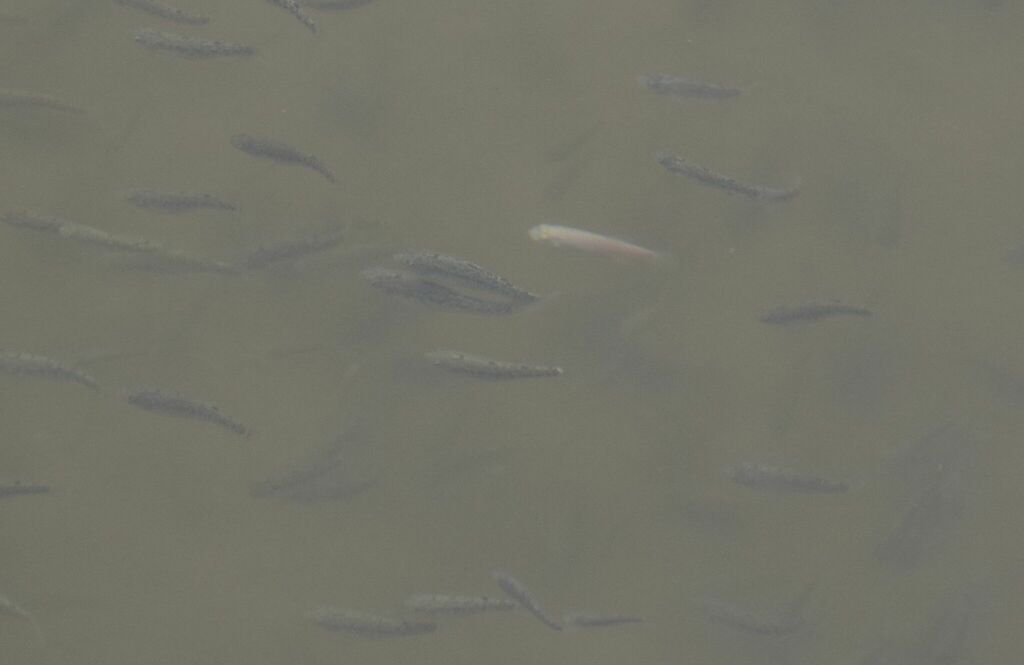
(c) velodrome, some rights reserved (CC BY) · licence
Family: Cyprinodontidae · Class: Actinopterygii · Order: Cyprinodontiformes
Conservation status: G1T1 S1
Cyprinodon salinus salinus (Salt Creek pupfish) is a California animal in the Cyprinodontidae family.
The Salt Creek pupfish is a small, robust freshwater fish endemic to a single spring system in Death Valley National Park, California. Adults typically measure 25 to 50 millimeters (1.0 to 2.0 inches) in total length, with females generally larger than males. The species exhibits sexual dimorphism, particularly during breeding season when males develop bright blue coloration on the head and body with contrasting black vertical bars. Females and non-breeding males display more subdued silver-gray coloration with darker vertical bands. The body is deep and laterally compressed, with a relatively large head and upturned mouth adapted for surface feeding. Salt Creek pupfish are found exclusively in Salt Creek, a small spring-fed stream system located in the central portion of Death Valley, Inyo County, California. This represents one of the most restricted ranges of any North American fish species. The species is endemic to approximately 1.6 kilometers (1 mile) of stream habitat and several associated pools within Death Valley National Park. Historical records suggest the population was never widespread, having evolved in isolation within this unique desert aquatic system. The species inhabits highly saline water with salt concentrations that can exceed 60 parts per thousand, nearly twice the salinity of seawater. Water temperatures in Salt Creek can reach 42°C (108°F) during summer months, making this one of the most extreme aquatic environments inhabited by any North American fish. The habitat consists of shallow pools and slow-moving stream sections with sandy and muddy substrates. Vegetation is sparse, consisting primarily of salt-tolerant plants such as pickleweed and saltgrass along the margins. Salt Creek pupfish are omnivorous, feeding on algae, detritus, small invertebrates, and occasionally their own eggs and larvae. Spawning occurs year-round but peaks during warmer months from March through October. Males establish and defend small territories in shallow areas, displaying aggressive behavior toward competitors and elaborate courtship displays to attract females. Females deposit single eggs on the substrate, which males then fertilize. The species exhibits rapid development, with fry reaching sexual maturity in approximately 6 to 8 weeks under optimal conditions. The Salt Creek pupfish is classified as critically imperiled globally (G1T1) and within California (S1), indicating extreme rarity and vulnerability to extinction. The species faces numerous threats despite protection within Death Valley National Park. Primary concerns include groundwater pumping that could affect spring flows, climate change impacts on water availability and temperature, flash flooding events that can dramatically alter habitat, and potential introduction of non-native species. The extremely small population size and restricted range make the species particularly vulnerable to catastrophic events. Conservation efforts focus on habitat monitoring, water level maintenance, and preventing introduction of competing or predatory fish species. Long-term monitoring programs track population trends and habitat conditions to detect changes that might threaten species persistence.
Classification
Class: Actinopterygii · Order: Cyprinodontiformes · Family: Cyprinodontidae
Conservation status
G1T1 S1
Frequently asked questions
How is Cyprinodon salinus salinus classified?
Cyprinodon salinus salinus belongs to class Actinopterygii, order Cyprinodontiformes, family Cyprinodontidae.
What family does Cyprinodon salinus salinus belong to?
Cyprinodon salinus salinus is in the Cyprinodontidae family.
Is Cyprinodon salinus salinus protected or of conservation concern?
Cyprinodon salinus salinus carries the following status: G1T1 S1.
What is Cyprinodon salinus salinus?
The Salt Creek pupfish is a small, robust freshwater fish endemic to a single spring system in Death Valley National Park, California.
Is Cyprinodon salinus salinus found in California?
Yes. Cyprinodon salinus salinus is recorded in California in The California Species Project's catalogue.
Related species
Other California species in the same genus, family, or bioregion.
Data from The California Species Project — 14,000+ California species with verified data from CNPS, CDFW, USFWS, and more.