Cyprinus rubrofuscus
Amur Carp
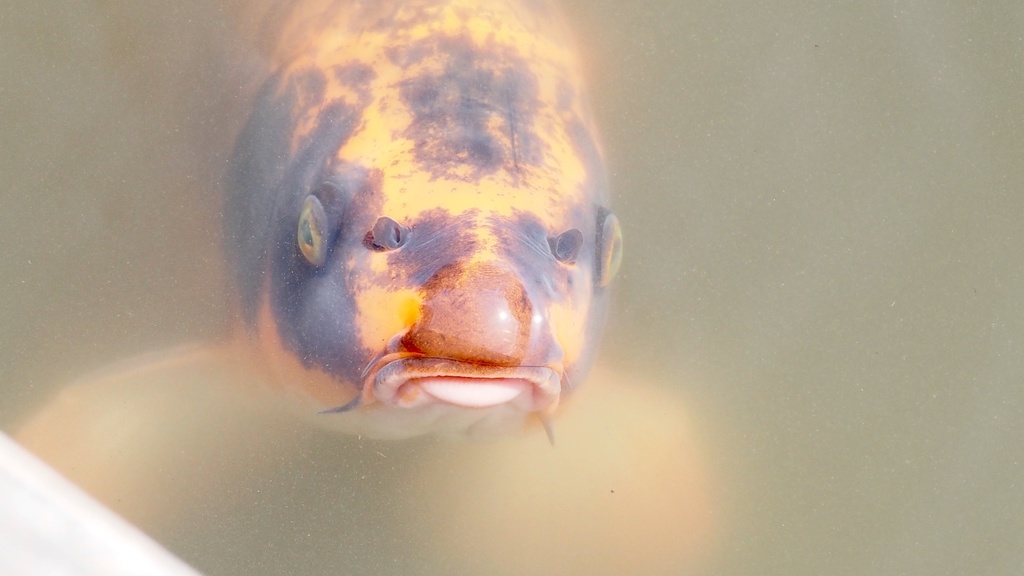
(c) りなべる, some rights reserved (CC BY) · licence
Family: Cyprinidae · Class: Teleostei · Order: Cypriniformes
Cyprinus rubrofuscus (Amur Carp) is a California animal in the Cyprinidae family.
The Amur carp (Cyprinus rubrofuscus) is a freshwater fish native to eastern Asia, commonly known as koi in its domesticated form. Adults typically measure 60 to 90 cm (24 to 35 inches) in total length, with some individuals reaching up to 150 cm (59 inches) and weighing up to 45 kg (99 pounds). Wild specimens display a bronze to dark olive coloration with a lighter ventral surface, while domesticated varieties exhibit extensive color variations including gold, silver, white, orange, and black patterns. The species possesses the characteristic cyprinid body form with pharyngeal teeth adapted for omnivorous feeding. Natively distributed across eastern Asia, Cyprinus rubrofuscus occurs from the Amur River drainage in Russia and Mongolia south through eastern China to the Red River system. According to the U.S. Fish and Wildlife Service, the species' native range extends from approximately 20° to 50° north latitude and 100° to 140° east longitude (USFWS 2019). In California, established populations exist primarily through aquaculture escapees and deliberate releases, though specific distribution data within the state remains limited. Amur carp inhabit freshwater systems including rivers, lakes, ponds, and reservoirs. The species demonstrates wide environmental tolerance, surviving in water temperatures from 0°C to 38°C (32°F to 100°F) and tolerating salinities up to 10 parts per thousand. They prefer areas with soft substrates and can survive in highly turbid conditions with visibility less than 8 cm (3.2 inches). The species occurs from sea level to elevations above 500 meters (1,640 feet) and tolerates pH ranges from 5.0 to 10.5. Amur carp are omnivorous, consuming aquatic vegetation, invertebrates, small fish, and organic detritus. Adults are primarily benthic feeders, using their protrusible mouth to sift through bottom sediments. Spawning occurs in spring and early summer when water temperatures reach 19°C to 30°C (66°F to 86°F), with optimal conditions around 23°C (73°F). Females deposit adhesive eggs on submerged vegetation in shallow areas. Sexual maturity occurs at 68 cm (27 inches) standard length, and individuals may live 13 to 20 years in the wild, with captive specimens reaching 47 years. The species lacks federal or state listing status in California, though it is classified as an introduced species of uncertain ecological risk by the U.S. Fish and Wildlife Service (USFWS 2019). Primary concerns include potential impacts on native fish communities through competition and habitat modification. The taxonomic confusion between C. rubrofuscus and the European common carp (C. carpio) has historically complicated risk assessments, as many older studies referenced C. carpio when describing what may have been C. rubrofuscus populations. Current research utilizing DNA barcoding and environmental DNA detection methods is improving species identification and monitoring capabilities (Dong et al. 2015). Management focuses on preventing further introductions and monitoring established populations for ecological impacts.
Classification
Class: Teleostei · Order: Cypriniformes · Family: Cyprinidae
Frequently asked questions
How is Cyprinus rubrofuscus classified?
Cyprinus rubrofuscus belongs to class Teleostei, order Cypriniformes, family Cyprinidae.
What family does Cyprinus rubrofuscus belong to?
Cyprinus rubrofuscus is in the Cyprinidae family.
What is Cyprinus rubrofuscus?
The Amur carp (Cyprinus rubrofuscus) is a freshwater fish native to eastern Asia, commonly known as koi in its domesticated form.
Is Cyprinus rubrofuscus found in California?
Yes. Cyprinus rubrofuscus is recorded in California in The California Species Project's catalogue.
Related species
Other California species in the same genus, family, or bioregion.
Data from The California Species Project — 14,000+ California species with verified data from CNPS, CDFW, USFWS, and more.