Cyrtonyx montezumae merriami
Merriam's Montezuma quail
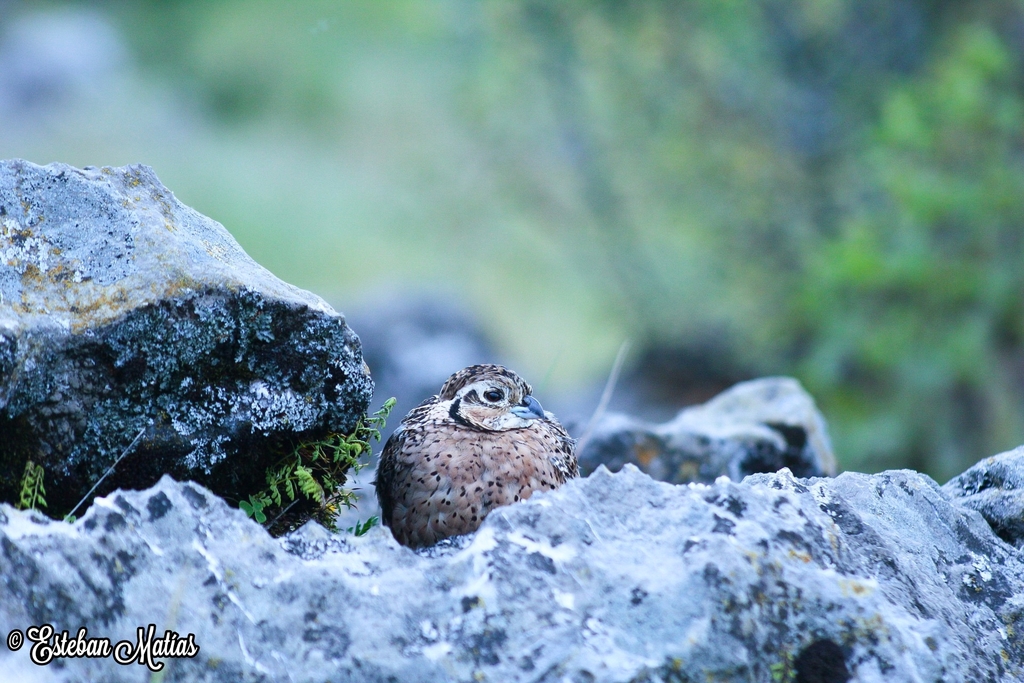
(c) Esteban Matías, some rights reserved (CC BY) · licence
Family: Odontophoridae · Class: Aves · Order: Galliformes
Conservation status: Endangered
Cyrtonyx montezumae merriami (Merriam's Montezuma quail) is a California animal in the Odontophoridae family.
Merriam's Montezuma quail is a small, stocky game bird characterized by distinctive facial markings and cryptic plumage. Males display a prominent white-striped facial pattern with black and white markings on the head and neck, while the body is grayish-brown with white spotting on the flanks. Females lack the bold facial markings and are more uniformly brown with subtle barring. Both sexes measure approximately 20-23 cm (8-9 inches) in length and weigh 160-200 grams (5.6-7.1 ounces). The species is distinguished from other quail by its rounded body shape, short tail, and unique head pattern. Historically, Merriam's Montezuma quail ranged through the mountainous regions of Arizona, New Mexico, and Mexico, including portions of the Sierra Madre Occidental and Sierra Madre Oriental. The subspecies merriami was found primarily in the sky island mountain ranges of southeastern Arizona and southwestern New Mexico. Current distribution is severely restricted compared to historical range, with extant populations limited to isolated mountain ranges in Mexico. The species inhabits pine-oak woodlands and montane forests, typically at elevations between 1,500-3,000 meters (4,900-9,800 feet). Preferred habitat consists of dense understory vegetation with oak thickets, pine stands, and associated shrubland. These quail require areas with substantial ground cover for foraging and escape cover, including dense grass, fallen logs, and rocky outcrops. The species shows strong association with Madrean pine-oak forest ecosystems. Merriam's Montezuma quail are ground-dwelling birds that feed primarily on bulbs, tubers, and other underground plant parts, which they excavate using their strong bills and claws. The diet includes bulbs of wood sorrel (Oxalis species) and other forbs, along with acorns, seeds, and occasionally insects. Breeding occurs from July through September, coinciding with monsoon rains. Females construct ground nests concealed under shrubs or fallen logs, laying 6-12 cream-colored eggs. The species exhibits secretive behavior, often freezing motionless when threatened rather than flushing like other quail species. The U.S. Fish and Wildlife Service listed Merriam's Montezuma quail as federally endangered wherever found. The species has experienced severe population decline due to habitat loss, degradation of pine-oak forests, overgrazing, and fire suppression altering natural forest structure. According to USFWS expenditure reports, the species received $7,488 in federal conservation funding during fiscal year 2019. Primary threats include continued habitat fragmentation, drought, altered fire regimes, and invasive species. No confirmed breeding populations remain in the United States, with the species likely extirpated from Arizona and New Mexico. Recovery efforts focus on habitat restoration in historical range areas and monitoring potential recolonization from Mexican populations. The species' specialized habitat requirements and secretive nature make population assessment and recovery planning challenging.
Classification
Class: Aves · Order: Galliformes · Family: Odontophoridae
Conservation status
Endangered
Frequently asked questions
How is Cyrtonyx montezumae merriami classified?
Cyrtonyx montezumae merriami belongs to class Aves, order Galliformes, family Odontophoridae.
What family does Cyrtonyx montezumae merriami belong to?
Cyrtonyx montezumae merriami is in the Odontophoridae family.
Is Cyrtonyx montezumae merriami protected or of conservation concern?
Cyrtonyx montezumae merriami carries the following status: Endangered.
What is Cyrtonyx montezumae merriami?
Merriam's Montezuma quail is a small, stocky game bird characterized by distinctive facial markings and cryptic plumage.
Is Cyrtonyx montezumae merriami found in California?
Yes. Cyrtonyx montezumae merriami is recorded in California in The California Species Project's catalogue.
Related species
Other California species in the same genus, family, or bioregion.
Data from The California Species Project — 14,000+ California species with verified data from CNPS, CDFW, USFWS, and more.